Hari:
My name is Hari, and I'm 11 years old. Today, my mum is going to tell me a true story of a very special woman, an Indian princess called Sophia Duleep Singh, who helped women in this country gain the right to vote.My mum was so inspired by her story that she wrote a book about her. During Victorian times in Britain, only rich men had the right to vote. Women tried for 50 years to ask the government to give them the right to vote, but nobody listened.Then in 1903, a woman named Emmeline Pankhurst created a new organisation that would fight harder for women to have the same rights as men. They became known as the suffragettes.So when did you actually first find out about Princess Sophia Duleep Singh?
Hari’s mum:
I was looking through a newspaper and it had a picture saying 'Suffragette selling newspaper outside Hampton Court'. And, you know, even though it was black and white picture, there was something about it that made me think this woman is Indian.Now, I know the word suffragette sounds a little bit like it should do with suffering, right? But it isn't. Suffrage is the right to vote. So here was a woman who looked a bit Indian who was campaigning for the right for women to vote in London. I had so many questions.
So what I did was I looked for a book that might explain all of this because, you know, as an Indian woman myself, I'd quite like to know, but there were no books anywhere. None. I couldn't find any. So I went and wrote my own. So, I mean, I think all the suffragettes were extraordinary, strong, brave women. But there's something a little bit special about Princess Sophia.So she was born in 1876, but she was born here in Britain. Her father was a maharajah. Her grandfather was a very famous man in India. He was called Ranjeet Singh, and they called him 'The Lion'. So she came from a really important royal family.
Hari:
When Sophia was growing up what was her childhood like?
Hari’s mum:
She had a lot of wealth. She was Queen Victoria's goddaughter. She got invited to all the best parties. Magazines would write about how fashionable she was. The bad thing though, is that her father fell out with Queen Victoria, and so she didn't have her dad to look after her because he was exiled. Her mother died when she was very young. She sees one of her baby brothers die. Another brother dies. So she has a really mixed fortune.
Hari:
How did Sophia actually become a suffragette?
Hari’s mum: She went to India in a really important year in 1903. So here in England, she was a celebrity, but in India she was just another brown face among many brown faces. And the British ruled India at that time, and they treated her like a second class citizen. She also saw that Indians didn't have the vote, they weren't able to decide what was going to happen to their country. So when she came back to England, that same feeling that she had about people not being treated well in India, she got here when she had women saying, "Give us a voice." And so she signed up to the suffragettes.
Hari:
What did she do as a suffragette?
Hari’s mum:
So their leader was a woman called Emmeline Pankhurst, who had this saying, 'deeds, not words', because people aren't listening to us asking nicely. We're not going to ask nicely anymore. We're going to do things. And Sophia was in Emmeline's close circle. Rock star suffragettes, if you like, who sort of fronted the movement. The things that she did, she refused to pay taxes. She also refused to fill in a census, which is recording how many people live in the country. She scrawled graffiti all over hers, saying, "As women do not count, I will not be counted."She went on marches. She led these demonstrations to some of the roughest parts of town where people often threw bottles and stones at the suffragettes. And she knew she could be arrested at any time and thrown in prison. But she didn't care.
Hari:
She sounded very brave. In the end, did all of this work? Did they get the right to vote?
Hari’s mum:
Yeah, but not immediately and not all of them. So first of all, in 1918 women over the age of 30 or women who owned property were allowed to vote. It took another ten years for it to become equal. So it was a really long road. It was a very long fight. But finally women got an equal right to vote in this country.For me to think that actually there was another British Indian woman who was there right at the start making things better. Do you know, I feel kind of shivery.
Hari:
It was very inspiring to find out about the life of Sophia Duleep Singh and how she helped women achieve the right to vote in this country. I think all boys and girls should know about her story.
Video summary
11 year-old Hari talks to his mum about an Indian princess called Sophia Duleep Singh, who helped women in the UK gain the right to vote.
They discuss how, during Victorian times in Britain, only rich men had the right to vote. Then in 1903, a woman named Emmeline Pankhurst created a new organisation that would fight harder for women to have the same rights as men. They became known as the Suffragettes.
Hari leans that Sophia Duleep Singh was born in Britain in 1876 to an important royal family, her father was a maharajah and her grandfather was a famous man in India called Ranjeet Singh.
Sophia went to India in 1903 and saw how Indian people were treated like second class citizens by the British. So when she came back to England and saw the struggle women had to get their voices heard, she decided to join the Suffragettes.
She went on marches, and led demonstrations to some of the roughest parts of town where people often threw bottles and stones, knowing she could be arrested at any time and thrown in prison.
Hari's mum explains that in 1918, women over the age of 30, or women who owned property were allowed to vote, but it took another ten years for all women to get the right to vote.
This short film is from the BBC Teach series British Asian History.
Teacher Notes
Learning points:
- To learn about key turning points in modern British history: the suffragette movement.
- To learn about significant figures in British history: Sophia Dleep Singh and Emmeline Pankhurst, leaders of the Suffragettes.
- To know how a Suffrage movement advanced democracy, one of our British Values.
Key Vocabulary
This film gives you the chance to explore and learn this vocabulary in the context of a personal story.
Vocabulary used in the film:
- Rights
- Suffrage
- Suffragettes
- Maharajah
- Royal
- Privileged
- Hardship
- Taxes
- Campaign
- Pamphlet
- Profound
- Census
Vocabulary useful for discussing the film:
- Immigration and immigrants - coming to live permanently in another country.
- Emigration - leaving one's own country in order to settle permanently in another.
- Asia/Asian - the largest and most populous continent on earth.
- Britain/ British - "Great Britain" is often used to refer to England, Scotland and Wales, including their component adjoining islands.Great Britain and Northern Ireland now constitute the United Kingdom.
- Community - a group of people living in the same place or having a particular characteristic in common.
- Culture - a pattern of behaviour shared by a society, or group of people.
- Discrimination - the unjust or prejudicial treatment of different categories of people.
- Diversity - differences in racial and ethnic, socioeconomic, geographic and academic backgrounds.
- Equality - when people are treated the same, regardless of what they look like or where they come from.
- Inclusion - being a part of what everyone else is, being welcomed and embraced as a member who belongs.
- Legacy - something we inherit from past generations and pass to our future generations.
- Prejudice - a preconceived opinion that is not based on reason or actual experience.
- Racism - the belief that people of different races or ethnic groups have different value in society, and using this against them.
Before watching the film
You may want to discuss what your pupils understand by the word ‘immigrant’ and what they already know about people who have come to live in the UK, over time. Pupils could discuss what they understand by the term ‘community’ and whether they identify as being part of any communities.
This film examines important people, causes and effects of the Suffragette Movement, as well as Sophia Duleep Singh’s life as Queen Victoria’s goddaughter. You could make links between the pupils’ prior history knowledge of this time, as well as democracy in Britain and our voting system.
Questions to consider
Depending on the focus of your lesson, you may wish to pause the short film at certain points to check for understanding, asking questions such as:
- Even though a woman, Victoria, was queen in the 19th Century, women did not have the right to vote. Why is that such an important right to fight for?
- What do you think about Sophia’s childhood? What were the opportunities and challenges she faced?
- When Sophia went to India, how was she treated? What do you think a ‘second class citizen’ might mean?
- How and why do you think the suffragettes had to be brave?
Activities to further explore learning
- Pupils could discuss how our British Values feature in Sophia’s story. For example, is it right to break the law, to fight for democracy?
- Pupils could use a range of sources about the Suffragette movement to write a non-fiction account, and write a biography of Sophia.
How this film meets the aims of the National Curriculum in England:
- History
This film will help you to ensure your pupils understand the history of these places as a coherent, chronological narrative, focusing on the 19th Century to the present day. Through this personal story, pupils will learn about the diversity of people who have shaped this nation and how Britain has influenced and been influenced by the wider world.
Pupils will develop deeper understanding of historical concepts such as continuity and change, cause and consequence, similarity, difference and significance, and use them to make connections, draw contrasts, analyse trends, and frame historically-valid questions.
They will also gain historical perspective by placing their growing knowledge into different contexts, understanding the connections between local, regional, national and international history; between cultural, economic, military, political, religious and social history; and between short- and long-term timescales.
How this film meets the aims of the Scottish Curriculum:
Social Studies
This film will enable pupils to compare and contrast communities and the lives of people in the past with their own, and to contribute to a discussion of the similarities and differences.They will find out why people and events from a particular time in the past were important, placing them within a historical sequence.
Health and Welbeing Across the Curriculum
This film will help pupils to develop self-awareness, self-worth and respect for others, understanding diversity and that it is everyone’s responsibility to challenge discrimination.
How this film meets the aims of the The Northern Ireland Curriculum:
- The World Around Us
This film will enable pupils to learn about how people and places have changed over time, the causes and effects of people moving from one place to another, and the positive and negative impacts of people on places. Exploring the lives and memories of people from the past is part of the history non-statutory guidance and this film provides an ideal starting point for this.
- Personal Development
This film will enable pupils to appreciate the similarities and differences between themselves and others by providing a starting point for discussing cultural heritage, community and the diversity of people living in Britain.
How this film meets the aims of the National Curriculum in Wales:
History
This film will enable pupils to place events chronologically, identify similarities and differences between ways of life in different places during the 20th Century, and to discuss the consequences to people of historic events.Personal and Social Education Framework
This film will help pupils to see people who have been active citizen and help them to develop respect for others. Through personal stories, pupils will learn the value of diversity and recognise the importance of equality of opportunity.
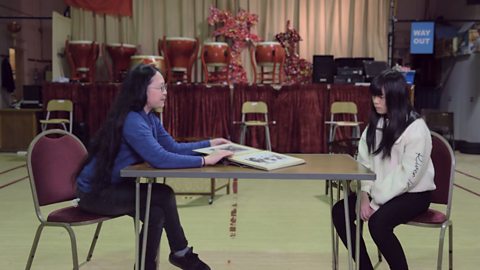
Zi Lan Liao - Chinese migration to Britain. video
Music teacher, Zi Lan, talks to 10 year-old Cherie about how she came to Liverpool as a child and why people emigrated to Britain from Asia.
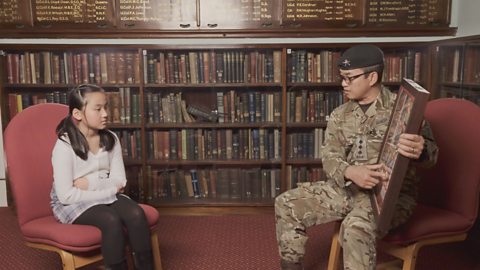
Ganesh Rai - The Gurkhas contribution to the British army. video
Eight-year-old Reva talks to Captain Ganesh Rai about the contribution of Gurkha soldiers to the British army over the past 200 years, especially during World war Two.
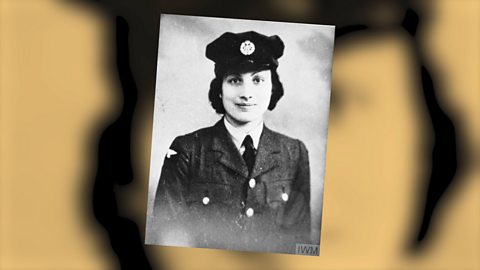
Noor Inayat Khan - Britain's first muslim war heroine. video
Author Shrabani Basu tells 14 year-old Iman about the life of Noor Inayat Khan, Britain's first muslim war heroine.
Anna Nguyen - Vietnamese migration after the Vietnam War. video
Artist Anna Nguyen talks to 11 year-old Vincent about the Vietnamese migration to Britain after the war between North and South Vietnam.
Marigin Opiala - Migrating from the Philippines to work for the NHS. video
In this short film for primary schools Marigin Opiala talks to 15-year-old Bea about why she moved to the UK, along with thousands of other Filipino nurses, to work for the NHS.
Moey Hassan - Pakistani migration to the UK. video
Actor and musician Moey Hassan talks to his nephew, 10 year-old Yusef, about the Pakistani migration to the UK.
Rupal Rajani - The forced migration of Indian people from Uganda. video
Radio DJ Rupal Rajani talks to 10-year-old Ayush about how Indian people living in Uganda in the 1970's were forced to leave by the Ugandan President Idi Amin.
Hermann Rodrigues - South Asian migration to Scotland. video
Photographer Hermann Rodrigues talks to 15 year-old Rohit about the South Asian communities that migrated to Scotland.