Planet Planners on Roblox has been specifically designed to align to the KS3 Geography curriculum in Wales.
Select show more to discover how the game delivers KS3 learning objectives and supports cross-curricular development.
Tectonic hazards
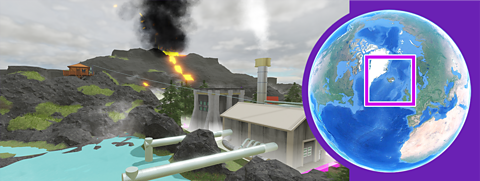
Volcano preparation
Approximate location: Iceland
Learning objectives
- to identify the impacts of volcanic eruptions
- to make decisions about how to monitor, prepare for, and respond to volcanic eruptions
- to examine the social, economic, and environmental consequences of living close to volcanoes, including the potential benefits
Welsh National Curriculum Humanities Focus (progression step 4)
Learners need to experience:
- opportunities to develop a curiosity about and an appreciation of the natural world
Learners need to know:
- about a range of themes and concepts, including agricultural and industrial change, climate change, consumerism, economic and environmental sustainability, employment, nature, natural hazards and disasters, migration, myths, legends and stories, pilgrimage, pollution, population, resource scarcity, sacred places, settlements, trade, war and conflict
- the causes and effects of physical processes that shape places, environments and landscapes
- that a range of physical processes interact to develop distinctive landscapes at a range of scales
- about sustainability in the context of strategies to reduce the risk and impact of physical processes on people and their environment
- about a variety of factors that have and continue to have a positive and negative impact on the environment in Wales and the wider world
Learners need to know how to and be able to:
- give detailed descriptions of place, environments and landscapes, including distinctive features and landforms, and type and nature of human communities
- create and utilise a variety of maps, using their map skills to accurately locate places, environments and landscapes, and exploiting digital and other methods, including geographical information systems
- use annotated maps and diagrams appropriately
- explore a range of local environments and experience opportunities to develop their curiosity about and appreciation of them
Cross-curricular skills: KS3 Welsh National Curriculum
Health and Well-being
- the importance of decision-making to support ethical and sustainable responses to challenges and opportunities
- responding sensitively to the needs of others
- social influences and citizenship
- understanding rights, respect and equity
Mathematics and Numeracy
- an individual’s economic role, including being financially literate
Science and Technology
- the scientific, technological and digital challenges facing humanity
- potential scientific and technological solutions to the challenges facing humanity
For detailed Teacher notes
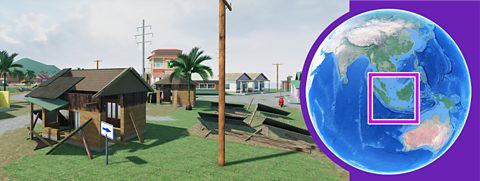
After the earthquake
Approximate location: Indonesia
Learning objectives
- to identify the impacts of earthquakes /tsunamis
- to make decisions about how to recover from earthquakes /tsunamis
- to prioritise responses to earthquakes /tsunamis, whilst balancing the needs of people, the economy and the environment
Welsh National Curriculum Humanities Focus (progression step 4)
Learners need to experience:
- opportunities to develop a curiosity about and an appreciation of the natural world
Learners need to know:
- about a range of themes and concepts, including agricultural and industrial change, climate change, consumerism, economic and environmental sustainability, employment, nature, natural hazards and disasters, migration, myths, legends and stories, pilgrimage, pollution, population, resource scarcity, sacred places, settlements, trade, war and conflict
- the causes and effects of physical processes that shape places, environments and landscapes
- that a range of physical processes interact to develop distinctive landscapes at a range of scales
- about sustainability in the context of strategies to reduce the risk and impact of physical processes on people and their environment
- about a variety of factors that have and continue to have a positive and negative impact on the environment in Wales and the wider world
Learners need to know how to and be able to:
- give detailed descriptions of place, environments and landscapes, including distinctive features and landforms, and type and nature of human communities
- create and utilise a variety of maps, using their map skills to accurately locate places, environments and landscapes, and exploiting digital and other methods, including geographical information systems
- use annotated maps and diagrams appropriately
- explore a range of local environments and experience opportunities to develop their curiosity about and appreciation of them
Cross-curricular skills: KS3 Welsh National Curriculum
Health and Well-being
- the importance of decision-making to support ethical and sustainable responses to challenges and opportunities
- responding sensitively to the needs of others
- social influences and citizenship
- understanding rights, respect and equity
Mathematics and Numeracy
- an individual’s economic role, including being financially literate
Science and Technology
- the scientific, technological and digital challenges facing humanity
- potential scientific and technological solutions to the challenges facing humanity
For detailed Teacher notes
Coasts
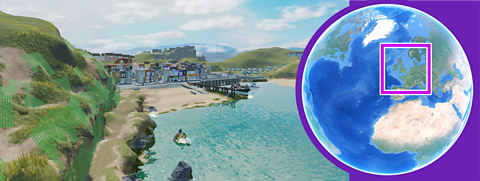
Erosion
Approximate location: United Kingdom
Learning objectives
- to identify physical processes along coastlines, such as erosion and longshore drift
- to make decisions about how to manage coastlines, including the use of hard and soft engineering strategies
- to examine the social, economic, and environmental impacts of decisions made along coastlines
Welsh National Curriculum Humanities Focus (progression step 4)
Learners need to experience:
- opportunities to develop a curiosity about and an appreciation of the natural world
Learners need to know:
- about a range of themes and concepts, including agricultural and industrial change, climate change, consumerism, economic and environmental sustainability, employment, nature, natural hazards and disasters, migration, myths, legends and stories, pilgrimage, pollution, population, resource scarcity, sacred places, settlements, trade, war and conflict
- about the impact of businesses and of people’s actions as producers and consumers on the natural world
- the causes and effects of physical processes that shape places, environments and landscapes
- the causes and effects of change to places, environments, landscapes and people over time, including economic, political, technological and social factors
- that a range of physical processes interact to develop distinctive landscapes at a range of scales
- about sustainability in the context of strategies to reduce the risk and impact of physical processes on people and their environment
- about a variety of factors that have and continue to have a positive and negative impact on the environment in Wales and the wider world
Learners need to know how to and be able to:
- give detailed descriptions of place, environments and landscapes, including distinctive features and landforms, and type and nature of human communities
- create and utilise a variety of maps, using their map skills to accurately locate places, environments and landscapes, and exploiting digital and other methods, including geographical information systems
- articulate their experiences and appreciation of interacting with the natural world and the effect this has had upon them
- use annotated maps and diagrams appropriately
- explore a range of local environments and experience opportunities to develop their curiosity about and appreciation of them
Cross-curricular skills: KS3 Welsh National Curriculum
Health and Well-being
- the importance of decision-making to support ethical and sustainable responses to challenges and opportunities
- responding sensitively to the needs of others
- social influences and citizenship
- understanding rights, respect and equity
Mathematics and Numeracy
- an individual’s economic role, including being financially literate
Science and Technology
- the scientific, technological and digital challenges facing humanity
- potential scientific and technological solutions to the challenges facing humanity
For detailed Teacher notes
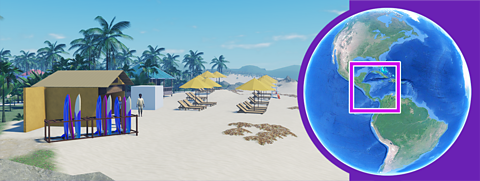
Nature and tourism
Approximate location: Central America
Learning objectives
- to identify physical processes along coastlines, such as erosion and longshore drift
- to make decisions about how to manage coastlines, including the use of hard and soft engineering strategies
- to examine the social, economic, and environmental impacts of decisions made along coastlines
Welsh National Curriculum Humanities Focus (progression step 4)
Learners need to experience:
- opportunities to develop a curiosity about and an appreciation of the natural world
Learners need to know:
- about a range of themes and concepts, including agricultural and industrial change, climate change, consumerism, economic and environmental sustainability, employment, nature, natural hazards and disasters, migration, myths, legends and stories, pilgrimage, pollution, population, resource scarcity, sacred places, settlements, trade, war and conflict
- about the impact of businesses and of people’s actions as producers and consumers on the natural world
- the causes and effects of physical processes that shape places, environments and landscapes
- the causes and effects of change to places, environments, landscapes and people over time, including economic, political, technological and social factors
- that a range of physical processes interact to develop distinctive landscapes at a range of scales
- about sustainability in the context of strategies to reduce the risk and impact of physical processes on people and their environment
- about a variety of factors that have and continue to have a positive and negative impact on the environment in Wales and the wider world
Learners need to know how to and be able to:
- give detailed descriptions of place, environments and landscapes, including distinctive features and landforms, and type and nature of human communities
- create and utilise a variety of maps, using their map skills to accurately locate places, environments and landscapes, and exploiting digital and other methods, including geographical information systems
- articulate their experiences and appreciation of interacting with the natural world and the effect this has had upon them
- use annotated maps and diagrams appropriately
- explore a range of local environments and experience opportunities to develop their curiosity about and appreciation of them
Cross-curricular skills: KS3 Welsh National Curriculum
Health and Well-being
- the importance of decision-making to support ethical and sustainable responses to challenges and opportunities
- responding sensitively to the needs of others
- social influences and citizenship
- understanding rights, respect and equity
Mathematics and Numeracy
- an individual’s economic role, including being financially literate
Science and Technology
- the scientific, technological and digital challenges facing humanity
- potential scientific and technological solutions to the challenges facing humanity
For detailed Teacher notes
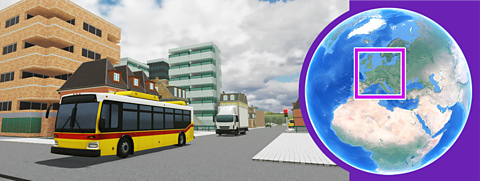
Urbanisation
Managing high-income country (HIC) cities
Approximate location: Northern Europe
Learning objectives
- to identify some of the key challenges in HIC cities
- to make decisions about how to manage challenges in HIC cities
- to evaluate the social, economic, and environmental impacts of decisions made in cities in HICs
Welsh National Curriculum Humanities Focus (progression step 4)
Learners need to know:
- about a range of themes and concepts, including agricultural and industrial change, climate change, consumerism, economic and environmental sustainability, employment, nature, natural hazards and disasters, migration, myths, legends and stories, pilgrimage, pollution, population, resource scarcity, sacred places, settlements, trade, war and conflict
- about the impact of businesses and of people’s actions as producers and consumers on the natural world
- the causes and effects of change to places, environments, landscapes and people over time, including economic, political, technological and social factors
- about sustainability in the context of strategies to reduce the risk and impact of physical processes on people and their environment
Learners need to know how to and be able to:
- give detailed descriptions of place, environments and landscapes, including distinctive features and landforms, and type and nature of human communities
- create and utilise a variety of maps, using their map skills to accurately locate places, environments and landscapes, and exploiting digital and other methods, including geographical information systems
- describe and explain patterns and reasons for changes in spatial distribution of settlements and features, such as migration, population or industrialisation
- use annotated maps and diagrams appropriately
- explore a range of local environments and experience opportunities to develop their curiosity about and appreciation of them
Cross-curricular skills: KS3 Welsh National Curriculum
Health and Well-being
- the importance of decision-making to support ethical and sustainable responses to challenges and opportunities
- responding sensitively to the needs of others
- social influences and citizenship
- understanding rights, respect and equity
Mathematics and Numeracy
- an individual’s economic role, including being financially literate
Science and Technology
- the scientific, technological and digital challenges facing humanity
- potential scientific and technological solutions to the challenges facing humanity
For detailed Teacher notes
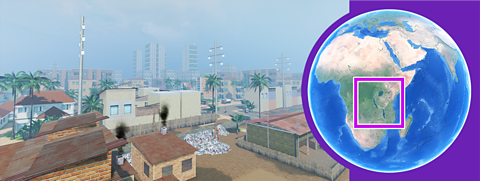
Environmental consequences
Approximate location: Central Africa
Learning objectives
- to identify the causes and effects of urbanisation in low-income countries (LICs)
- to identify social, economic, and environmental challenges in LIC cities
- to make decisions about how to manage the growth of cities and how to improve conditions for those living in informal settlements in LICs
Welsh National Curriculum Humanities Focus (progression step 4)
Learners need to know:
- about a range of themes and concepts, including agricultural and industrial change, climate change, consumerism, economic and environmental sustainability, employment, nature, natural hazards and disasters, migration, myths, legends and stories, pilgrimage, pollution, population, resource scarcity, sacred places, settlements, trade, war and conflict
- about the impact of businesses and of people’s actions as producers and consumers on the natural world
- the causes and effects of change to places, environments, landscapes and people over time, including economic, political, technological and social factors
- about sustainability in the context of strategies to reduce the risk and impact of physical processes on people and their environment
Learners need to know how to and be able to:
- give detailed descriptions of place, environments and landscapes, including distinctive features and landforms, and type and nature of human communities
- create and utilise a variety of maps, using their map skills to accurately locate places, environments and landscapes, and exploiting digital and other methods, including geographical information systems
- describe and explain patterns and reasons for changes in spatial distribution of settlements and features, such as migration, population or industrialisation
- use annotated maps and diagrams appropriately
- explore a range of local environments and experience opportunities to develop their curiosity about and appreciation of them
Cross-curricular skills: KS3 Welsh National Curriculum
Health and Well-being
- the importance of decision-making to support ethical and sustainable responses to challenges and opportunities
- responding sensitively to the needs of others
- social influences and citizenship
- understanding rights, respect and equity
Mathematics and Numeracy
- an individual’s economic role, including being financially literate
Science and Technology
- the scientific, technological and digital challenges facing humanity
- potential scientific and technological solutions to the challenges facing humanity
For detailed Teacher notes
Weather and climate
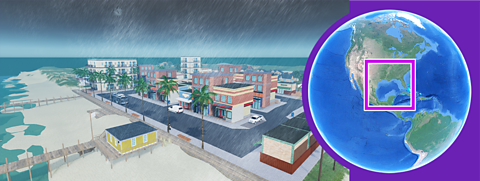
Extreme weather
Approximate location: Southern USA
Learning objectives
- to understand how climate change is leading to an increased frequency of extreme weather events
- to examine the social, economic, and environmental impacts of extreme weather events
- to make decisions about how to prepare for, and respond to, extreme weather events
Welsh National Curriculum Humanities Focus (progression step 4)
Learners need to experience:
- opportunities to develop a curiosity about and an appreciation of the natural world
Learners need to know:
- about a range of themes and concepts, including agricultural and industrial change, climate change, consumerism, economic and environmental sustainability, employment, nature, natural hazards and disasters, migration, myths, legends and stories, pilgrimage, pollution, population, resource scarcity, sacred places, settlements, trade, war and conflict
- about the impact of businesses and of people’s actions as producers and consumers on the natural world
- about the influence of political groups and institutions on the natural world
- the causes and effects of physical processes that shape places, environments and landscapes
- the causes and effects of change to places, environments, landscapes and people over time, including economic, political, technological and social factors
- about sustainability in the context of strategies to reduce the risk and impact of physical processes on people and their environment
- about a variety of factors that have and continue to have a positive and negative impact on the environment in Wales and the wider world
Learners need to know how to and be able to:
- create and utilise a variety of maps, using their map skills to accurately locate places, environments and landscapes, and exploiting digital and other methods, including geographical information systems
Cross-Curricular Skills: KS3 Welsh National Curriculum
Health and Well-being
- the importance of decision-making to support ethical and sustainable responses to challenges and opportunities
- responding sensitively to the needs of others
- social influences and citizenship
- understanding rights, respect and equity
Mathematics and Numeracy
- an individual’s economic role, including being financially literate
Science and Technology
- the scientific, technological and digital challenges facing humanity
- potential scientific and technological solutions to the challenges facing humanity
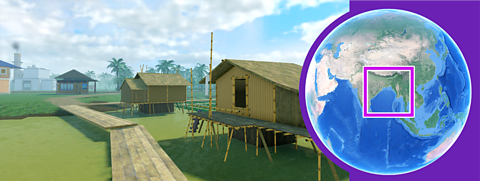
Low-income country (LIC) climate change
Approximate location: Bay of Bengal
Learning objectives
- to identify the factors contributing to climate change in LICs
- to make decisions about adapting to climate change in LICs
- to examine strategies for mitigating climate change in LICs
Welsh National Curriculum Humanities Focus (progression step 4)
Learners need to experience:
- opportunities to develop a curiosity about and an appreciation of the natural world
Learners need to know:
- about a range of themes and concepts, including agricultural and industrial change, climate change, consumerism, economic and environmental sustainability, employment, nature, natural hazards and disasters, migration, myths, legends and stories, pilgrimage, pollution, population, resource scarcity, sacred places, settlements, trade, war and conflict
- about the impact of businesses and of people’s actions as producers and consumers on the natural world
- about the influence of political groups and institutions on the natural world
- the causes and effects of physical processes that shape places, environments and landscapes
- the causes and effects of change to places, environments, landscapes and people over time, including economic, political, technological and social factors
- about sustainability in the context of strategies to reduce the risk and impact of physical processes on people and their environment
- about a variety of factors that have and continue to have a positive and negative impact on the environment in Wales and the wider world
Learners need to know how to and be able to:
- create and utilise a variety of maps, using their map skills to accurately locate places, environments and landscapes, and exploiting digital and other methods, including geographical information systems
Cross-Curricular Skills: KS3 Welsh National Curriculum
Health and Well-being
- the importance of decision-making to support ethical and sustainable responses to challenges and opportunities
- responding sensitively to the needs of others
- social influences and citizenship
- understanding rights, respect and equity
Mathematics and Numeracy
- an individual’s economic role, including being financially literate
Science and Technology
- the scientific, technological and digital challenges facing humanity
- potential scientific and technological solutions to the challenges facing humanity
Population and migration
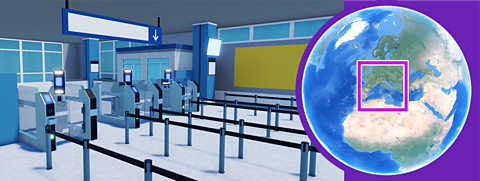
Increasing immigration
Approximate location: Central/ Southern Europe
Learning objectives
- to identify the reasons why people migrate
- to make decisions about immigration
- to examine the impacts of immigration on people, the economy and the environment
Welsh National Curriculum Humanities Focus (progression step 4)
Learners need to know:
- about a range of themes and concepts, including agricultural and industrial change, climate change, consumerism, economic and environmental sustainability, employment, nature, natural hazards and disasters, migration, myths, legends and stories, pilgrimage, pollution, population, resource scarcity, sacred places, settlements, trade, war and conflict
- about sustainability in the context of strategies to reduce the risk and impact of physical processes on people and their environment
Learners need to know how to and be able to:
- give detailed descriptions of place, environments and landscapes, including distinctive features and landforms, and type and nature of human communities
- create and utilise a variety of maps, using their map skills to accurately locate places, environments and landscapes, and exploiting digital and other methods, including geographical information systems
- describe and explain patterns and reasons for changes in spatial distribution of settlements and features, such as migration, population or industrialisation
- use annotated maps and diagrams appropriately
- explore a range of local environments and experience opportunities to develop their curiosity about and appreciation of them
Cross-curricular skills: KS3 Welsh National Curriculum
Health and Well-being
- the importance of decision-making to support ethical and sustainable responses to challenges and opportunities
- responding sensitively to the needs of others
- social influences and citizenship
- understanding rights, respect and equity
Mathematics and Numeracy
- an individual’s economic role, including being financially literate
Science and Technology
- the scientific, technological and digital challenges facing humanity
- potential scientific and technological solutions to the challenges facing humanity
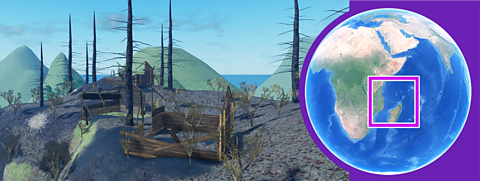
Dealing with emigration
Approximate location: Madagascar
Learning objectives
- to identify the causes of emigration from LICs
- to examine the social, economic, and environmental impacts of emigration on LICs
- to make decisions about how to manage emigration in LICs
Welsh National Curriculum Humanities Focus (progression step 4)
Learners need to know:
- about a range of themes and concepts, including agricultural and industrial change, climate change, consumerism, economic and environmental sustainability, employment, nature, natural hazards and disasters, migration, myths, legends and stories, pilgrimage, pollution, population, resource scarcity, sacred places, settlements, trade, war and conflict
- about sustainability in the context of strategies to reduce the risk and impact of physical processes on people and their environment
Learners need to know how to and be able to:
- give detailed descriptions of place, environments and landscapes, including distinctive features and landforms, and type and nature of human communities
- create and utilise a variety of maps, using their map skills to accurately locate places, environments and landscapes, and exploiting digital and other methods, including geographical information systems
- describe and explain patterns and reasons for changes in spatial distribution of settlements and features, such as migration, population or industrialisation
- use annotated maps and diagrams appropriately
- explore a range of local environments and experience opportunities to develop their curiosity about and appreciation of them
Cross-curricular skills: KS3 Welsh National Curriculum
Health and Well-being
- the importance of decision-making to support ethical and sustainable responses to challenges and opportunities
- responding sensitively to the needs of others
- social influences and citizenship
- understanding rights, respect and equity
Mathematics and Numeracy
- an individual’s economic role, including being financially literate
Science and Technology
- the scientific, technological and digital challenges facing humanity
- potential scientific and technological solutions to the challenges facing humanity
Food and water
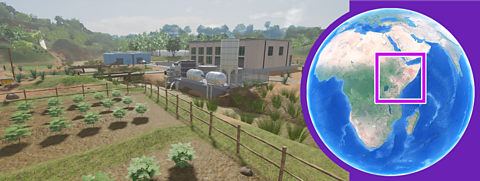
Producing food
Approximate location: East Africa
Learning objectives
- to identify the challenges of food distribution in LICs, including issues related to infrastructure and transportation
- to make decisions about strategies to address and combat food insecurity in LICs
- to examine the political, economic and human costs associated with food insecurity in LICs
Welsh National Curriculum Humanities Focus (progression step 4)
Learners need to know:
about a range of themes and concepts, including agricultural and industrial change, climate change, consumerism, economic and environmental sustainability, employment, nature, natural hazards and disasters, migration, myths, legends and stories, pilgrimage, pollution, population, resource scarcity, sacred places, settlements, trade, war and conflict
about the impact of businesses and of people’s actions as producers and consumers on the natural world
the causes and effects of change to places, environments, landscapes and people over time, including economic, political, technological and social factors
about sustainability in the context of strategies to reduce the risk and impact of physical processes on people and their environment
about a variety of factors that have and continue to have a positive and negative impact on the environment in Wales and the wider world
Learners need to know how to and be able to:
create and utilise a variety of maps, using their map skills to accurately locate places, environments and landscapes, and exploiting digital and other methods, including geographical information systems
describe and explain patterns and reasons for changes in spatial distribution of settlements and features, such as migration, population or industrialisation
use annotated maps and diagrams appropriately
explore a range of local environments and experience opportunities to develop their curiosity about and appreciation of them
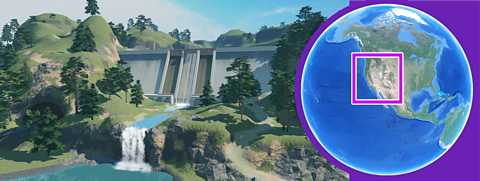
Conserving water
Approximate location: Western USA
Learning objectives
- to identify short- and long-term variability of water sources in HICs
- to make decisions about securing water supplies for domestic, agricultural and industrial uses
- to examine the causes, effects and solutions to water pollution in HICs
Welsh National Curriculum Humanities Focus (progression step 4)
Learners need to know:
about a range of themes and concepts, including agricultural and industrial change, climate change, consumerism, economic and environmental sustainability, employment, nature, natural hazards and disasters, migration, myths, legends and stories, pilgrimage, pollution, population, resource scarcity, sacred places, settlements, trade, war and conflict
about the impact of businesses and of people’s actions as producers and consumers on the natural world
the causes and effects of change to places, environments, landscapes and people over time, including economic, political, technological and social factors
about sustainability in the context of strategies to reduce the risk and impact of physical processes on people and their environment
about a variety of factors that have and continue to have a positive and negative impact on the environment in Wales and the wider world
Learners need to know how to and be able to:
create and utilise a variety of maps, using their map skills to accurately locate places, environments and landscapes, and exploiting digital and other methods, including geographical information systems
describe and explain patterns and reasons for changes in spatial distribution of settlements and features, such as migration, population or industrialisation
use annotated maps and diagrams appropriately
explore a range of local environments and experience opportunities to develop their curiosity about and appreciation of them
