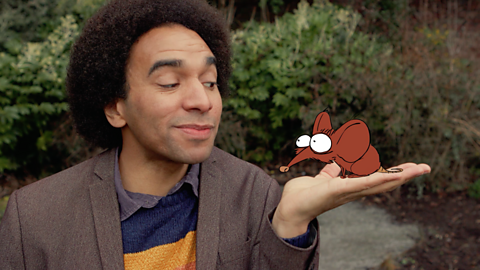
There aren't many poets in the world whose life and work we celebrate on their birthday. Even Shakespeare isn't afforded that accolade.
Every year on the 25th of January, we pay tribute to Robert Burns, Scotland's national poet, with Burns suppers featuring recitals of the bard's best-loved works.
Burns wrote much of his poetry in Scots, but that's not so say he's only well- known in Scotland.
His poems have been translated into more than 40 languages including Latin and Esperanto and his face has featured on stamps, coins and banknotes worldwide.
He's admired not only for his poetry and love songs, but also for his good looks, his colourful character and his reputation with women.
On his deathbed, Burns is said to have proclaimed: 'I will be much better known in the future than I am today.'
In the 21st century, why has the ploughman poet become a poster boy for Scottish identity and a global brand for the Scots themselves?
National Bard
Scotland's national poet Robert Burns is recognised the world over for his work focusing on universal themes of love and nature.
He has a national day named after him on the 25th January each year. Burns suppers are celebrated on this day with traditional dishes of haggis and whisky and recitals of his best-loved work. At New Year all over the world, his poem 'Auld Lang Syne', a sincere expression of friendship is sung. His face has featured on banknotes and his books have been translated into over forty languages.
He died over 200 years ago in 1796, so why has Burns become a poster boy for the Scottish identity and why is he more popular than ever today?
Burns' life
So who is this national bard? He was a farmer's son who could speak to the common man. His life growing up among the ordinary people of Scotland meant he could write about nature and hardship as well as love and family. He also led a colourful and varied life which exposed him to different sections of society.
He was born in a small town in Ayrshire in 1759, the son of a tenant farmer. He was well-read and was educated both at school and at home. He began writing while working on his father's farm and his first works were songs declaring his love to local girls.
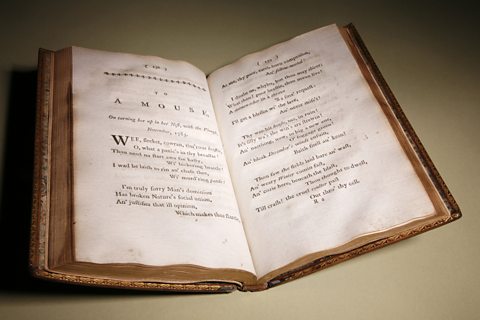
Burns' first collection of poetry, 'Poems Chiefly in the Scottish Dialect', was published in 1786 and includes favourite 'To A Mouse'. It became known as the 'Kilmarnock Edition' after the town in which it was published and all copies were sold within a few weeks.
Burns had been planning to emigrate to Jamaica but, encouraged by the success of his book, he stayed in Scotland where he took the Scottish literary world by storm. He published a second edition of his poems but his popularity did not make him wealthy. He liked a drink and due to his lifestyle, the money made from writing did not last long.
By 1787, he was working as a farmer again and in 1788, despite his increasingly radical views, he took a job in the Excise Service. The hard work this job entailed and his dissolute lifestyle took their toll on Burns' health and he died on 21 July 1796, aged 37, on the day his son Maxwell was born.
Ricky Ross finds out about Robert Burns's legacy from David Hopes, Director and General Manager of the Robert Burns Birthplace Museum.
Ricky Ross: I've come to the cottage where Robert Burns was born in Alloway in Ayrshire to ask David Hopes, Director of the Burns Birthplace Museum, why Burns is still an important figure in Scottish culture.
Has there been a revival of Burns work or has he always been popular?
David Hopes: I think he's always been popular. I mean he was really popular after the publication of his first book back in 1786 and the growth in Burns' popularity from that point has been exponential I'd say. There have been many revivals, for example, around anniversaries of his birth and death, but his fame has been on a steady increase since 1786.
Ricky Ross: When did the tradition of Burns suppers begin?
David Hopes: The tradition of Burns suppers started in 1801 in this very room in what was then the lounge of a bar because Burns cottage was a pub for over 100 years. So they had a dinner of sheep's heid, sheep's head, and haggis. They used the address to the haggis and the Reverent Hamilton Paul who convened the meeting composed a special ode and at the end of the meeting and lots of toasts, they were Freemasons who liked their drink, they agreed to meet on the poet's birthday next year. Unfortunately, they got the wrong date, they met on the 29th January instead of the 25th but, nonetheless, the tradition was established of the Burns supper.
Ricky Ross: Why is Burns remembered over and above other Scottish writers?
David Hopes: I think people relate to Burns perhaps more than other Scottish writers. I think another one of the reasons is that he mentions so many places in his work. For example, in Tam o'Shanter, Burns immortalises the place of his birth by throwing an imaginary web over the village of Alloway. Lots of the buildings mentioned in the poem are still here, so when people visit these historic buildings, they're visiting the poem as well. So place and poetry are closely linked.
(Extract from 'Tam o'Shanter')
Now, do thy speedy utmost, Meg,And win the key-stane o' the brig;There at them thou thy tail may toss,A running stream they dare na cross.
Ricky Ross: Is his work as relevant today as it was when he was alive?
David Hopes: I think in some cases, it's more relevant because of those enduring themes, the worldly themes. For example, in the referendum in 2014, Burns' work was cited by both camps, the 'yes' and the 'no' camps. I think some of the themes he spoke about have certainly passed by, but a lot of the themes, for example in 'A Man's a Man for 'a that', themes of equality and freedom, we all can relate to even now.
(Extract from 'A Man's a Man for 'a that')
That Man to Man the world ower,Shall brother's be for a' that.
The Ploughman poet
The main reason Burns is so popular today is because of the themes and language of everyday life that he used. His poems were humorous and he used small subjects to express big ideas.
This can be seen in poems like 'To a Mouse', as he draws a comparison between the lives of mice and men. In 'Tam o' Shanter, he suggests that the drunken protagonist who's chased by witches should have heeded his wife's advice and gone home instead of going drinking. In 'To a Louse', he highlights how useful it would be for us to have the power to see ourselves as others see us when he pokes fun at the posh lady in church with a louse on her hat.
Burns was a champion of the Scots language at a time when it was not popular in literary circles. It is through his work that we are still exposed to Scots. By writing in the vernacular, he paved the way for Scottish writers like James Kelman, James Robertson and Irvine Welsh to do the same today.
Burns and women
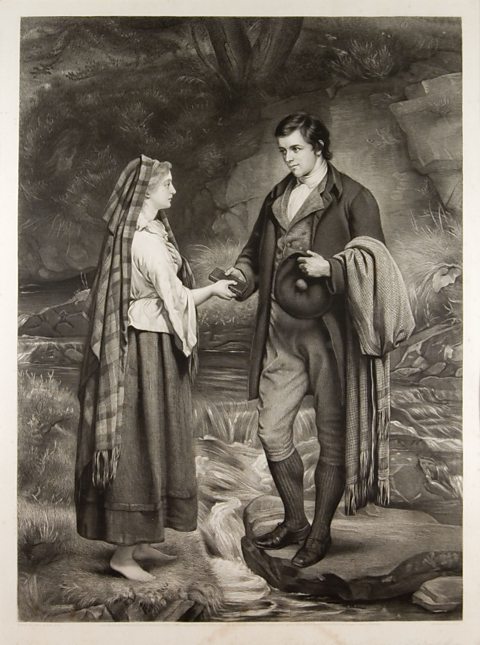
Burns has also left a long legacy of romantic poetry that is still sung and recited today. This was partly because he was a ladies' man. He had eight children with his wife Jean Armour and four children with other women.
However he wasn’t always the rogue that he seemed. He was influenced by the female writers of the time such as Mary Wollstonecraft who said women were entitled to education and a place in society. This gave him a respect for women which is evident in his works and relationships. He had friendships with women such as Mrs Dunlop and Agnes McLehose who were both close confidantes.
When his relationship with Agnes McLehose finished he wrote ‘Ae Fond Kiss’. This has become one of his most enduring songs performed by people such as the actor Alex Norton and singers such as Eddi Reader as it so movingly expresses his sadness at the end of their relationship.
At the Burns supper itself, there is ‘The Toast to the Lassies’. One of the responses is ‘Green Grow the Rashes’ which shows Burns’ respect for women. The poem says that although Mother Nature created men first she perfected the process with women.
Lyrical poet
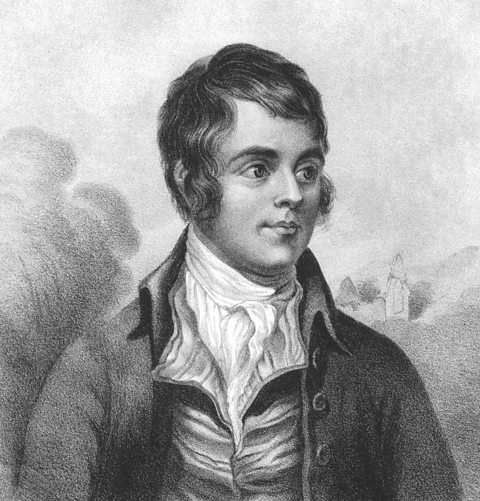
Burns wasn't just known for his poems. He was also a prolific song writer and we often remember songs more easily than we do poems. He adapted the words of old Scottish folk songs and contributed over 300 songs to the Scots Musical Museum.
One of his most famous poems was 'Auld Lyne Syne' which is set to the music of a traditional folk song. This song is now sung all over the world to herald the New Year and is taken to mean 'long, long ago' or 'days gone by'.
In terms of songwriting ability, he is perhaps the nearest thing Scotland has to Lennon and McCartney. Bob Dylan cites 'My Love is Like a Red, Red Rose' as his greatest lyrical inspiration.
Burns was also musical himself and played the violin, the guitar and the stock and horn. There is also strong evidence that he could read music.
Burns and modern day culture
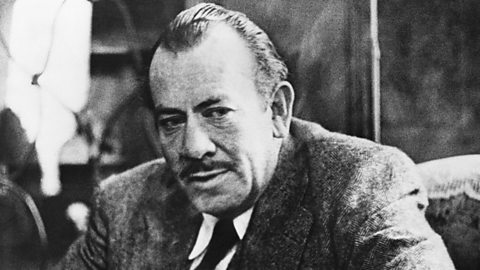
His work has even influenced 20th Century American authors. JD Salinger's book ‘Catcher in the Rye’ references the song 'Comin' thro' the Rye' and John Steinbeck’s novel ‘Of Mice and Men’ is named after a line in the poem 'To a Mouse'.
It is Burns' ability to empathise with the human condition that makes him a universally loved poet and songwriter and an important cultural figure over 200 years after his death.
Burns is often mythologised in Scottish life and literary circles especially at the time of year when Burns suppers are held across the country. But what is interesting about him is that he was a farmer's son with a dubious reputation, both as a womaniser and later as an exciseman, who had a way with words which ultimately became his legacy.
A deserving national bard?
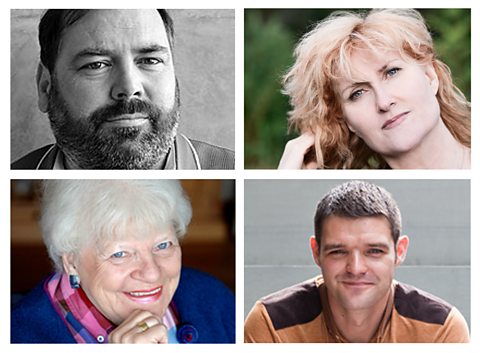
Four experts give their view:
Gerard Carruthers
Burns enjoyed life, having a varied career as a farmer, exciseman and an editor. He was also an artist full of creative, political, and human passion. He may be Scotland’s greatest poet, he is certainly Scotland’s greatest songwriter, and in both these spheres he shows the world the romantic and also the modern image of his nation. He is, quite simply, one of the most fascinating cultural phenomena to emerge in the eighteenth-century. His appeal has lasted over two hundred and thirty years later.
Eddi Reader
In one short lifetime, between the ages of 15 through to 36 he left us historical detail, social interactions, philosophical debate, song craft, archive music and confidence in Scotland as a nation. But more than all of that, he's great company. Through his words, his voice commits us to our own lives by revealing how connected we are to the land and our loves.
Ruth Wishart
Burns wrote movingly and lyrically of love and its emotions. He wrote wittily and memorably about hypocrisy, not least within the Scottish Kirk. But it is in his celebration of international brotherhood, of social equality, of honest toil and just reward that his global adherents still rejoice more than two centuries after his death. We still hold suppers in his memory. We still extol the virtues he espoused. Robert Burns left an extraordinary body of work in both Scots and English. But had he written nothing else than this poetic fanfare to the common man, he would have still deserved his iconic stature.
William Letford
At the time my first book was published I was working as a roofer for my family company, and someone coined the term roofer/poet. Burns was known as the 'heaven-taught ploughman.' Burns was never a ploughman. He laboured in the fields and his body would have performed the tasks but his mind would have been working somewhere else. He became the 'people's poet' of Russia'. His songs are sung all over the world and have influenced a huge number of other artists. Do I think Robert Burns is a deserving National Bard? The votes have been cast and the decision has already been made. The answer is yes.
Learn more about World War Two and the Holocaust
Could you be a poet? document
In this interactive article poet and broadcaster Benjamin Zephaniah discusses the prose and poetry of Dylan Thomas, and sees how a person's background influences their work.

What is the power of poetry? video
Griff Rhys Jones on why poetry is powerful and how it differs from other forms of writing.
Understanding Poetry. collection
In this series of short films Joseph Coelho explains how poetry is relatable, fun and achievable, and can open up new ways of understanding and expressing emotions and thoughts.