The magic of poetry
Deep down, I always wanted to be a poet. I love the musicality of the words, the rhythms, the rhymes, the sound of the language on the ear and the rolling of the words on the tongue. That's when the words really come alive for me.
Ever since I was introduced to his poetry, I've had a great respect for Dylan Thomas. In the year of his centenary I challenged the Townhill community in his hometown of Swansea to write their own version of Under Milk Wood. I wanted to see if the group could be inspired to unleash their own creativity.
If we share a few techniques and key tips, are you up for accepting the challenge to create lines that people will cherish and remember? Can we all be poets?
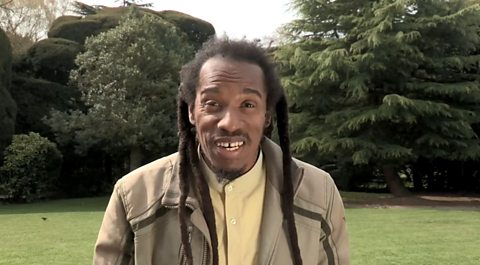
Poet and broadcaster Benjamin Zephaniah discusses the prose and poetry of Dylan Thomas, and sees how a person's background influences their work.
The magic of poetry
Benjamin Zephaniah:
I grew up thinking that poetry was something that dead, white males did. Something for the elite. But that was because of the way that poetry was presented to me.
When I started having ideas about poetry and plays, I started to say: “I could do that”. But people around me said, “Benjamin, that’s nice, but you’ve got to be a painter and decorator.” But hey, I proved them wrong.
Words are my way of expressing myself. A way of looking at my life. I write poetry to tell somebody that I’m annoyed, to tell somebody that I love them. I’ve written about dinosaurs, I’ve written poetry about my mother and I write to make people sit up and listen.
[Benjamin Zephaniah performs on stage]
“Dis poetry is like a riddim dat drops"De tongue brings a riddim dat shoots like a shot"Dis poetry is designed fe rantin"Dance hall style, big mouth chanting…”
A very special community project in Swansea took the work of Dylan Thomas and tried to inspire people to write.
Over a six-week period, the people of Townhill grew to love the work of Dylan Thomas and they put pen to paper themselves.
Some of the work they produced was incredible, even though many had never written before.
Not so long ago people were saying about me: “Lock him up and throw away the key. He’s a waste of space.”
You see, we all have a story to tell and, interestingly, the poorer people, the people who live on estates, the people who have suffered, and people who have had broken relationships – those are the people that have the most interesting stories.
So get writing. I think you can do it. Do you?
Finding your voice
My favourite Dylan Thomas poem is 'Do not go gentle into that good night'. I love its rhythms, repetitions and strong message. In this workshop I used it to inspire the Swansea group to find their own inner voices and start writing.
This mixed group from Dylan Thomas's home town of Swansea had never before written creatively, but I loved how they rose to the challenge and came up with their own versions of this great poem. Try it for yourself. Think of something you really care about and start shaping the lines.
Finding your voice
One of the poems that really connected me to Dylan Thomas is 'Do not go gentle into that good night'. This is a poem I recited to myself a lot when my father was ill.
[Benjamin Zephaniah performs on stage]
“Rage, rage against the dying of the light”
I wanted to use it to inspire some of the people from Townhill to write their own poetry, and I think they surprised themselves with the outcome.
The great thing about this poem, it’s called a villanelle, the way it rhymes. It’s a perfect example of this. And then even in the middle lines you’ve got day, they, they, way, gay… It’s amazing. Very talented.
And the other thing that he’s done, he’s used repetition without being repetitious.
Workshop participant:
It’s really strong. Really strong, even raw, you know. Really strong, powerful words.
Benjamin:
It’s a poem that is pleading. There’s a passion in there, there’s a kind of anger in there. And what I would like us to do is to now write something about something that means something to us.
Workshop participant:
OK. Mine’s called ‘Hiraeth’. It’s about Nye, who’s my grandson.
I think of you Nye, each dayI came to you Nye, at birthI hope for you Nye, the bestI’m linked with you Nye, via SkypeI’m connected to you Nye, by genesI’m loving you Nye, at homeI wish for you Nye, with meI’m proud of you Nye, in WalesI long to cwtch you Nye, today
Benjamin:
If you’re having problems getting started, take one of your favourite poems, or even a song, anything that means something to you, and use that as a starting point. Apply your life to it, your emotions, your feelings. And you will get creative. Trust me. I’m a poet.
Focus on what you see
Dylan Thomas was always inventive with words, and created a strong sense of place when describing his surroundings. He's almost painting pictures in your mind's eye.
He used different and imaginative ways to describe the sea to bring the image alive: "the tusked, ramshackled sea" (Poem on his Birthday) or "the goose plucked sea" (A Winter's Tale).
He evoked pictures of the sun in similar ways, by combining unexpected words: "the mustardseed sun" (Poem on his Birthday) or "the torrent salmon sun" (Author's Prologue).
Poet Rhian Edwards worked with me in Townhill, and led some productive workshops, encouraging the group to write about somewhere they knew well, and to focus on what they saw rather than what they felt.
Travel a path and know it well
Start by setting out your journey from your front door to school or work, and begin with a description of the day.
Imagine the journey like a flickbook of images. Create a sense of movement by repeating sentences beginning with 'past the…' Don't linger on a particular image, keep up the momentum and pace of the journey's passage.
Illustrate the interesting images you pass as visually and specifically as you can. Use concise language but think of imaginative adjectives to describe them.
Benjamin Zephaniah:
Sitting in front of a blank piece of paper can feel really daunting for any writer regardless of your experience. The poet Rhian Edwards worked with me in Swansea and led a workshop to encourage the team to write a piece of poetry about an everyday journey.
Rhian Edwards:
I’ve used an example here of one of my own poems, which describes a journey from my front door to work basically, and I’m going to then get you to do a similar thing. So from your front door to a certain destination. All the things that go past. I just want that sense of all these different images. It’s almost like a flickbook of images that occur during your journey.
So I’ll just quickly read through this, and then we’ll knuckle down to it. Does that sound cool?
So this is called, 'The City Tore Past'
Past the yawn of the housePast the wrinkle-skin brickPast the cataract window with their drape-lined eyelidsPast the past, past the present, past the pregnant day’s futurePast a city tearing past to a wheel’s revolution.
But you get that sense of pace. You get the sense of actually that pedalling in the journey.
So basically you just start every line ‘past’. That’s pretty much all it is. So write as much as you can basically. Just give sort of like five minutes. Don’t think too hard about it. Just think of all these images that kind of usually whip past you on the journey from say your front door to the Phoenix Centre, or to the social club, or whatever.
Participant:
Past the chalk written ‘Darren loves Lou for ever and ever’Past the gang road sign covered in Spider-Man stickersPast the chip shop smell which lingers and lingers…
Participant:
Past the hedges and nesting birdsPast the strewn street lightPast the glowing paint to the top of Heaven’s View…
Participant:
Past myself and my lover, hand-linked in the darkPast a hope I once had for a city long past
Rhian Edwards:
Ooh lovely. [Applause.]
Benjamin Zephaniah:
I really love the template she uses. Using the repetition of words is a great way to give a poem form, and it’s also a great way of giving a new writer a head start.
Adding colour and emotion
Writing effectively about feelings is something poet Rhian Edwards worked through with the group in Swansea. Whether it's anger, hurt or frustration, getting words on to paper can help focus thoughts on what's happening in life.
Similarly, writing about happiness or joy can be rewarding and serve as a reminder of the good times. Rhian has some good tips for writing about emotion. When you write, your raw material is your life and you want it as raw as it can be. Use your experience to get started.
Rhian Edwards on how colour, taste and texture can be invoked to describe emotions in poetry.
Adding colour and emotion
As a novice writer, reading poetry can be really daunting. You might think: ‘I could never do this.’
My fellow mentor on the Townhill project, poet Rhian Edwards, has some really good tips for breaking down a poem into different steps.
In this workshop, she’s encouraging the group to use colour, taste and texture to help describe feelings, and she gets some really powerful results.
Rhian Edwards:
So the exercise I want to set you now, I want you to use an emotion, but I want you to give that emotion a smell. I want you to give it a sound, and I want you to give it a texture and I also want you to give it a visual kind of quality as well.
So this is my example. See if you can guess what the emotion’s about.
It rusts my blood,Cadavers my skin,Sweating a smile,A jaundice-licked grin.
Hid, curled and foetal,Eyes sealed to blind…Die me a death,To deprive me of senseMaim me or sleep meLet the horror be silenced.
So it’s depression, but also…
Participant:
Is it fear?
Rhian:
Fear. Yeah.
Benjamin Zephaniah:
You could give this a go. It doesn’t have to be a long poem. Just start with a few lines and see where it gets you.
First participant:
Green-eyed bile-yellow knotsPulling ever tighter in my insidesShallowed breath whimperingSharply snarling simperingA cat about to pounceA baby bird and fluffy mouse…
Second participant:
A breath I wipe awayA breath from my own mouth as my head hangs backI wipe my face and he pads away.
Rhian Edwards:
Lovely.
Benjamin Zephaniah:
For some people, reading their poems out loud can be terrifying. For me, reading words that I’ve written is the most rewarding part.“Dis poetry is like a riddim dat drops…”
Writing your own 'selfie'
Dylan Thomas’s precise, pictorial and dynamic choice of language meant he could conjure up graphic images of people, places and moments.
In Fern Hill, he brings his childhood visits to Carmarthenshire brilliantly to life with lines such as "Time let me play and be/Golden in the mercy of his means" and "As I rode to sleep the owls were bearing the farm away".
We all have those sorts of memories inside us. The Townhill group worked hard to unearth snatches of the past and turn them into creative pieces of writing we could all relate to, and which made good theatre.
Joining up your own childhood dots
Start by thinking of an event you remember vividly from your childhood, something from your school days, a Christmas Day, a birthday party or a family reunion.
Try to nail what it is about the recollection that makes it so memorable.
Be concise but spend time finding evocative adjectives to describe the people, the location, the event.
Alternatively, you could make it a list poem, starting each verse with 'I remember', so that the stanza reads like a flickbook of visual reminiscences.
Steer clear of clichés.
Learn more
Poets in Person. collection
A selection of short films that explore six well-known contemporary poems.

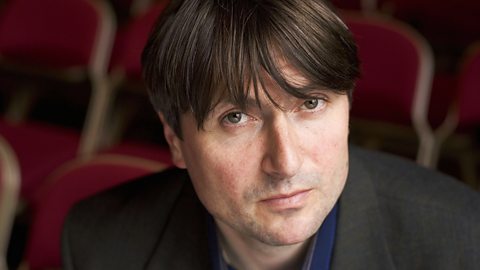
Simon Armitage - Writing Poems. collection
Over the course of six short films for teaching secondary students, Simon Armitage goes behind the scenes of some of his most famous poems.
Poetry: Between the Lines. collection
A collection of short films for teaching GCSE students presented by hip-hop star Akala, and featuring contemporary poets including Jackie Kay, Gillian Clarke and Ciaran Carson, talking about some of their best-loved poems.