Planet Planners on Roblox has been specifically designed to align to the S1, S2 and S3 Scottish Curriculum for Excellence.
Select show more to discover how the game delivers learning objectives and supports cross-curricular development.
Tectonic hazards
Volcano preparation
Approximate location: Iceland
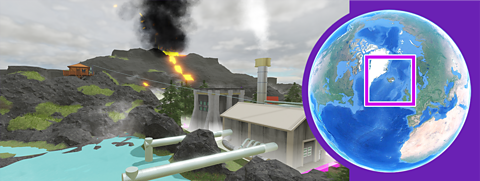
Learning objectives
- to identify the impacts of volcanic eruptions
- to make decisions about how to monitor, prepare for, and respond to volcanic eruptions
- to examine the social, economic, and environmental consequences of living close to volcanoes, including the potential benefits
Scottish Curriculum for Excellence
This scenario in Planet Planners on Roblox supports the following statements from the Scottish curriculum:
Science Focus
By investigating renewable energy sources and taking part in practical activities to harness them, students can discuss their benefits and potential problems. (SCN 3-04b)
By contributing to an investigation on different ways of meeting society’s energy needs, students can express an informed view on the risks and benefits of different energy sources, including those produced from plants. (SCN 4-04a)
Through investigation, students can explain the formation and use of fossil fuels and contribute to discussions on the responsible use and conservation of finite resources. (SCN 4-04b)
Through evaluation of a range of data, students can describe the formation, characteristics and uses of soils, minerals and basic types of rocks. (SCN 3-17a)
Students can research new developments in science and can explain how their current or future applications might impact on modern life. (SCN 4-20a)
Having selected scientific themes of topical interest, students can critically analyse the issues, and use relevant information to develop an informed argument. (SCN 4-20b)
Social studies focus
Students can discuss the sustainability of key natural resources and analyse the possible implications for human activity. (SOC 4-08a)
Students can develop their understanding of the interaction between humans and the environment by describing and assessing the impact of human activity on an area. (SOC 4-10a)
Having considered responses to a recent international crisis, Students can contribute to a discussion of the effectiveness of the responses. (SOC 3-19b)
Cross-curricular links
Literacy
- Using what I know about the features of different types of texts, I can find, select, sort, summarise, link and use information from different sources. (LIT 3-14a / LIT 4-14a)
Numeracy
I can show how quantities that are related can be increased or decreased proportionally and apply this to solve problems in everyday contexts. (MNU 3-08a)
Using proportion, I can calculate the change in one quantity caused by a change in a related quantity and solve real-life problems. (MNU 4-08a)
I can budget effectively, making use of technology and other methods, to manage money and plan for future expenses. (MNU 3-09b)
Technologies
I can explore and use the features of a range of digital technologies, integrated software and online resources to determine the most appropriate to solve problems. (TCH 3-01a)
I can select and use digital technologies to access, select relevant information and solve real world problems. (TCH 4-01a)
For detailed Teacher notes
After the earthquake
Approximate location: Indonesia
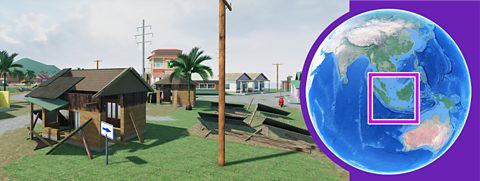
Learning objectives
- to identify the impacts of earthquakes / tsunamis
- to make decisions about how to recover from earthquakes / tsunamis
- to prioritise responses to earthquakes / tsunamis, whilst balancing the needs of people, the economy and the environment
Scottish Curriculum for Excellence
This scenario in Planet Planners on Roblox supports the following statements from the Scottish curriculum:
Science Focus
By investigating renewable energy sources and taking part in practical activities to harness them, students can discuss their benefits and potential problems. (SCN 3-04b)
By contributing to an investigation on different ways of meeting society’s energy needs, students can express an informed view on the risks and benefits of different energy sources, including those produced from plants. (SCN 4-04a)
Through investigation, students can explain the formation and use of fossil fuels and contribute to discussions on the responsible use and conservation of finite resources. (SCN 4-04b)
Through evaluation of a range of data, students can describe the formation, characteristics and uses of soils, minerals and basic types of rocks. (SCN 3-17a)
Students can research new developments in science and can explain how their current or future applications might impact on modern life. (SCN 4-20a)
Having selected scientific themes of topical interest, students can critically analyse the issues, and use relevant information to develop an informed argument. (SCN 4-20b)
Social studies focus
Students can discuss the sustainability of key natural resources and analyse the possible implications for human activity. (SOC 4-08a)
Students can develop their understanding of the interaction between humans and the environment by describing and assessing the impact of human activity on an area. (SOC 4-10a)
Having considered responses to a recent international crisis, Students can contribute to a discussion of the effectiveness of the responses. (SOC 3-19b)
Cross-curricular links
Literacy
- Using what I know about the features of different types of texts, I can find, select, sort, summarise, link and use information from different sources. (LIT 3-14a / LIT 4-14a)
Numeracy
I can show how quantities that are related can be increased or decreased proportionally and apply this to solve problems in everyday contexts. (MNU 3-08a)
Using proportion, I can calculate the change in one quantity caused by a change in a related quantity and solve real-life problems. (MNU 4-08a)
I can budget effectively, making use of technology and other methods, to manage money and plan for future expenses. (MNU 3-09b)
Technologies
I can explore and use the features of a range of digital technologies, integrated software and online resources to determine the most appropriate to solve problems. (TCH 3-01a)
I can select and use digital technologies to access, select relevant information and solve real world problems. (TCH 4-01a)
For detailed Teacher notes
Coasts
Erosion
Approximate location: United Kingdom
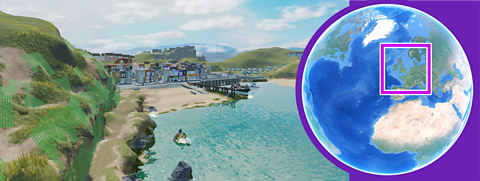
Learning objectives
- to identify physical processes along coastlines, such as erosion and longshore drift
- to make decisions about how to manage coastlines, including the use of hard and soft engineering strategies
- to examine the social, economic, and environmental impacts of decisions made along coastlines
Scottish Curriculum for Excellence
This scenario in Planet Planners on Roblox supports the following statements from the Scottish curriculum:
Science focus
Students understand how animal and plant species depend on each other and how living things are adapted for survival. They can predict the impact of population growth and natural hazards on biodiversity. (SCN 4-01a)
Through evaluation of a range of data, students can describe the formation, characteristics and uses of soils, minerals and basic types of rocks. (SCN 3-17a)
Having selected scientific themes of topical interest, students can critically analyse the issues, and use relevant information to develop an informed argument. (SCN 4-20b)
Social studies focus
Having investigated processes which form and shape landscapes, students can explain their impact on selected landscapes in Scotland, Europe and beyond. (SOC 3-07a)
Students can explain how the interaction of physical systems shaped and continue to shape the Earth’s surface by assessing their impact on contrasting landscape types. (SOC 4-07a)
Students can identify the possible consequences of an environmental issue and make informed suggestions about ways to manage the impact. (SOC 3-08a)
Students can develop my understanding of the interaction between humans and the environment by describing and assessing the impact of human activity on an area. (SOC 4-10a)
Cross-curricular links
Literacy
- Using what I know about the features of different types of texts, I can find, select, sort, summarise, link and use information from different sources. (LIT 3-14a / LIT 4-14a)
Numeracy
I can show how quantities that are related can be increased or decreased proportionally and apply this to solve problems in everyday contexts. (MNU 3-08a)
Using proportion, I can calculate the change in one quantity caused by a change in a related quantity and solve real-life problems. (MNU 4-08a)
I can budget effectively, making use of technology and other methods, to manage money and plan for future expenses. (MNU 3-09b)
Technology
I can explore and use the features of a range of digital technologies, integrated software and online resources to determine the most appropriate to solve problems. (TCH 3-01a)
I can select and use digital technologies to access, select relevant information and solve real world problems. (TCH 4-01a)
For detailed Teacher notes
Nature and tourism
Approximate location: Central America
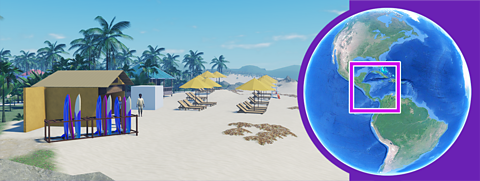
Learning objectives
- to identify physical and human processes along coastlines, such as tourism and the formation of coastal habitats
- to make decisions about how to manage coastlines, including the provision of facilities for tourists and the protection of environments and habitats
- to examine the social, economic, and environmental impacts of decisions made along coastlines
Scottish Curriculum for Excellence
This scenario in Planet Planners on Roblox supports the following statements from the Scottish curriculum:
Science focus
Students understand how animal and plant species depend on each other and how living things are adapted for survival. They can predict the impact of population growth and natural hazards on biodiversity. (SCN 4-01a)
Through evaluation of a range of data, students can describe the formation, characteristics and uses of soils, minerals and basic types of rocks. (SCN 3-17a)
Having selected scientific themes of topical interest, students can critically analyse the issues, and use relevant information to develop an informed argument. (SCN 4-20b)
Social studies focus
Having investigated processes which form and shape landscapes, students can explain their impact on selected landscapes in Scotland, Europe and beyond. (SOC 3-07a)
Students can explain how the interaction of physical systems shaped and continue to shape the Earth’s surface by assessing their impact on contrasting landscape types. (SOC 4-07a)
Students can identify the possible consequences of an environmental issue and make informed suggestions about ways to manage the impact. (SOC 3-08a)
Students can develop my understanding of the interaction between humans and the environment by describing and assessing the impact of human activity on an area. (SOC 4-10a)
Cross-curricular links
Literacy
- Using what I know about the features of different types of texts, I can find, select, sort, summarise, link and use information from different sources. (LIT 3-14a / LIT 4-14a)
Numeracy
I can show how quantities that are related can be increased or decreased proportionally and apply this to solve problems in everyday contexts. (MNU 3-08a)
Using proportion, I can calculate the change in one quantity caused by a change in a related quantity and solve real-life problems. (MNU 4-08a)
I can budget effectively, making use of technology and other methods, to manage money and plan for future expenses. (MNU 3-09b)
Technology
I can explore and use the features of a range of digital technologies, integrated software and online resources to determine the most appropriate to solve problems. (TCH 3-01a)
I can select and use digital technologies to access, select relevant information and solve real world problems. (TCH 4-01a)
For detailed Teacher notes
Urbanisation
Managing high-income country (HIC) cities
Approximate location: Northern Europe
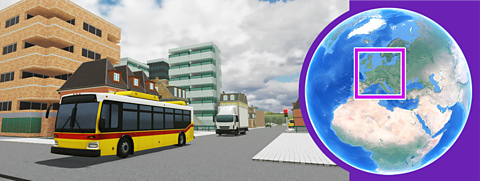
Learning objectives
- to identify some of the key challenges in HIC cities
- to make decisions about how to manage challenges in HIC cities
- to evaluate the social, economic, and environmental impacts of decisions made in cities in HICs
Scottish Curriculum for Excellence
This scenario in Planet Planners on Roblox supports the following statements from the Scottish curriculum:
Science focus
Students understand how animal and plant species depend on each other and how living things are adapted for survival. Students can predict the impact of population growth and natural hazards on biodiversity. (SCN 4-01a)
Having selected scientific themes of topical interest, students can critically analyse the issues, and use relevant information to develop an informed argument. (SCN 4-20b)
Social studies
Students can identify the possible consequences of an environmental issue and make informed suggestions about ways to manage the impact. (SOC 3-08a)
Students can discuss the sustainability of key natural resources and analyse the possible implications for human activity. (SOC 4-08a)
Students can assess the impact of developments in transport infrastructure in a selected area and can contribute to a discussion on the development of sustainable systems. (SOC 4-09b)
Students can develop their understanding of the interaction between humans and the environment by describing and assessing the impact of human activity on an area. (SOC 4-10a)
Students can explain the development of the main features of an urban area in Scotland or elsewhere and can evaluate the implications for the society concerned. (SOC 4-10b)
Having studied an economic activity, students can explain its development and assess the impact of change within its locality and beyond. (SOC 4-10c)
Cross-curricular links
Literacy
- Using what I know about the features of different types of texts, I can find, select, sort, summarise, link and use information from different sources. (LIT 3-14a / LIT 4-14a)
Numeracy
I can show how quantities that are related can be increased or decreased proportionally and apply this to solve problems in everyday contexts. (MNU 3-08a)
Using proportion, I can calculate the change in one quantity caused by a change in a related quantity and solve real-life problems. (MNU 4-08a)
I can budget effectively, making use of technology and other methods, to manage money and plan for future expenses. (MNU 3-09b)
Technology
I can explore and use the features of a range of digital technologies, integrated software and online resources to determine the most appropriate to solve problems. (TCH 3-01a)
I can select and use digital technologies to access, select relevant information and solve real world problems. (TCH 4-01a)
For detailed Teacher notes
Environmental consequences
Approximate location: Central Africa
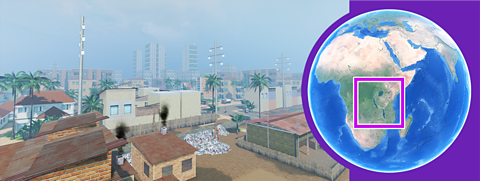
Learning objectives
- to identify the causes and effects of urbanisation in low-income countries (LICs)
- to identify social, economic, and environmental challenges in LIC cities
- to make decisions about how to manage the growth of cities and how to improve conditions for those living in informal settlements in LICs
Scottish Curriculum for Excellence
This scenario in Planet Planners on Roblox supports the following statements from the Scottish curriculum:
Science focus
Students understand how animal and plant species depend on each other and how living things are adapted for survival. Students can predict the impact of population growth and natural hazards on biodiversity. (SCN 4-01a)
Students can explore how the body defends itself against disease and can describe how vaccines can provide protection. (SCN 3-13c)
Having selected scientific themes of topical interest, students can critically analyse the issues, and use relevant information to develop an informed argument. (SCN 4-20b)
Social studies
Students can identify the possible consequences of an environmental issue and make informed suggestions about ways to manage the impact. (SOC 3-08a)
Students can discuss the sustainability of key natural resources and analyse the possible implications for human activity. (SOC 4-08a)
Students can assess the impact of developments in transport infrastructure in a selected area and can contribute to a discussion on the development of sustainable systems. (SOC 4-09b)
Students can develop their understanding of the interaction between humans and the environment by describing and assessing the impact of human activity on an area. (SOC 4-10a)
Students can explain the development of the main features of an urban area in Scotland or elsewhere and can evaluate the implications for the society concerned. (SOC 4-10b)
Having studied an economic activity, students can explain its development and assess the impact of change within its locality and beyond. (SOC 4-10c)
Cross-curricular links
Literacy
- Using what I know about the features of different types of texts, I can find, select, sort, summarise, link and use information from different sources. (LIT 3-14a / LIT 4-14a)
Numeracy
I can show how quantities that are related can be increased or decreased proportionally and apply this to solve problems in everyday contexts. (MNU 3-08a)
Using proportion, I can calculate the change in one quantity caused by a change in a related quantity and solve real-life problems. (MNU 4-08a)
I can budget effectively, making use of technology and other methods, to manage money and plan for future expenses. (MNU 3-09b)
Technology
I can explore and use the features of a range of digital technologies, integrated software and online resources to determine the most appropriate to solve problems. (TCH 3-01a)
I can select and use digital technologies to access, select relevant information and solve real world problems. (TCH 4-01a)
For detailed Teacher notes
Weather and climate
Extreme weather
Approximate location: Southern USA
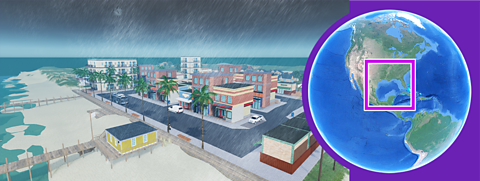
Learning objectives
- to understand how climate change is leading to an increased frequency of extreme weather events
- to examine the social, economic, and environmental impacts of extreme weather events
- to make decisions about how to prepare for, and respond to, extreme weather events
Scottish National Curriculum for Excellence
This scenario in Planet Planners supports the following statements from the Scottish curriculum:
Science focus
Students understand how animal and plant species depend on each other and how living things are adapted for survival. Students can predict the impact of population growth and natural hazards on biodiversity. (SCN 4-01a)
By investigating renewable energy sources and taking part in practical activities to harness them, I can discuss their benefits and potential problems. (SCN 3-04b)
By contributing to an investigation on different ways of meeting society’s energy needs, students can express an informed view on the risks and benefits of different energy sources, including those produced from plants. (SCN 4-04a)
Through investigation, students can explain the formation and use of fossil fuels and contribute to discussions on the responsible use and conservation of finite resources. (SCN 4-04b)
Students can explain some of the processes which contribute to climate change and discuss the possible impact of atmospheric change on the survival of living things. (SCN 3-05b)
Through exploring the carbon cycle, students can describe the processes involved in maintaining the balance of gases in the air, considering causes and implications of changes in the balance. (SCN 4-05b)
Students can explore how different materials can be derived from crude oil and their uses. Students can explain the importance of carbon compounds in our lives. (SCN 4-17a)
Having selected scientific themes of topical interest, students can critically analyse the issues, and use relevant information to develop an informed argument. (SCN 4-20b)
Social studies focus
Students can discuss the sustainability of key natural resources and analyse the possible implications for human activity. (SOC 4-08a)
Students can develop their understanding of the interaction between humans and the environment by describing and assessing the impact of human activity on an area. (SOC 4-10a)
Students can identify threats facing the main climate zones, including climate change, and analyse how these threats impact on the way of life. (SOC 4-12a)
Students can carry out a geographical enquiry to assess the impact and possible outcomes of climate change on a selected region and can propose strategies to slow or reverse the impact. (SOC 4-12b)
Cross-curricular links
Literacy
- Using what I know about the features of different types of texts, I can find, select, sort, summarise, link and use information from different sources. (LIT 3-14a / LIT 4-14a)
Numeracy
I can show how quantities that are related can be increased or decreased proportionally and apply this to solve problems in everyday contexts.(MNU 3-08a)
Using proportion, I can calculate the change in one quantity caused by a change in a related quantity and solve real-life problems. (MNU 4-08a)
I can budget effectively, making use of technology and other methods, to manage money and plan for future expenses. (MNU 3-0a)
Technology
I can explore and use the features of a range of digital technologies, integrated software and online resources to determine the most appropriate to solve problems. (TCH 3-01a)
I can select and use digital technologies to access, select relevant information and solve real world problems. (TCH 4-01a)
Low-income country (LIC) climate change
Approximate location: Bay of Bengal
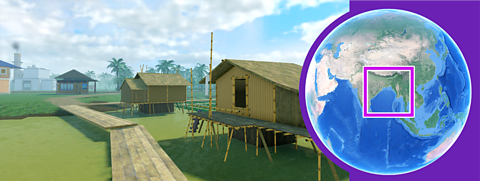
Learning objectives
- to identify the factors contributing to climate change in LICs
- to make decisions about adapting to climate change in LICs
- to examine strategies for mitigating climate change in LICs
Scottish National Curriculum for Excellence
This scenario in Planet Planners supports the following statements from the Scottish curriculum:
Science focus
Students understand how animal and plant species depend on each other and how living things are adapted for survival. Students can predict the impact of population growth and natural hazards on biodiversity. (SCN 4-01a)
By investigating renewable energy sources and taking part in practical activities to harness them, I can discuss their benefits and potential problems. (SCN 3-04b)
By contributing to an investigation on different ways of meeting society’s energy needs, students can express an informed view on the risks and benefits of different energy sources, including those produced from plants. (SCN 4-04a)
Through investigation, students can explain the formation and use of fossil fuels and contribute to discussions on the responsible use and conservation of finite resources. (SCN 4-04b)
Students can explain some of the processes which contribute to climate change and discuss the possible impact of atmospheric change on the survival of living things. (SCN 3-05b)
Through exploring the carbon cycle, students can describe the processes involved in maintaining the balance of gases in the air, considering causes and implications of changes in the balance. (SCN 4-05b)
Students can explore how different materials can be derived from crude oil and their uses. Students can explain the importance of carbon compounds in our lives. (SCN 4-17a)
Having selected scientific themes of topical interest, students can critically analyse the issues, and use relevant information to develop an informed argument. (SCN 4-20b)
Social studies focus
Students can discuss the sustainability of key natural resources and analyse the possible implications for human activity. (SOC 4-08a)
Students can develop their understanding of the interaction between humans and the environment by describing and assessing the impact of human activity on an area. (SOC 4-10a)
Students can identify threats facing the main climate zones, including climate change, and analyse how these threats impact on the way of life. (SOC 4-12a)
Students can carry out a geographical enquiry to assess the impact and possible outcomes of climate change on a selected region and can propose strategies to slow or reverse the impact. (SOC 4-12b)
Cross-curricular links
Literacy
- Using what I know about the features of different types of texts, I can find, select, sort, summarise, link and use information from different sources. (LIT 3-14a / LIT 4-14a)
Numeracy
I can show how quantities that are related can be increased or decreased proportionally and apply this to solve problems in everyday contexts.(MNU 3-08a)
Using proportion, I can calculate the change in one quantity caused by a change in a related quantity and solve real-life problems. (MNU 4-08a)
I can budget effectively, making use of technology and other methods, to manage money and plan for future expenses. (MNU 3-0a)
Technology
I can explore and use the features of a range of digital technologies, integrated software and online resources to determine the most appropriate to solve problems. (TCH 3-01a)
I can select and use digital technologies to access, select relevant information and solve real world problems. (TCH 4-01a)
Population and migration
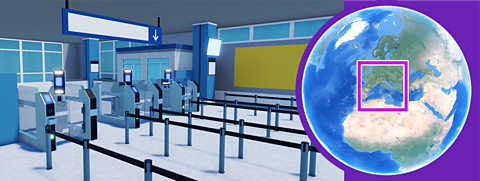
Increasing immigration
Approximate location: Central/ Southern Europe
Learning objectives
- to identify the reasons why people migrate
- to make decisions about immigration
- to examine the impacts of immigration on people, the economy and the environment
Scottish Curriculum for Excellence
This scenario in Planet Planners on Roblox supports the following statements from the Scottish curriculum:
Science focus
- Students can critically analyse the issues and use relevant information to develop an informed argument. (SCN 4-20b)
Social studies focus
- Students can develop my understanding of the interaction between humans and the environment by describing and assessing the impact of human activity on an area.(SOC 4-10a)
Cross-curricular links
Literacy
- Students can find, select, sort, summarise, link and use information from different sources. (LIT 3-14a/ LIT 4-14a)
Numeracy
Students can show how quantities that are related can be increased or decreased proportionally and apply this to solve problems in everyday contexts. (MNU 3-08a)
Using proportion, students can calculate the change in one quantity caused by a change in a related quantity and solve real-life problems. (MNU 4-08a)
Students can budget effectively, making use of technology and other methods, to manage money and plan for future expenses. (MNU 3-09b)
Technology
Students can explore and use the features of a range of digital technologies, integrated software and online resources to determine the most appropriate to solve problems. (TCH 3-01a)
Students can select and use digital technologies to access, select relevant information and solve real world problems. (TCH 4-01a)
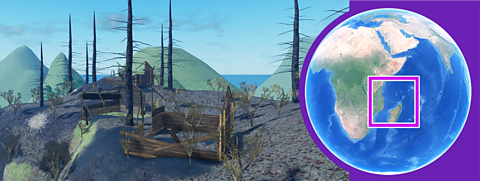
Dealing with emigration
Approximate location: Madagascar
Learning objectives
- to identify the causes of emigration from LICs
- to examine the social, economic, and environmental impacts of emigration on LICs
- to make decisions about how to manage emigration in LICs
Scottish Curriculum for Excellence
This scenario in Planet Planners on Roblox supports the following statements from the Scottish curriculum:
Science focus
- Students can critically analyse the issues and use relevant information to develop an informed argument. (SCN 4-20b)
Social studies focus
- Students can develop my understanding of the interaction between humans and the environment by describing and assessing the impact of human activity on an area.(SOC 4-10a)
Cross-curricular links
Literacy
- Students can find, select, sort, summarise, link and use information from different sources. (LIT 3-14a/ LIT 4-14a)
Numeracy
Students can show how quantities that are related can be increased or decreased proportionally and apply this to solve problems in everyday contexts. (MNU 3-08a)
Using proportion, students can calculate the change in one quantity caused by a change in a related quantity and solve real-life problems. (MNU 4-08a)
Students can budget effectively, making use of technology and other methods, to manage money and plan for future expenses. (MNU 3-09b)
Technology
Students can explore and use the features of a range of digital technologies, integrated software and online resources to determine the most appropriate to solve problems. (TCH 3-01a)
Students can select and use digital technologies to access, select relevant information and solve real world problems. (TCH 4-01a)
Food and water
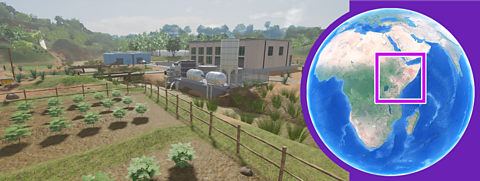
Producing food
Approximate location: East Africa
Learning objectives
- to identify the challenges of food distribution in LICs, including issues related to infrastructure and transportation
- to make decisions about strategies to address and combat food insecurity in LICs
- to examine the political, economic and human costs associated with food insecurity in LICs
Scottish Curriculum for Excellence
Science focus
Through investigations and based on experimental evidence, students can explain the use of different types of chemicals in agriculture and their alternatives and can evaluate their potential impact on the world’s food production (SCN 3-03a)
Students can research new developments in science and can explain how their current or future applications might impact on modern life (SCN 4-20a)
Having selected scientific themes of topical interest, students can critically analyse the issues, and use relevant information to develop an informed argument (SCN 4-20b)
Social studies focus
Students can discuss the sustainability of key natural resources and analyse the possible implications for human activity (SOC 4-08a)
Having evaluated the role of agriculture in the production of food and raw material, students can draw reasoned conclusions about the environmental impacts and sustainability (SOC 4-09a)
Students can develop my understanding of the interaction between humans and the environment by describing and assessing the impact of human activity on an area (SOC 4-10a)
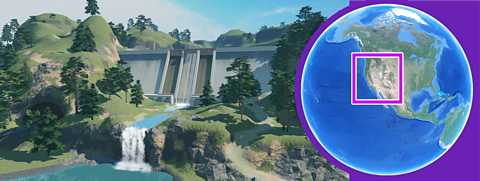
Conserving water
Approximate location: Western USA
Learning objectives
- to identify short- and long-term variability of water sources in HICs
- to make decisions about securing water supplies for domestic, agricultural and industrial uses
- to examine the causes, effects and solutions to water pollution in HICs
Scottish Curriculum for Excellence
Science focus
Through investigations and based on experimental evidence, students can explain the use of different types of chemicals in agriculture and their alternatives and can evaluate their potential impact on the world’s food production (SCN 3-03a)
Students can research new developments in science and can explain how their current or future applications might impact on modern life (SCN 4-20a)
Having selected scientific themes of topical interest, students can critically analyse the issues, and use relevant information to develop an informed argument (SCN 4-20b)
Social studies focus
Students can discuss the sustainability of key natural resources and analyse the possible implications for human activity (SOC 4-08a)
Having evaluated the role of agriculture in the production of food and raw material, students can draw reasoned conclusions about the environmental impacts and sustainability (SOC 4-09a)
Students can develop my understanding of the interaction between humans and the environment by describing and assessing the impact of human activity on an area (SOC 4-10a)
