Themes
Compassion; empathy; kindness; helping others.
Summary
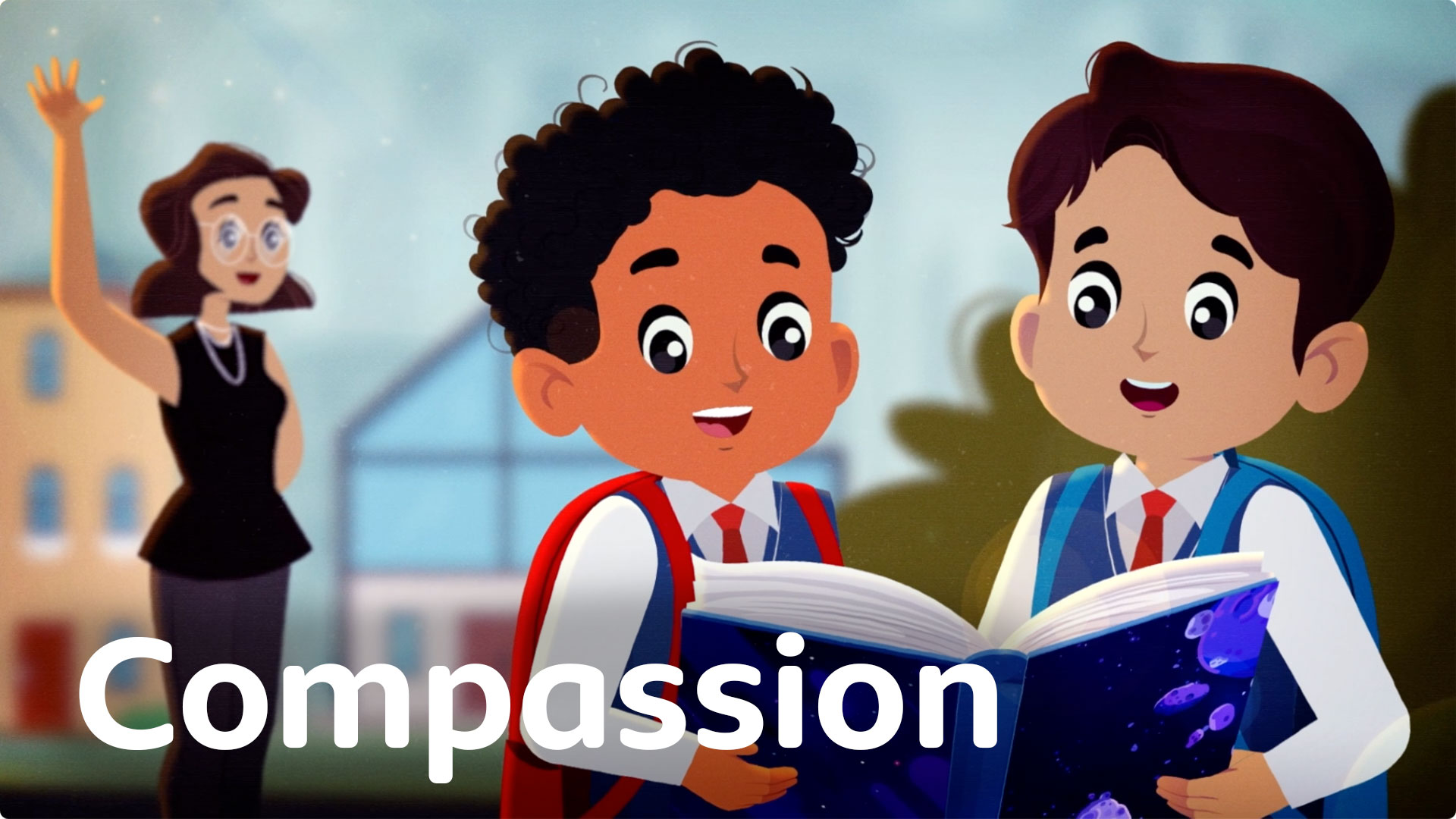
This assembly framework for primary schools uses a short video to consider the theme of compassion – it is part of a collection celebrating 'school values'. Pupils will reflect on the importance of kindness, understanding, and supporting others.
The video
Rhys:
Having compassion means we care about others, show kindness, and help people in need. It's important that we consider the feelings of the people around us and treat them with understanding. Have you ever shown compassion?
Child 1:
I felt compassion when I helped my friend when they fell over.
Child 2:
I'm compassionate to my sister when she needs my support.
Child 3:
The time I had compassion was when I gave all my old toys away to the charity.
Child 4:
I showed compassion when I have a lonely friend and I talk to them.
Child 5:
I've shown compassion when I donated money to charity.
Child 6:
I showed compassion for my little sister when she was upset by making silly faces to cheer her up.
Child 7:
I've been compassionate when my friend has hurt himself in football and I tried really hard to help him and sort him out.
Child 8:
I have compassion when I help my mum.
Rhys:
Those are all great ways to show compassion. Everybody has days when they're feeling sad or upset. When you're compassionate, you can understand how people feel when they're having a tough time. Put yourself in their shoes and think, 'How would I like to be treated if I were them?' By thinking about how others feel and understanding, we can support them better. Like this story of Amrit and Isaac.
Child VO:
I'm Amrit. I love school. Today we're doing a weather experiment in the playground, and in the afternoon we have P.E.! That's Isaac, he's in my class. Sometimes, he gets a bit worried about going to school, but he really likes the solar system! I can't wait for school today! We're making models of Viking longships from recycling and then we're going to test them to see if they float! It's gonna be… Isaac wasn't happy in school that day, I was worried about him. So, I looked for him the next morning. Hi Isaac! I like your lunchbox. I thought you might be interested in this? I'm looking forward to school today. I'm glad that Isaac will be there too.
Rhys:
By showing compassion like Amrit did for Isaac, we can build friendships and show others that we care about them. Compassion makes the world a kinder place. Conor knows just how important it is to look after our mental health and has even started his own charity. Conor thinks being compassionate is a superpower.
Conor:
Hi, I'm Conor and I run a charity that focuses on having conversations around mental health, run by young people for young people. I think compassion is a superpower because it keeps us connected and it helps us to understand our own emotions better. Both things help to improve our overall mental wellbeing. Compassion is really important to me, especially when helping a friend.
When my best friend's grandad passed away, I went to her house and took her some ice cream, and sat with her while she was sad. I listened to her and then I was there for her, and that can make a big difference when someone is upset. It's in moments like these that people might need compassion the most. If you notice a friend is quieter than usual or not their normal selves, why don't you reach out to them and show support? Listen to them and let them know you're there for them.
When someone is compassionate towards you, it makes you feel grateful and reminds you that you're never alone. Compassion keeps us all connected, it helps us to relate better to our friends and families. Compassion is such a big part of being human.
Rhys:
Even the smallest acts of compassion can make a big difference. Remember, you have the power to make the world a kinder place! How could you be compassionate to someone else today?
Video summary
Presenter Rhys Stephenson defines the theme of compassion and asks children to consider the word’s meaning, followed by a group of children describing what it means to them.
Rhys expands on those ideas and a short animation provides an example with a story about Isaac and his friend Amrit, who is anxious about going to school.
Rhys then provides some practical advice and introduces Conor Warren, who runs a charity that focuses on having conversations about mental health, and believes compassion is a superpower.
Resources
Assembly framework (PDF) document
A suggested framework to download/print
Image: Compassion. image
Click to display the image full-size
Suggested assembly framework
1. As the pupils enter
Play your chosen music – perhaps from this collection of songs to support assemblies and Collective Worship, each with lyrics on screen and backing tracks.
2. Introduction
Engaging question:
"What does it mean to care about someone else? Can you think of a time when someone was kind to you, or when you showed kindness to someone else?"
Set the scene:
Explain that today’s assembly will focus on compassion—why it matters, how it helps others, and how it makes us better friends, classmates, and family members.
Link to National Curriculum:
Highlight connections to:
- PSHE: Building positive relationships through kindness and empathy.
- English: Developing reflective speaking and writing skills.
- Art: Exploring values like compassion through creative expression.
- RE: Understanding compassion as a shared value in different cultures and faiths.
3. The video
You may choose to watch the video either in its entirety or in sections with pauses to allow you to personalise the assembly as you go.
Play the video and encourage pupils to watch for:
- How the characters demonstrate compassion and care for others.
- The positive impact of their actions.
- The challenges they face in showing kindness.
- What pupils take away from hearing the real-life stories of developing compassion.
Pause the video at 00:56 and ask pupils to consider a time they have shown compassion to someone else or when someone has shown them compassion.
Resume the video and pause at 02:14 to discuss Isaac’s story:
- What acts of compassion did you notice in the film?
- How did Isaac show compassion?
- How did these acts help Amrit to feel better or more included?
- Why do you think showing compassion is important in our school and community?
Resume the video until the end and discuss discuss Conor’s story. How does his work support other young people and what kind of difference do you think it makes?
- Why does Conor think compassion is important?
- How can we show compassion to others, even when it’s not always easy?
- Why does Conor think listening is important when showing compassion?
This is an opportunity to introduce someone from your own school community who has a story that demonstrates the value of Compassion.
4. After the video – time to talk
Key questions for reflection:
- What acts of compassion did you notice in the film?
- How did Isaac show compassion?
- How did these acts help Amrit to feel better or more included?
- Why do you think showing compassion is important in our school and community?
- Why does Conor think compassion is important?
- How can we show compassion to others, even when it’s not always easy?
- Why does Conor think listening is important when showing compassion?
Interactive activity:
Use a ‘think, pair, share’ format:
- Think: Pupils reflect individually.
- Pair: Discuss their thoughts with a partner.
- Share: Invite pairs to share their insights with the assembly.
Reinforce compassion themes:
Compassion means understanding how others feel and taking action to help.
Encourage kindness:
Highlight that even small acts of care can make a big difference in someone’s life.
Connect to PSHE:
Discuss how compassion helps us build stronger, happier relationships, supporting the objectives of Relationships Education.
5. Opportunity for reflection/prayer
Ask each pupil to set a "Compassion Goal" for the week, such as:
- Helping a friend who seems upset.
- Being patient and kind during group work.
- Saying thank you to someone who helps them.
End the session with a positive phrase that emphasises the value of compassion, such as:
"Compassion is a gift we can give every day. When we care for others, we help make our school and the world a kinder, better place."
More assemblies based around primary school values
Confidence. video
An assembly framework and video exploring the theme of confidence. Pupils will learn how belief in themselves, encouragement, and perseverance can help overcome challenges.

Courage. video
An assembly and short video exploring the theme of courage. Pupils will reflect on what it means to face fears, overcome challenges, and support others in their moments of bravery.

Commitment. video
An assembly framework and short video exploring the theme of commitment. Pupils will learn how dedication, focus, and perseverance help achieve goals, even when faced with challenges.

Teamwork. video
An assembly framework and short film exploring the theme of teamwork. Pupils will reflect on the importance of working collaboratively to achieve shared goals and understand the value of everyone’s contribution to the group.

Friendship. video
An assembly framework and short film exploring the theme of friendship. Pupils will reflect on the qualities of good friends, how to build strong relationships, and how friendships can help us navigate challenges.