Planet Planners on Roblox has been specifically designed to align to the KS3 Geography curriculum in England.
Select show more to discover how the game delivers KS3 learning objectives and supports cross-curricular development.
Tectonic hazards
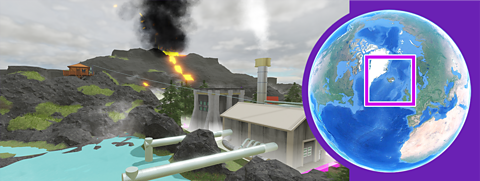
Volcano preparation
Approximate location: Iceland
Learning objectives
- to identify the impacts of volcanic eruptions
- to make decisions about how to monitor, prepare for, and respond to volcanic eruptions
- to examine the social, economic, and environmental consequences of living close to volcanoes, including the potential benefits
English National Curriculum focus - Human and physical geography
Understand the key processes in:
- physical geography relating to: plate tectonics
- human geography relating to: international development
Understand how human and physical processes interact to influence, and change landscapes and environments
Cross-curricular links (KS3 English National Curriculum)
- English: Reading - Pupils should be taught to understand increasingly challenging texts through learning new vocabulary.
- Maths: Number - Pupils should be taught to use standard units of mass, length, time, money and other measures, including with decimal quantities.
- Science: Chemistry - Pupils should be taught about the composition of the Earth (and) the structure of the Earth.
- Citizenship: Pupils should be taught about the functions and uses of money, the importance and practice of budgeting, and managing risk.
For detailed Teacher notes
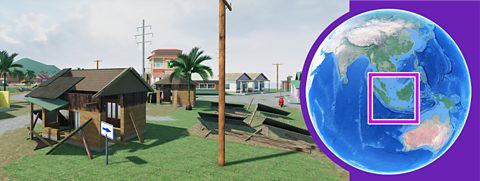
After the earthquake
Approximate location: Indonesia
Learning objectives
- to identify the impacts of earthquakes/tsunamis
- to make decisions about how to recover from earthquakes/tsunamis
- to prioritise responses to earthquakes/tsunamis, whilst balancing the needs of people, the economy and the environment
English National Curriculum focus - Human and physical geography
Understand the key processes in:
- physical geography relating to: plate tectonics
- human geography relating to: international development
Understand how human and physical processes interact to influence, and change landscapes and environments
Cross-curricular links (KS3 English National Curriculum)
- English: Reading - Pupils should be taught to understand increasingly challenging texts through learning new vocabulary.
- Maths: Number - Pupils should be taught to use standard units of mass, length, time, money and other measures, including with decimal quantities.
- Science: Chemistry - Pupils should be taught about the composition of the Earth (and) the structure of the Earth.
- Citizenship: Pupils should be taught about the functions and uses of money, the importance and practice of budgeting, and managing risk.
For detailed Teacher notes
Coasts
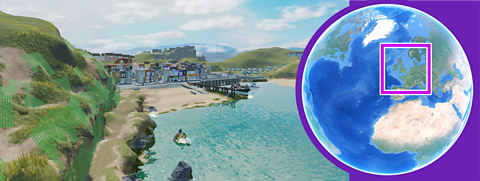
Erosion
Approximate location: United Kingdom
Learning objectives
- to identify physical processes along coastlines, such as erosion and longshore drift
- to make decisions about how to manage coastlines, including the use of hard and soft engineering strategies
- to examine the social, economic, and environmental impacts of decisions made along coastlines
English National Curriculum Focus: Human and physical geography
Understand the key processes in:
- physical geography relating to: coasts
- human geography relating to: economic activity in the primary and tertiary sectors and the use of natural resources
Understand how human and physical processes interact to influence and change landscapes and environments
Cross-curricular links (KS3 English National Curriculum)
- English: Reading - Pupils should be taught to understand increasingly challenging texts through learning new vocabulary.
- Maths: Number - Pupils should be taught to use standard units of mass, length, time, money and other measures, including with decimal quantities.
- Science: Biology - Pupils should be taught about the interdependence of organisms in an ecosystem, including food webs and insect pollinated crops (and) how organisms affect, and are affected by, their environment, including the accumulation of toxic materials.
- Citizenship: Pupils should be taught about the functions and uses of money, the importance and practice of budgeting, and managing risk.
For detailed Teacher notes
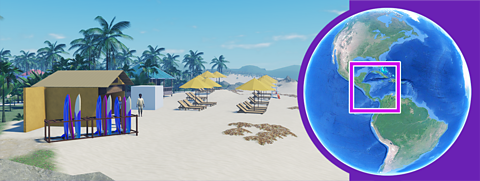
Nature and tourism
Approximate location: Central America
Learning objectives
- to identify physical and human processes along coastlines, such as tourism and the formation of coastal habitats
- to make decisions about how to manage coastlines, including the provision of facilities for tourists and the protection of environments and habitats
- to examine the social, economic, and environmental impacts of decisions made along coastlines
English National Curriculum Focus: Human and physical geography
Understand the key processes in:
- physical geography relating to: coasts
- human geography relating to: economic activity in the primary and tertiary sectors and the use of natural resources
Understand how human and physical processes interact to influence and change landscapes and environments
Cross-curricular links (KS3 English National Curriculum)
- English: Reading - Pupils should be taught to understand increasingly challenging texts through learning new vocabulary.
- Maths: Number - Pupils should be taught to use standard units of mass, length, time, money and other measures, including with decimal quantities.
- Science: Biology - Pupils should be taught about the interdependence of organisms in an ecosystem, including food webs and insect pollinated crops (and) how organisms affect, and are affected by, their environment, including the accumulation of toxic materials.
- Citizenship: Pupils should be taught about the functions and uses of money, the importance and practice of budgeting, and managing risk.
For detailed Teacher notes
Urbanisation
Managing high-income country (HIC) cities
Approximate location: Northern Europe
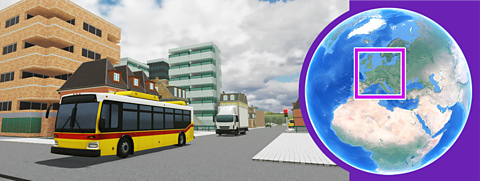
Learning objectives
- to identify some of the key challenges in HIC cities
- to make decisions about how to manage challenges in HIC cities
- to evaluate the social, economic, and environmental impacts of decisions made in cities in HICs
English National Curriculum focus: Human and physical geography
Understand the key processes in:
- human geography relating to: population and urbanisation; international development; economic activity in the primary, secondary, tertiary and quaternary sectors; and the use of natural resources
Understand how human and physical processes interact to influence, and change landscapes and environments; and how human activity relies on effective functioning of natural systems
Cross-curricular links (KS3 English National Curriculum)
- English: Reading - Pupils should be taught to understand increasingly challenging texts through learning new vocabulary.
- Maths: Number - Pupils should be taught to use standard units of mass, length, time, money and other measures, including with decimal quantities.
- Citizenship: Pupils should be taught about the functions and uses of money, the importance and practice of budgeting, and managing risk.
- Computing: Pupils should be taught to use computational abstractions that model the state and behaviour of real-world problems and physical systems
For detailed Teacher notes
Environmental consequences
Approximate location: Central Africa
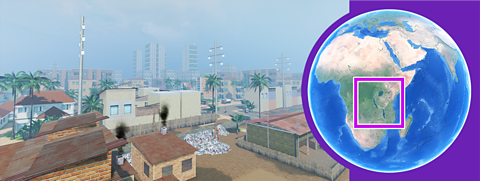
Learning objectives
- to identify the causes and effects of urbanisation in low-income countries (LICs)
- to identify social, economic, and environmental challenges in LIC cities
- to make decisions about how to manage the growth of cities and how to improve conditions for those living in informal settlements in LICs
English National Curriculum focus: Human and physical geography
Understand the key processes in:
- human geography relating to: population and urbanisation; international development; economic activity in the primary, secondary, tertiary and quaternary sectors; and the use of natural resources
Understand how human and physical processes interact to influence, and change landscapes and environments; and how human activity relies on effective functioning of natural systems
Cross-curricular links (KS3 English National Curriculum)
- English: Reading - Pupils should be taught to understand increasingly challenging texts through learning new vocabulary.
- Maths: Number - Pupils should be taught to use standard units of mass, length, time, money and other measures, including with decimal quantities.
- Citizenship: Pupils should be taught about the functions and uses of money, the importance and practice of budgeting, and managing risk.
- Computing: Pupils should be taught to use computational abstractions that model the state and behaviour of real-world problems and physical systems
For detailed Teacher notes
Weather and climate
Extreme weather
Approximate location: Southern USA
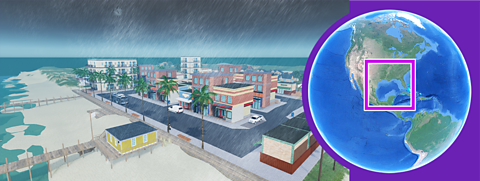
Learning objectives
- to understand how climate change is leading to an increased frequency of extreme weather events
- to examine the social, economic, and environmental impacts of extreme weather events
- to make decisions about how to prepare for, and respond to, extreme weather events
England National Curriculum focus: Human and physical geography
Understand the key processes in:
- physical geography relating to: weather and climate, including the change in climate from the Ice Age to the present
- human geography relating to: the use of natural resources
Understand how human and physical processes interact to influence, and change landscapes and environments; and how human activity relies on effective functioning of natural systems
Cross-curricular links (KS3 English National Curriculum)
- English: Reading - Pupils should be taught to understand increasingly challenging texts through learning new vocabulary.
- Maths: Number - Pupils should be taught to use standard units of mass, length, time, money and other measures, including with decimal quantities.
- Science: Chemistry - Pupils should be taught about the carbon cycle (and) the composition of the atmosphere (and) the production of carbon dioxide by human activity and the impact on climate.
- Citizenship: Pupils should be taught about the functions and uses of money, the importance and practice of budgeting, and managing risk.
- Computing: Pupils should be taught to use computational abstractions that model the state and behaviour of real-world problems and physical systems.
Low-income country (LIC) climate change
Approximate location: Bay of Bengal
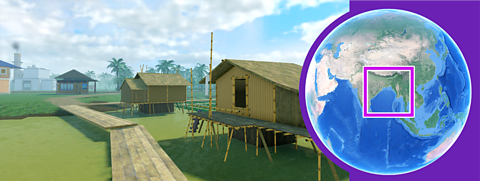
Learning objectives
- to identify the factors contributing to climate change in LICs
- to make decisions about adapting to climate change in LICs
- to examine strategies for mitigating climate change in LICs
England National Curriculum focus: Human and physical geography
Understand the key processes in:
- physical geography relating to: weather and climate, including the change in climate from the Ice Age to the present
- human geography relating to: the use of natural resources
Understand how human and physical processes interact to influence, and change landscapes and environments; and how human activity relies on effective functioning of natural systems
Cross-curricular links (KS3 English National Curriculum)
- English: Reading - Pupils should be taught to understand increasingly challenging texts through learning new vocabulary.
- Maths: Number - Pupils should be taught to use standard units of mass, length, time, money and other measures, including with decimal quantities.
- Science: Chemistry - Pupils should be taught about the carbon cycle (and) the composition of the atmosphere (and) the production of carbon dioxide by human activity and the impact on climate.
- Citizenship: Pupils should be taught about the functions and uses of money, the importance and practice of budgeting, and managing risk.
- Computing: Pupils should be taught to use computational abstractions that model the state and behaviour of real-world problems and physical systems.
Population and migration
Increasing immigration
Approximate location: Central/ Southern Europe
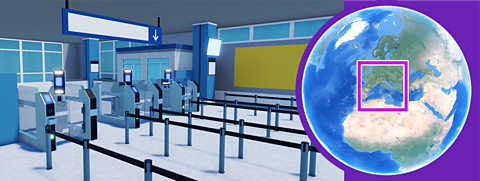
Learning objectives
- to identify the reasons why people migrate
- to make decisions about immigration
- to examine the impacts of immigration on people, the economy and the environment
English National Curriculum focus - Human and physical geography
- Understand the key processes in:
- human geography relating to: population and urbanisation, international development
Cross-curricular links (KS3 English National Curriculum)
English: Reading - Pupils should be taught to understand increasingly challenging texts through learning new vocabulary.
Maths: Number - Pupils should be taught to use standard units of mass, length, time, money and other measures, including with decimal quantities.
Citizenship: Pupils should be taught about the functions and uses of money, the importance and practice of budgeting, and managing risk.
Computing: Pupils should be taught to use computational abstractions that model the state and behaviour of real-world problems and physical systems"
Dealing with emigration
Approximate location: Madagascar
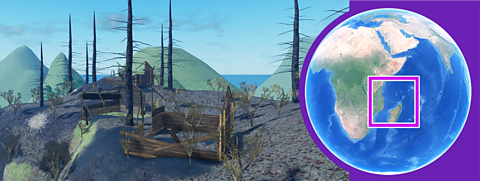
Learning objectives
- to identify the causes of emigration from LICs
- to examine the social, economic, and environmental impacts of emigration on LICs
- to make decisions about how to manage emigration in LICs
English National Curriculum focus - Human and physical geography
- Understand the key processes in:
- human geography relating to: population and urbanisation, international development
Cross-curricular links (KS3 English National Curriculum)
English: Reading - Pupils should be taught to understand increasingly challenging texts through learning new vocabulary.
Maths: Number - Pupils should be taught to use standard units of mass, length, time, money and other measures, including with decimal quantities.
Citizenship: Pupils should be taught about the functions and uses of money, the importance and practice of budgeting, and managing risk.
Computing: Pupils should be taught to use computational abstractions that model the state and behaviour of real-world problems and physical systems"
Food and water
Producing food
Approximate location: East Africa
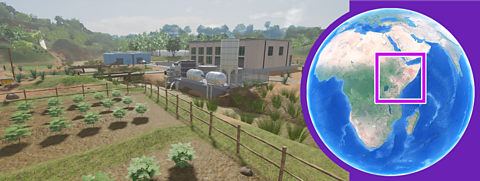
Learning objectives
- to identify the challenges of food distribution in LICs, including issues related to infrastructure and transportation
- to make decisions about strategies to address and combat food insecurity in LICs
- to examine the political, economic and human costs associated with food insecurity in LICs
English National Curriculum focus - Human and physical geography
understand the key processes in:
- physical geography relating to: soils, hydrology
- human geography relating to: population and urbanisation, economic activity in the primary and secondary sectors, and the use of natural resources
understand how human and physical processes interact to influence, and change landscapes and environments, and how human activity relies on effective functioning of natural systems
Conserving water
Approximate location: Western USA
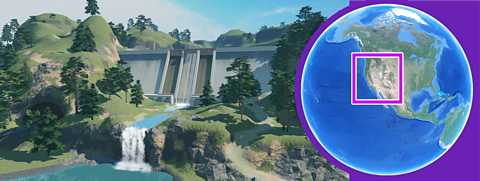
Learning objectives
- to identify short- and long-term variability of water sources in HICs
- to make decisions about securing water supplies for domestic, agricultural and industrial uses
- to examine the causes, effects and solutions to water pollution in HICs
English National Curriculum focus - Human and physical geography
understand the key processes in:
- physical geography relating to: soils, hydrology
- human geography relating to: population and urbanisation, economic activity in the primary and secondary sectors, and the use of natural resources
understand how human and physical processes interact to influence, and change landscapes and environments, and how human activity relies on effective functioning of natural systems
