If you have children in your classroom who have barriers that may stop them from writing a 500 Words story, there are alternative ways that you can help them submit.
Dyslexia and ADHD are two separate conditions and can affect children in different ways, but both could impact their approach to writing a story. Mr Hunt is a year 3/4 teacher at an inclusive school in Greater Manchester, where they use alternative learning techniques for children of all abilities.
Check out what Mr Hunt's classroom does to overcome these barriers and how you can help support each child write and submit their 500 Words story.
Mr Hunt: Good afternoon everyone.
Children: Good afternoon Mr Hunt.
Mr Hunt: My name is Mr Hunt. I'm a primary school teacher in a mixed year 3/4 class. When you have a group of children, you will have children that have these barriers that sometimes can block them from writing and from getting ideas down on paper, but the good thing about 500 Words is that it's a competition for everyone. So, in my class we have some children with ADHD, reading difficulties, some concentration barriers, but we do have the tools to help remove those barriers.
Harry: I struggle with looking at focusing on my work. Sometimes, I hear these sounds around me and, I'm like 'what's that sound?
Mr Hunt: Children in my class who have ADHD and concentration issues, they'll use accessibility tools on a device and they will listen to sounds. So, Harry in my class is one of the children, when you're a teacher, you see all these ideas literally spark. You can physically see it happen in his brain, but sometimes he struggles to get it.
Harry: Mr Hunt has got these headphones and he got an iPad.
Mr Hunt: You could use any device. He has headphones on, he'll go into the settings, he will pick through the different settings,like white noise.
Harry: They're like stream sounds, rain sounds, ocean sounds. My favourite sounds is the stream.
Mr Hunt: It's really changed things for him because just by doing that he is able to get his ideas on on his paper. It means he can then enter competitions like 500 Words.
Sometimes, it's hard to read the words. It's a bit like, if it's white paper, it's too white.
Mr Hunt: They have these amazing ideas, but what dyslexia can do, it can scramble their ideas and it can stop them getting down onto paper. We have specific tools to help them access writing and access their learning. One of the ones is the coloured overlays.We have different overlays for different children, which is better. What Kiera has is a coloured background, so when they write, similar to the overlays, it's like a colour thats better for them, so it helps them write down and have some focused onto the writing they are doing.
I write on yellow paper, so it's a little bit easier instead of. white paper.
Mr Hunt: Quite often they worry about spelling, worried about forgetting ideas as their writing down. So, what we do is, we get them to dictate and iPad. As a teacher, you want them to be creative.
You want to use ambitious vocabulary. What would happen is if a child is writing a sentence and they wanted to write the word gigantic, they'd go 'that's a difficult word to spell I'm going to write big', so now by dictating to iPad, they would say the word, it's their words and their ideas, they see it spelt correctly, they would then put that in their writing. You can use any mobileor tablet so depending on which tablet or device you use in your class or school. Although there's challenges, there's no one barrier that can stop a child entering the competition because we can remove those barriers.

Need more inspiration?
Back to 500 Words
Click here for more information on 500 Words.

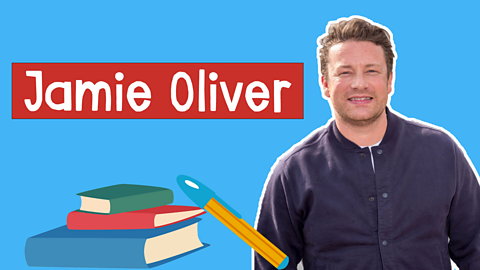
TV Chef and children's author Jamie Oliver shares his advice for writing a 500 Words story with dyslexia
World-famous chef, and most recently children's book author, Jamie Oliver, shares his story about dyslexia and writing stories.
What are the 500 Words prizes?
There are many prizes to be handed out to the gold, silver and bronze recipients.