| 24 September 2014 |

| |
| BBC Homepage | | |
| |||
| Contact Us | | |
FeaturesYou are in: Suffolk > Community > Features > Transplant success for Suffolk youth 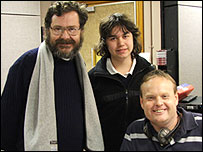 Gareth and Peter Barham with Mark Murphy Transplant success for Suffolk youthIn 2004, a teenager from Bury St Edmunds had a heart transplant. He's backing suggestions that if we die we should have to opt out of donating our organs. He says it'll cut waiting lists. Transplants save livesMore than 12.7 million people have said they want to help others to live after their death by joining the NHS Organ Donor Register. Figures taken from the UK Transplant website state that in the year to the end of March 2005 there were:
Right now, more than 7,000 people in the UK need an organ transplant. To find out more about organ donation and transplantation call: The Organ Donor Line on 0845 60 60 400 or visit www.uktransplant.org.uk Listen to Gareth and his father (18/07/07): Audio and Video links on this page require Realplayer The government's Chief Medical Officer for England, Sir Liam Donaldson, has said there is a crisis in the supply of organs for transplant and we need a system that means unless we specifically withdraw our consent, then our organs would be available for others. Gareth Barham was a seriously ill 15 year old in the run up to Christmas 2004, but a transplant carried out on 22 December that year proved to be a success. He says the 'opting-out' system is vital: "That's what we need in this country. I don't think there are enough people registered at the moment and I think more people should be. "I was very frightened [while waiting for an available organ] and I had a couple of false alarms rushing down to London to find out there was no heart waiting for me." Gareth's back storyGareth, and his father, The Revd Canon Peter Barham, joined Mark Murphy on BBC Radio Suffolk's breakfast show in 2005:
The BBC is not responsible for the content of external websites Audio and Video links on this page require Realplayer MM: You're looking fantastic, how are you feeling? GB: I'm feeling fine. MM: In the run up to the transplant, take us through what happened, because you didn't at first realise you had problems with your heart, did you? GB: At first they thought it was asthma and pneumonia. MM: So you were feeling chesty and unwell? GB: Yes, out of breath and that sort of thing...couldn't do PE (nothing new there!). 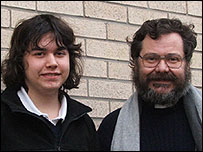 Visiting BBC Radio Suffolk MM: So nothing to alert you that there was something seriously wrong at that point? Dad - no major concerns? PB: We'd been to see the GP on Monday, this was a week after she said it was asthma and she said, oh it's a virus, come back on Thursday. He was white as a sheet on Tuesday night and my wife said I'm taking him to the GP and I basically said, don't be so stupid, he's going back on Thursday, he's fine, let him lie on the sofa. And she took him up to the GP and then phoned me and said they wanted him at the hospital for an x-ray, so muttering under my breath I went and took them up to the hospital. I'd been a Hospital Chaplain before so when the consultant walked into the room at They said his heart was almost twice the size it ought to have been and they were transferring us in the morning, and I assumed Addenbrookes, because if you are in Bury you end up in Addenbrookes. But no, they were taking us to Guy's because that's the regional paediatric cardiac centre. We had eight days in intensive care in Guy's, then another couple of weeks there and they started to say this heart's not getting better, it's going to need a transplant. MM: This is all going on around you Gareth. How did you feel with all this happening? GB: Terrified, feeling pretty awful. Sitting there in hospital and all these doctors and people flying around, telling me I need transplants and lots and lots of treatments. MM: It's about as scary as it gets? GB: Yes, definitely, it can't get much worse. MM: When you are lying there, waiting, how does it feel? GB: Very, very boring. I spent about eight months sitting there in front of a TV, not being able to get upstairs, only being able to watch TV and play the odd computer game and just sit and wait. It was very long and tedious. MM: So it was a long time before a transplant? PB: He went on the transplant list at the beginning of August and it actually came through on the 22nd December. We were lucky. Because he's an adult size we could wait for an adult heart. If you've got an eight-year-old and you're waiting for an eight-year-old heart - it's not good. MM: You were just waiting for a phone call...it could have happened any time? GB: It could have happened any time, day or night. PB: And the phone goes quite a lot in our house since I work from home, so every time the phone went we sort of jumped in the air and thought: is this going to be Great Ormond Street? And then eventually it was, but it was a very long eight months. MM: How did you feel as parents, not being able to do anything to help? PB: You expect that at the age of 40 you're going to start falling apart, when it's your children that actually fall apart, you can't quite believe it. Then you expect that they'll be mended and we then had to realise that actually there was nothing they could do to make Gareth better. They were keeping him alive, which was a miracle in itself, but the only thing that would make him better was a transplant. And you knew you were waiting for that to come and there was always the chance that it wouldn't come, that the phone would not ring in time and his health would get worse and worse and the next stage was that he would have to end up permanently at Great Ormond Street on a machine while they phoned every hospital in Europe trying to find a donor. MM: When the call came, did you believe it? GB: No. The day before I got the real heart they had a false alarm. They basically took me right down to London and said we might have a heart and we got to London, but in the end it wasn't good enough because it had deteriorated so much. 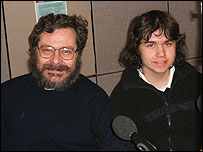 In the studio at BBC Radio Suffolk But then we got home and within a few hours they phoned up again and said we've got a heart, we know this one's alright, and there's an ambulance waiting outside, get in it! PB: This was at one o'clock in the morning, having got back from London at four o'clock the previous afternoon! We made it from beds to ambulance in 11 minutes, which I didn't think was bad going! MM: When it was finally there, when you were going for that transplant, how did you feel about that? GB: The shock takes over and the excitement of waiting, after so long, and it's suddenly now coming and you just sort of keep going and see what happens... PB: You're sat in the front of an ambulance, watching the blue flashing lights, watching the speedometer at 100 mph, thinking this is actually quite exciting! MM: What happened when Gareth was in theatre? PB: We went back up to the room on Ladybird Ward and one of the lovely nurses came in with a tray of tea and hot buttered toast and about every hour throughout the night the Transplant Coordinator would come in and tell us how it was going. They started the op about 3 am and just after seven o'clock the consultant walked in and told us it was a textbook operation. It had really gone well and everything was superb and he had been on call the night before when we'd had the false alarm. So this was the second night he'd had to come into hospital for my son, but he didn't mind at all. He'd in fact had the Cardiac department Christmas party the evening before. We must admit we wondered whether his scar would be straight(!), but they assured me they had all been on the wagon and they were very glad they had an operation to do as they hadn't been on the wagon for wasted time! (laughing). MM: When you woke up, how did you feel? GB: I can't actually remember much of it, but there were machines everywhere, beeping noises, plugged into everything. PB: You said to me - have I had my operation? - and I said look at your chest, but you don't remember that... MM: When you came round and you had a chance to realise what had happened did you start to feel better pretty quick? GB: Yes, I did really, but it took a couple of days to work out where I was and what was going on. Once they started taking all the machines off and letting things work normally I got really well. MM: Afterwards, you've obviously had a chance to think about the whole procedure now, what do you say to the person and the family that gave you that heart? GB: All I can say is thank you very much, it's going to be used very well. Thank you. MM: What about you Dad? PB: I can't help thinking that while we had a wonderful Christmas there's a family somewhere else that had an horrendous Christmas and all I can do is pray for and cry with them. I don't know anything about them, I don't know if it's male or female, age, anything like that. But we are incredibly grateful and hope they have some comfort out of the fact that something good came out of the death of someone that they loved. MM: Now it's a very, very important decision that someone makes, and they make it when they're alive, to carry a card or not. What would you say? PB: You can carry a card, the other very good thing to do is to go onto the uktransplant.org.uk website, or phone 0845 60 60 400 and actually get your wishes registered on the website. It's a good thing to do because there's a computer list there and you might not have the card, you might have lost the card, whatever. It's going to be a horrendous decision for someone to make, because they are in the middle of grief. They have been told someone they love has died. The fact that you've thought about it before hand, you've made your wishes known, makes that decision somewhat easier. Not easy, but easier. So think about it, talk about it, decide what you want to do, and then hope it never happens. MM: Is this something you as a family had talked about before it happened? Were you card carriers? PB: Both my wife and I did carry a card. We're both blood donors and I think we picked up a card at a donor session, signed it and it was going mouldy at the back of the wallet. You never think it's going to happen to you, but then suddenly you find that actually so many people don't carry cards and there is such a long waiting list. That had a huge effect on us last year. MM: You missed Christmas last year Gareth? GB: Yes, I can't remember Christmas Day at all, really. PB: I'm a Clergyman, so usually I'm working at the Cathedral and all the hours God sends over Christmas week 'must be your busy time Vicar' - last year I got out of it! This year they're making me do the eight o'clock service on Christmas morning - I think my colleagues are getting their own back! (laughing) MM: How are you feeling now Gareth? GB: I have to take a certain amount of drugs every day, forever, so my heart doesn't reject and things. I'm doing everything I did before hand, if not more. MM: Thank you both very much indeed for coming in this morning. last updated: 18/07/07 Have Your SayYou are in: Suffolk > Community > Features > Transplant success for Suffolk youth |
| | About the BBC | Help | Terms of Use | Privacy & Cookies Policy |