 | 24 September 2014 |

| |
| BBC Homepage | | |
| |||
| Contact Us | | |
Local HistoryYou are in: Stoke & Staffordshire > History > Local History > Penkhull Windmill 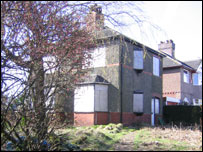 The windmill site. Penkhull WindmillBy Helen Thomas We look into the history of the windmill's that once towered over Penkhull and Hartshill in Stoke-on-Trent. Did you know there used to be windmills in Stoke-on-Trent? According to historians, in the 18th century they were a fairly common sight, and used to grind corn for the city. According to local historian Richard Talbot, both Penkhull and Hartshill used to have windmills. Penkhull's stood on Kirkland Lane, which used to be called Mill Street. There's evidence of the Penkhull windmill on old maps of the area, like Hargreaves map of 1832, and it's mentioned in Census documents. The windmill dates roughly from 1780, which was quite late on for a windmill to be built - and ten years after the neighbouring Hartshill windmill. There's no pictures of it, but historians think it was probably a two sail design. 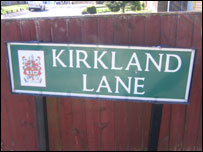 Where the windmill once stood... Why was it built?Stoke-on-Trent already had three water mills on the River Trent, which were used for grinding corn. As the pottery industry developed, those mills were used for flint instead, because this brought in money all year round. But local farmers needed somewhere for milling, so the windmills in Penkhull and Hartshill (which were both farming areas) were constructed. Hartshill windmill stood where the church now stands. Who owned it?It was built by John Chapman who was the miller there until 1802. He sold it to John Cope of Cheddleton for £600, in those days a fair amount, which just proves how much business the mill was doing. At that time it had a cowhouse, a small holding and an acre of land. It was sold to John Sutton, then in 1823 Josiah Spode bought it for £550. Spode rented it to Michael Baxter who also owned the Malt House in Penkhull, and produced local ale. In 1831 it was up for sale again - with the advert in the Staffordshire advertiser saying. "Penkhull windmill, very advantageously situated near to the town of Stoke-upon-Trent, now in the holding of Michael Baxter". In 1871 Joseph Beech was registered as the miller of Penkhull - and he would be the last one. By 1891, the mill was all gone, demolished and collapsed. The only evidence of it left was a spindle in a local stable. What's there now?The plot of land where Penkhull Windmill stood is now the garden of a derelict house, on Kirkland Lane. The house is up for sale, and the garden overgrown. A planning application went in recently to build a house there, and as a condition of the application, local historian Richard Talbot got the council to agree that if a new house was built, there would be an archaeological dig at the site too. But for other reasons, the application failed, so for now, the windmill will stay buried. If there was a dig, what would be found?According to Richard Talbot, there would be the base and foundation of the windmill, perhaps some spindles, mill stones and other artefacts. He says it would prove all his research and be an interesting part of the village history. last updated: 11/03/2008 at 14:44 You are in: Stoke & Staffordshire > History > Local History > Penkhull Windmill
|
| | About the BBC | Help | Terms of Use | Privacy & Cookies Policy |



 Listen to the
  Watch the