| 29 October 2014 |

| |
| BBC Homepage | | |
| |||
| Contact Us | | |
War StoriesYou are in: Stoke & Staffordshire > History > War Stories > Meeting the 'Few' 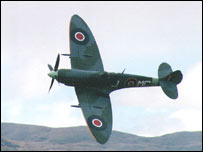 Meeting the 'Few'It's more than 60 years since the end of World War 2, and the debt to the RJ Mitchell's Spitfire is greater than ever. But what of the people behind this brilliant aircraft? BBC Staffordshire's Matt Newsum uncovers their stories. Inside the SpitfireThe 'Inside the Spitfire' exhibition offers visitors to the museum the chance to see a real wartime Spitfire completely stripped down, like a giant model aircraft kit. The RAF Hendon museum lent the aircraft, which is a Mark 22 edition, one that would have just seen the final days and weeks of the Second World War. The exhibition is free, and is open until January 2007. My boyhood dream was to be a fighter pilot. I'm sure that this was fuelled by seeing films like 'The Battle of Britain' - the adrenaline rush of running for a scramble, heroic young men putting fear and a very real sense of danger to the back of their minds as they flew into wave upon wave of Luftwaffe fighters. So when I was invited to the Science Museum's 'Inside the Spitfire' exhibition, dedicated to RJ Mitchell and his machine, I was fortunate to meet some of those people who were involved with the aircraft during the Second World War, and it was my chance to put across those questions I'd always wanted to ask... From the Raj to the RAFSquadron Leader Pujji is unlike many of the war's fighter aces in that he isn't English, German, Japanese or American - he's Indian. Having joined the RAF while working for Shell Petroleum in India as a pilot, he found himself on the cusp of war, something he says was quite exciting. He said: "Whenever I saw German fighters, I thought I would have a go at them, and they had a go at me. I came back many times with holes in my wings!" "I cost the government a lot of money!"Flight Lieutenant William Walker flew Spitfires during the Battle of Britain and beyond - and was fortunate to fly them throughout their history. Unfortunately for William, he wasn't always so lucky in the air, as he recalls: "The Spitfire got faster and faster, and luckily a retractable undercarriage. When I was shot down I was flying a Mark II which I'm afraid ended up in the sea! I cost the government probably quite a lot of money, I think a Spitfire cost about £30,000 in those days." The best of its kindCaptain Eric Brown was a military test pilot who flew every British and German fighter aircraft in the Second World War. So he should know something about fighter aircraft of that time. He was adamant that the Spitfire was the very best of it's kind during the campaign, and acknowledged the brilliance of Mitchell's design. Captain Brown said: "Of the piston engined aircraft, this was the outstanding aeroplane of World War Two." The pilots' recollectionsHear the recollections of pilots who flew the Spitfire Help playing audio/video "We did jobs that we never thought we'd be able to do..."The Second World War brought many changes in the lives of young women, giving them new skills and gave them jobs in industry, that were previously considered unsuitable. This 'liberation' of women altered their perspective of what was expected of them, and had a tremendous impact on women's equality within the workplace. Jean Fergus was a parts maker at Castle Bromwich, and like many other women, her hard work in building the fighter helped turn Mitchell's vision into reality, and ensured that the flying men were able to do their bit during the Second World War. The factory girls...Hear recollections from people who helped build the planes in the factories. Help playing audio/video The Mitchell statueOne of the major aspects of the exhibition was a Reginald Mitchell statue which was created by Stephen Kettle. The Birmingham-born artist was commissioned to design the piece which depicts one of Staffordshire's most famous sons in Welsh slate. Kettle worked with Mitchell's son in trying guarantee the most authenticity to the sculpture, even down to his stance. The story of the statue...Hear Stephen Kettle talk about the RJ Mitchell statue which he was commissioned to sculpt. Help playing audio/video Mitchell's legacyThe exhibition is clear on one thing - it is in part thanks to R.J Mitchell and his most famous design - 'The Spitfire' that the German invasion of the British Isles was thwarted. His story is well profiled in the museum's exhibits - there are several rare artefacts on display, such as his actual scrapbook which features his notes and design sketches. The museum also looks at the public's impact on the aircraft, down to the pots and pans that were collected to boost morale to the pilots' own recollections. last updated: 13/03/2008 at 14:26 You are in: Stoke & Staffordshire > History > War Stories > Meeting the 'Few' |
| | About the BBC | Help | Terms of Use | Privacy & Cookies Policy |