Summary

  • Scroll down to see all the wildlife wonderment from Sherborne Park Estate

  • Catch up with Springwatch and Unsprung on iPlayer

  • Don't miss the final episode of Unsprung, Friday at 6:30pm!

  • Get in touch @BBCSpringwatch or use #Springwatch

  1. Spring is sprungpublished at 20:29 BST 15 June 2017

    See you in the autumn...

    That's it for another season - and what a series it has been here at our new home at Sherborne Park Estate.

    This X post cannot be displayed in your browser. Please enable Javascript or try a different browser.View original content on X
    The BBC is not responsible for the content of external sites.
    Skip X post

    Allow X content?

    This article contains content provided by X. We ask for your permission before anything is loaded, as they may be using cookies and other technologies. You may want to read X’s cookie policy, external and privacy policy, external before accepting. To view this content choose ‘accept and continue’.

    The BBC is not responsible for the content of external sites.
    End of X post

    We hope you've enjoyed this spring as much as we have. See you in the autumn for many more wonders from the natural world.

    In the meantime, you can catch up with all the shows - Springwatch, Unsprung and the daytime commentary shows, all available on iPlayer.

    Scroll down this page for reams of wildlife facts, stunning photos and expert analysis. And watch all the best moments of Springwatch 2017 in this handy highlights collection.

    Don't forget, the team is active all year round here on the Springwatch website, as well as Facebook, external, Twitter, external, Instagram, external and Flickr, external so do keep in touch...

    Media caption,

    A final treat: if blue tit chicks could talk...
  2. Mission – Accomplished?published at 20:25 BST 15 June 2017

    Chris Howard
    Series Producer, Springwatch

    At the start of Springwatch this year we set out our stall. We wanted to showcase the ‘normal’ British countryside – away from the reserves and areas that are managed specifically with wildlife in mind – to a landscape that is lived in and worked in.

    We wanted to focus on the wildlife that lives and breathes in the bits of the countryside that is accessible to most people, not the exotic and hard to get to edges we have been based at previously.

    So have we succeeded? I think for the most part, yes, we have. We’ve brought lots of familiar species to the screen; robins, blackbirds, chaffinches, wrens, swallows – plus some of the familiar raptors like buzzards, kestrels and barn owls. I hope the intimate look into their lives that we have managed to give people has shown them in a new and surprising light. We’ve seen a buzzard chick snooze, a chaffinch helicopter fledge and a one-eye blackbird. They are inspiring and fascinating stories.

    On top of that we have had several Springwatch firsts – the red kite nest has been an utter joy and something we have wanted to do for a long time now. The wagtails were spectacular – and have given us a hugely dramatic ending to the series. We’ve covered kingfishers and stoats in Sherborne like never before.

    But in our bubble it's hard to know what you think. We have some feedback of course - on the ground locally we have had locals tell us that their eyes have been opened to the wildlife around them. That’s a massive tick. Online we know that a lot of you have loved the new location and the stories we have told – that’s another. We’ve had stories of schools getting involved, of people sharing their experiences of how nature is beneficial to their health and lost and lots of your amazing pictures, videos and questions. Tick, tick tick.

    But we would love to get even more feedback. What do you think of the new series? What have we done well? What have we done badly? Were you inspired of bored? We genuinely want to know – this is as much your programme as it is ours and we are always trying to make it better – so sends us a message on Facebook, external, Twitter, external or Instagram, external and let us know. We really do read them all and try our very hardest to reply to them all. And you never know, you might get your idea in the next ‘watch’…

  3. Sensational Sherbornepublished at 20:25 BST 15 June 2017

    Media caption,

    Sit back and enjoy the majesty of British wildlife from Springwatch 2017

  4. Get involvedpublished at 20:25 BST 15 June 2017

    You can make a big difference to wildlife

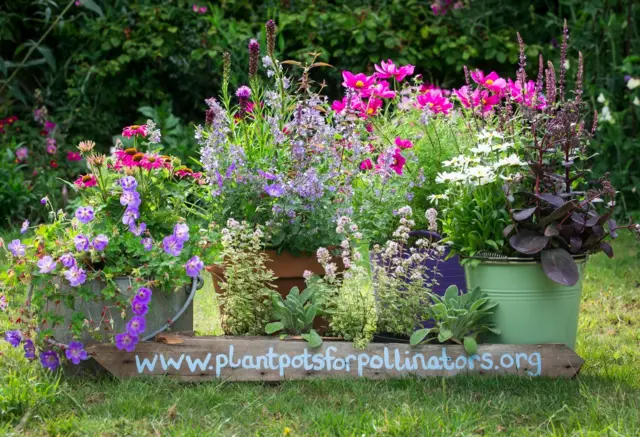
    There are SO many ways to get involved, everything from planting flowers for pollinating insects to doing literally nothing - leaving a patch of grass to grow 'wild' in your garden. From reporting sightings of jellyfish to making sure you know how to observe wildlife like seals in a way that doesn't harm them.

    It's all here on our website for you to jot down and bookmark. Let us know what you get up to over the summer using #Springwatch or sharing your tales on our Facebook, external page.

    Plant potsImage source, Butterfly Conservation
    Image caption,

    Plant a pot for a pollinator!

  5. Who's coming for Autumnwatch?published at 20:25 BST 15 June 2017

    Redwings, fieldfare, widgeons and teal are four species we'll be looking for around Sherborne for Autumnwatch.

    Media caption,

    The first sign of autumn: wildlife sound recordist Chris Watson presents the redwing's song

    A Scandi bird that flies south to the UK in the winter, the fieldfare are noisy birds that love fruit and often pop by British back gardens when they migrate here for autumn and winter.

    Media caption,

    John Aitchison, who made tonight's film about Oronsay, presents the sound of the wigeon - a duck that prefers to be out of water, grazing like a cow or sheep

    Teals will flock to Sherborne in the autumn - you can recognise both males and female in flight thanks to the bold square of blue or green (teal) on their wings.

  6. Who's off after the summer?published at 20:25 BST 15 June 2017

    Swallows, badgers, stoats and chiffchaffs won't be joining us for Autumnwatch, unfortunately.

    Swallows and chiffchaffs migrate in the winter - swallows go all over Africa, and chiffchaffs head to West Africa - while badgers and stoats move on to new warrens and dens after the summer. But we've got a whole new cast of characters joining us back at Sherborne in a few months...

  7. The best of the last day of Springwatchpublished at 20:24 BST 15 June 2017

  8. In the news: Painting from Scott expedition discovered in Antarcticapublished at 20:24 BST 15 June 2017

    The mystery of a beautifully painted watercolour of a dead bird that was found in Antarctica's oldest building has been solved. Read the story in full on BBC News

  9. Not long until... National Meadow Daypublished at 20:24 BST 15 June 2017

    Celebrate our meadows on 1 July

    The Springwatch team have spent the last three weeks in a tent surrounded by beautiful meadows in Gloucestershire. The fields around Sherborne are a melting pot of colour; reds, greens and yellows. Later this year, we will be celebrating the beauty and importance of our meadows with National Meadows Day, external.

    Between now and then you can help out wildlife in your garden by taking part in schemes like "Say No To The Mow", and not trim the grass in your garden. Allowing your bushes to grow wild will help wildlife too, especially birds who'll use them as safe places to nest.

    If you're not already, follow us on Facebook, external, Instagram, external, and Twitter, external. You can submit your photos through Flickr, external, too.

    This Instagram post cannot be displayed in your browser. Please enable Javascript or try a different browser.View original content on Instagram
    The BBC is not responsible for the content of external sites.
    Skip instagram post

    Allow Instagram content?

    This article contains content provided by Instagram. We ask for your permission before anything is loaded, as they may be using cookies and other technologies. You may want to read Meta’s Instagram cookie policy, external and privacy policy, external before accepting. To view this content choose ‘accept and continue’.

    The BBC is not responsible for the content of external sites.
    End of instagram post
  10. Say no to the mowpublished at 20:23 BST 15 June 2017

    This X post cannot be displayed in your browser. Please enable Javascript or try a different browser.View original content on X
    The BBC is not responsible for the content of external sites.
    Skip X post

    Allow X content?

    This article contains content provided by X. We ask for your permission before anything is loaded, as they may be using cookies and other technologies. You may want to read X’s cookie policy, external and privacy policy, external before accepting. To view this content choose ‘accept and continue’.

    The BBC is not responsible for the content of external sites.
    End of X post
  11. Why have hay meadows declined?published at 20:21 BST 15 June 2017

    We still have all kinds of meadows and farm in the UK, but we've lost a staggering 97% of hay meadows since the 1930s. But why?

    Farming has become more and more intense over the last hundred years as farmers have had more access to more pesticides and better technology.

    It became much easier to grow grass, and only grass, which was good for cattle, but not much good to other species that prefer fields mixed with lots of different types of grass and flowers.

    Farmers like those working at Sherborne are now working with conservationists to find a way to improve biodiversity in their meadows without running out of food to feed the herds.

    mayflies
  12. Where is Oronsay?published at 20:16 BST 15 June 2017

    Oronsay is an island off the west coast of Scotland. It’s an area of special scientific interest and it’s a protected area. This is mainly because of its chough and corncrake populations. Our friends at RSPB, external farm the island securing plenty of crops for conserving corncrake.

    Its biodiversity has given it the nickname, the Amazon rainforest of the UK.

    Exploding with wildlife, this island is a gem for seeing species you may not see in other parts of the UK. For example, there are 50 colonies of the only native honeybee in Britain - the European dark bee. It is also an important grey seal colony.

    It became a Special Protection Area in 2007: this means that member states of the European Union have a duty to safeguard the habitats it contains, that of threatened birds in particular.

  13. How tech is cleaning up our beachespublished at 20:13 BST 15 June 2017

    Washed up litter? There's an app for that

    Chris Hitchings
    BBC Springwatch social media producer

    Believe it or not, the six inches of metal, glass and plastic in your pocket can have a big impact when it comes to helping the environment.

    If you're a Twitter user, you may have spotted #2MinuteBeachClean. It's not only a hashtag but also a force for good.

    Devon-based wildlife lover and blogger Jan Wells, external recently committed two minutes of her day, every day, for a year to make sure that her local beach was clean. She tweeted about it using the hashtag, along with pictures of what she found on a dailt basis. You can read more about her beach cleaning adventures in a blog she wrote for Springwatch.

    This X post cannot be displayed in your browser. Please enable Javascript or try a different browser.View original content on X
    The BBC is not responsible for the content of external sites.
    Skip X post

    Allow X content?

    This article contains content provided by X. We ask for your permission before anything is loaded, as they may be using cookies and other technologies. You may want to read X’s cookie policy, external and privacy policy, external before accepting. To view this content choose ‘accept and continue’.

    The BBC is not responsible for the content of external sites.
    End of X post

    There are also a series of Apps that are a force for good when it comes to helping out Mother Nature. We wrote about six of them on our blog, you can find out more about them here but there's a new addition we want to bring to the table.

    Beat The Microbead is an app aimed at environmentally conscious shoppers keen to avoid buying products that are damaging to the planet. Upon opening the App, you're asked to scan the barcode of a product, the App then searches its database to see if it has Microbeads in.

    Microbeads are bad for all aspects of nature. Produced in the initial production of plastics, they end up in our rivers, seas and oceans as they're too small to be filtered out by machinery. Sometimes smaller than the human eye can sea, the beads can be swallowed by fish and other creatures that inhabit our waters. They move up the food chain when they are eaten by birds. As animals are unable to digest the manmade beads, they remain in their digestion system of those animals, slowly starving them to death. Grim.

    By now, you should be compelled to download this brilliant app. You can find it for free on the App Store, external or on Google Play, external.

    Encouragingly, a lot of people seem to be taking part in the #2MinuteBeachClean, some of the recent efforts are below.

    This X post cannot be displayed in your browser. Please enable Javascript or try a different browser.View original content on X
    The BBC is not responsible for the content of external sites.
    Skip X post 2

    Allow X content?

    This article contains content provided by X. We ask for your permission before anything is loaded, as they may be using cookies and other technologies. You may want to read X’s cookie policy, external and privacy policy, external before accepting. To view this content choose ‘accept and continue’.

    The BBC is not responsible for the content of external sites.
    End of X post 2

    These two bags of litter were collected from a beach at Charmouth, Dorset.

    This X post cannot be displayed in your browser. Please enable Javascript or try a different browser.View original content on X
    The BBC is not responsible for the content of external sites.
    Skip X post 3

    Allow X content?

    This article contains content provided by X. We ask for your permission before anything is loaded, as they may be using cookies and other technologies. You may want to read X’s cookie policy, external and privacy policy, external before accepting. To view this content choose ‘accept and continue’.

    The BBC is not responsible for the content of external sites.
    End of X post 3

    No pocket? No problem. Great work by Jen Dixon on a beach in Cornwall.

    This X post cannot be displayed in your browser. Please enable Javascript or try a different browser.View original content on X
    The BBC is not responsible for the content of external sites.
    Skip X post 4

    Allow X content?

    This article contains content provided by X. We ask for your permission before anything is loaded, as they may be using cookies and other technologies. You may want to read X’s cookie policy, external and privacy policy, external before accepting. To view this content choose ‘accept and continue’.

    The BBC is not responsible for the content of external sites.
    End of X post 4

    Great effort by Will Smith, who lives on the Skerries, off the coast of north Wales.

  14. Chick chatpublished at 20:12 BST 15 June 2017

    Media caption,

    If blue tit chicks could talk...

  15. Take part in a unique soundscape experimentpublished at 20:08 BST 15 June 2017

    We need your ears!

    Soundscape Ecology is a relatively new field of ecology, which studies the patterns, causes and consequences of sounds. Rather than individual species’ calls, the soundscape approach listens to the chorus as a whole and to all the sounds that can be heard across a particular landscape.

    Dr Mika Peck and Dr Alice Eldridge have been recording on the Sherborne Park estate for the past couple of weeks at three different sites: in a small patch of woodland, on a large oak tree in a large pasture and by a river.

    They have made short recordings around the clock. To take part in this mini-experiment, please email springwatch@bbc.co.uk stating the number of species you can hear in each of the three sound files, including a list of species names (common or Latin) where possible.

    To get your ears in, try this wonderful recording of the dawn chorus via BBC Earth.

    Media caption,

    Exclusive BBC Earth recording of the dawn chorus from RSPB Minsmere

  16. Your top three Springwatch momentspublished at 20:07 BST 15 June 2017

    What were they?

    Media caption,

    We asked: you answered

  17. Update: Peregrine falconspublished at 20:07 BST 15 June 2017

    Last week, the RSPB decided that the Salisbury Cathedral family that Springwatch has been following (two parents and one chick) would be the perfect foster parents for an orphaned chick they found locally. Now the peregrine chicks are exploring, sleeping and feeding together. We're delighted with the result.

    The adoption was a big hit with our presenters:

    Quote Message

    It's going to be fascinating to see how that female uses that part of Wiltshire to sustain her chicks. It's been a festival of raptors and it's been great to watch the kestrels too."

    Chris Packham

    Brett Westwood says his favourite moment was seeing the peregrine parents feeding the chicks together for the first time:

    Quote Message

    I had a lump in my throat. It was great to see the parents accept the adopted chick - that whole story's been a triumph over tragedy."

    Brett Westwood

    Media caption,

    Earth's fastest bird watches Earth's slowest sport

  18. Stick with Springwatch over the summerpublished at 20:06 BST 15 June 2017

    Chris Hitchings
    BBC Springwatch social media producer

    Don't worry! It isn't all over.

    Although tonight the last episode of Springwatch 2017 goes out, and tomorrow will be the last episode of Unsprung, there's plenty of UK wildlife action going on all year round from Springwatch.

    This year we have plans to keep several of our cameras in place through out the summer. On social media, we'll be bringing you regular updates from our barn owls, kestrels and the peregrines at Salisbury cathedral.

    So where you can you find it all?

    Like us on Facebook, external. Follow us on Twitter, external. Follow us on Instagram, external.

    If you want to get involved and do something for nature, head to the website and check out these useful links.

  19. Who is the fastest feeder of them all?published at 20:00 BST 15 June 2017

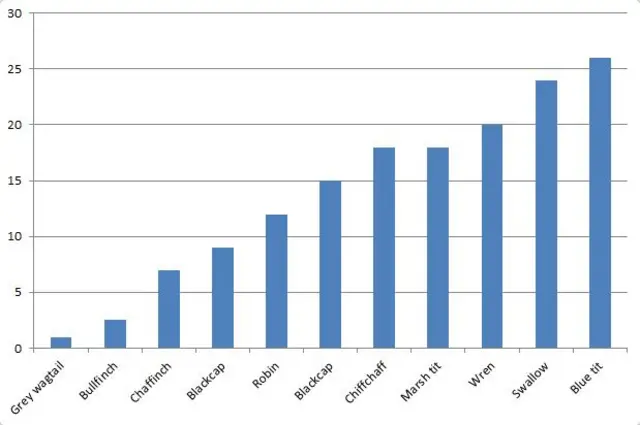
    We've had our eyes on the cameras 24 hours a day for three weeks – and we've tallied up how many feeds each of the birds have had during that time.

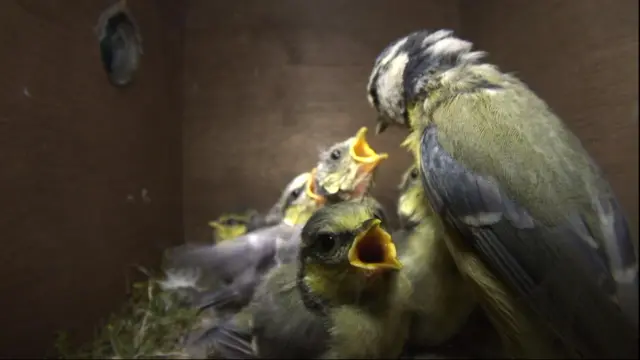
    Here's the average feeds per hour of each of the birds we've followed... bravo to the blue tits!

    Graph of average feeds per hour
    Image caption,

    The average feeds per hour for each of the Springwatch bird nests

    Blue tits banquet
    Image caption,

    Feed me now! Blue tit chicks demand their dinner

    Look at our greedy little guts awaiting their feeds

  20. The wrens: Our full storypublished at 19:59 BST 15 June 2017

    Our five wren chicks, which fledged yesterday, were thriving in an old swallows' nest in a barn on the estate. They were found as eggs a month ago, had hatched a week and a half ago, and they've been an excitable brood to follow.

    Media caption,

    From way back wren: the fledge in action