|
 |
 | | | You are in: Other Sports: Sailing: Americas Cup |
|
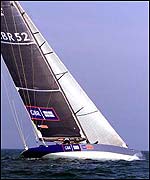
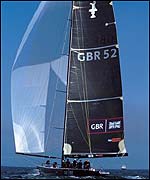
| |  Wednesday, 25 September, 2002, 12:49 GMT 13:49 UK Wednesday, 25 September, 2002, 12:49 GMT 13:49 UK Beginner's guide to sailing 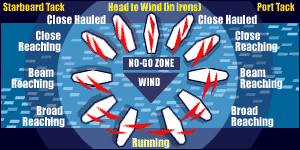 BBC Sport Online gives a guide to the basics of sailing. Sailing boats are at the mercy of the wind but they can be steered in virtually any direction by setting the sails accordingly. When the wind blows across the sails, they act like an aeroplane wing producing lift. Sideways and forward forces are created but because of the resistance of the hull and keel the sideways force is negated, leaving only forward momentum. The only direction a boat cannot directly sail in is into the wind, or an area about 45 degrees either side if it, known as the "no-go zone". A boat caught here is "in irons".
In order to reach a point directly upwind, such as the windward mark in an America's Cup race, a boat must describe a zigzag course called tacking, or beating. This allows the boat to make gradual process upwind towards its objective by sailing at an angle to the wind. The highest a boat can point towards the wind without its sails flapping and losing speed is termed "close-hauled". If a boat then alters direction away from the wind it is "bearing away". Headers and lifters A more advanced understanding of the basic principles allows sailors to exploit changes in wind direction as they make progress towards their goal. Wind shifts called lifters and headers can help and hinder sailors respectively. When close-hauled, a header is where the wind swings round to blow from directly in front of the boat. With the wind on the nose, the helm must bear away to keep the sails filled. The shift has headed the course further from the objective.
Another tack might now be necessary to reach the goal. A lifter is a wind shift in the opposite direction, allowing the boat to point higher and reducing the number of tacks needed to reach the destination. It follows that a lift on one tack is a header on the other. Racers will constantly monitor the wind pattern on the water to stay on the right side of the shifts, while keeping a watchful eye on the opposition. Armed with constantly updated information from the strategist and navigator the tactician can then decide the best course of action for his boat. | |
Top Americas Cup stories now:  Links to more Americas Cup stories are at the foot of the page. | ||||||||||||||||||||||||||||||||||||||||||||||||||||||||||||||||||||||||||||||||||||||||||||||||||||||||||||||||||||||||||||||||||||||||||||||||||||||||||||||||||||||||||||||||||||||||||||||||||||||
|  | | | | | ||||||||||||||||||||||||||||||||||||||||||||||||||||||||||||||||||||||||||||||||||||||||||||||||||||||||||||||||||||||||||||||||||||||||||||||||||||||||||||||||||||||||||||||||||||||||||||||||||||||
| |
|  E-mail this story to a friend E-mail this story to a friend |
| |
| Links to more Americas Cup stories |
| | | ||
 | ||||
 | | Back to top
| ||
| ------------------------------------------------------------ BBC News >> | BBC Weather >> -------------------------------------------------------------------------------- © MMIII | News Sources | Privacy |