|
 |
 | | | You are in: Cricket |
|
| | Monday, 8 July, 2002, 11:36 GMT 12:36 UK Selection change welcomed Black players tend to come from just a few provinces
The announcement that racial quotas are to be scrapped came as a surprise to some senior figures in South African cricket despite the controversy that has surrounded them of late. But one, former national captain Clive Rice, describes it as "the best news for our cricket ever". "This will mean that players aren't recognised as either black or white but as cricketers," Rice goes on. Former South Africa coach Bob Woolmer is equally pleased. "It means they can pick the best side available and it is a sign that the development programme is working." The policy, adopted four years ago in the Republic, required that each provincial first-class side field three "players of colour". But when the guidelines - never written into the rulebook - affected national selection during South Africa's Test series thrashing at the hands of Australia last season there was great argument.
United Cricket Board of South Africa (UCB) president Percy Sonn overruled the selected team for the third Test in Sydney, forcing the inclusion of all-rounder Justin Ontong in place of batsman Jacques Rudolph. And, whether or not the team suffered as a result, the ructions in team spirit were obvious as the players lost confidence in those making the decisions. But the UCB claims that the changes have come as a result of the success of quotas at lower levels rather than the problems at top level. Last season there were 66 black players across the country's 11 provincial sides, set against a target of 44 set three years ago. At youth and second team level there remains a requirement that 50% of players are black, a requirement that has generally been reached at age-group level. Woolmer believes that the quotas were a success as long as 18 months ago. "There are so many young black children in the system now that it will become the norm," he says. "They have the same chance of making it from there as white children do, and its down to whether they score runs and take wickets at the right times." Problems of geography But despite the UCB's talk of a move to "transformation driven by ownership and a spirit of responsibility and teamwork", there have been problems at provincial level with flat quotas. And Rice believes that in some areas the system has led to black players leaving the game after being dropped in at the deep end of first-class cricket.
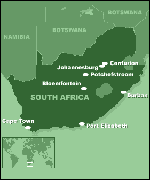
But in the north-east of the country, where several provincial sides are clustered around Johannesburg and Pretoria, there is no such tradition. "In some areas black players have been involved in the game for a long time so they can select players on merit, but around Pretoria there are no guys coming through," Rice explains. "If you select the guys you have available it's a bit like putting you or me into a boxing ring with Lennox Lewis - you can destroy players as a result. "The only alternative for those provinces has been to pay over the top to bring second rate players in from other provinces." County implications A perceived lack of opportunities in South Africa, along with weak rand, has seen several promising players head to England to play county cricket. Rice and Woolmer have both signed South Africans with European ancestry at Nottinghamshire and Warwickshire respectively.
"A lot of the guys in England have made commitments and that is probably still the case," argues Rice, who quit Trent Bridge last month. "If they have said they are looking to play for England [as Notts spinner Kevin Pieterson and Hampshire wicketkeeper Nic Pothas have] they will want to show that it is not just words." Woolmer does agree, though, that the change being made now will "keep white cricketers on board". And another former South Africa skipper, Kepler Wessels, says that players will feel more at ease now that selection on merit has returned. That commitment to make promises into reality is one that the UCB will have to carry through if it is to retain the confidence of players and fans. But Wessels sounds a note of caution: "It's debateable whether there have been quotas in the national team and we'll have to see how this works out. "But I'm sure the UCB will be analysing it closely and let's hope it works." | |
See also:  08 Jul 02 | Cricket 08 Jul 02 | Sports Talk 27 Dec 01 | Australia v South Africa 07 Dec 01 | Australia v South Africa 07 Dec 00 | Cricket Internet links: The BBC is not responsible for the content of external internet sites Top Cricket stories now: Links to more Cricket stories are at the foot of the page. | ||||||||||||||||||||||||||||||||||||||||||||||||||||||||||||||||||||||||||||||||||||||||||||||||||||||||||||||||||||||||||||||||||||||||||||||||||||||||||||||||||||||||||||||||||||||||||||||||||||||||||||||
|  | | | | | ||||||||||||||||||||||||||||||||||||||||||||||||||||||||||||||||||||||||||||||||||||||||||||||||||||||||||||||||||||||||||||||||||||||||||||||||||||||||||||||||||||||||||||||||||||||||||||||||||||||||||||||
| |
|  E-mail this story to a friend E-mail this story to a friend |
| |
| Links to more Cricket stories |
| | | ||
 | ||||
 | | Back to top
| ||
| ------------------------------------------------------------ BBC News >> | BBC Weather >> -------------------------------------------------------------------------------- © MMIII | News Sources | Privacy |