|
 |
 | | | You are in: Rugby Union: International |
|
| | Wednesday, 15 January, 2003, 14:01 GMT Tobias points the way forward  Tobias greets the English tourists in 1994
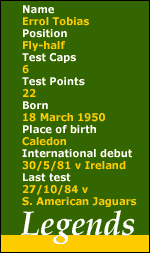
In the second part of BBC Sport Online's interview with Errol Tobias, the former Springbok talks about sporting sanctions and the impact of the 1995 World Cup. By the end of the 1980s, South Africa was at the receiving end of all number of sanctions, ranging from economic to diplomatic. But in a country that is fiercely proud of its prowess on the field of play, the sporting embargo was perhaps the most effective. Not being able to watch their beloved Springboks take on the world cut to the heart of many South Africans, and it is for that very reason that Errol Tobias believes the ban was such a success.
"Rugby is like a second religion over here," Tobias said, "but sanctions were right, we needed them." In between 1984 and 1992, the national team played ten Test matches, missing out on two World Cups and the proposed Lions tour of 1986. But, interestingly, Tobias suggests attitudes in South Africa's rugby hierarchy were more welcoming towards non-white players than previously thought. Coloured teams began to face white sides at the end of the 1970s, with Tobias and Avril Williams progressing through the ranks to become the first non-whites to play for South Africa.
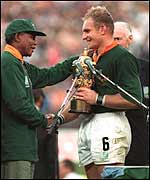
He also remembers Doctor Danie Craven, then head of South African rugby, praising the non-white sides, telling them, "you guys are on the right track". Grudging praise maybe, but a sign that even that regime's blinkered approach could not ignore good rugby when it saw it. All those dark memories were swept aside when the 1995 Rugby World Cup gave the country the chance it craved to redeem its image in the world's eyes. Chester Williams, the former Springbok winger, recently claimed that the 'unity' that was the driving force behind their triumph was a sham. Tobias says he was "unsurprised" by Williams' comments, as there were still leftovers of "certain attitudes" in 1995. But he claims the Springbok's 15-12 World Cup-winning performance over New Zealand was important, and has laid a solid foundation for the future of rugby in the country. "I think a sleeping giant was awakened, and the fact that Doctor Mandela wore the Springbok jersey was in itself significant," he said. "The interest in rugby from the Xhosa and Zulu peoples after the tournament was wonderful to see. "Now we have three black players who are good enough to play for the Springboks, and more following.
Recent evidence suggests that not enough is being done, with South Africa enduring a torrid 2002 European tour, culminating in a record 50-3 loss to England. And Tobias, himself a coach at Currie Cup side Boland, admits that South Africa has a way to go both as a country and a side. "We still have a bit of a journey ahead of us," he said. "And in the end it all comes down to honesty. "As a nation we must be able to look one another in the eye, and then the game of rugby football grow." | |
See also:  01 Nov 02 | International 17 Jun 02 | Africa Top International stories now: Links to more International stories are at the foot of the page. | |||||||||||||||||||||||||||||||||||||||||||||||||||||||||||||||||||||||||||||||||||||||||||||||||||||||||||||||||||||||||||||||||||||||||||||||||||||||||||||||||||||||||||||||||||||||||||||||||||||||||||||||||||||
| | | | | | |||||||||||||||||||||||||||||||||||||||||||||||||||||||||||||||||||||||||||||||||||||||||||||||||||||||||||||||||||||||||||||||||||||||||||||||||||||||||||||||||||||||||||||||||||||||||||||||||||||||||||||||||||||
 | |
|  E-mail this story to a friend E-mail this story to a friend |
| |
| Links to more International stories |
| | | ||
 | ||||
 | | Back to top
| ||
| ------------------------------------------------------------ BBC News >> | BBC Weather >> -------------------------------------------------------------------------------- © MMIII | News Sources | Privacy |






 The fact that Mandela wore the Springbok jersey was significant