|
 |
 | | | You are in: Cricket: England |
|
| |  Friday, 31 May, 2002, 15:18 GMT 16:18 UK Friday, 31 May, 2002, 15:18 GMT 16:18 UK Upping the conversion rate Trescothick hammers the ball through the covers
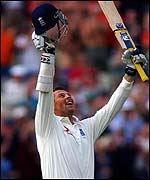
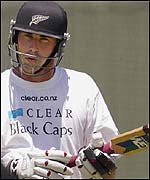
When Marcus Trescothick was out for 76 in the Lord's Test against Sri Lanka, it again raised fears that he could have the batsman's disease known as 'Fleming's Syndrome'. The chief symptom is an inability to convert Test match fifties into three figure scores and its effects can be long-lasting. It takes its name from New Zealand's captain Stephen Fleming who, despite passing 50 on 36 occasions in Test cricket, has only managed to go on to a century on three occasions. Another symptom is that the disease attracts bad luck - Trescothick's dismissal at Lord's was due to a dubious decision by umpire Daryl Harper. Hardly surprising therefore that when Trescothick completed his hundred against Sri Lanka at Edgbaston, he reacted by punching the air in jubilation.
Since making his debut against West Indies two years ago, Trescothick's place in the side has never been in doubt. Indeed, he is so highly regarded by the England hierarchy that he has already been identified as heir apparent to skipper Nasser Hussain. To be ranked as the finished article at Test match level, however, he needed to find a way to convert good starts into big scores more consistently. Excellent year Despite a demanding schedule in 2001 - Sri Lanka away, followed by Pakistan and Australia at home and India away - Trescothick scored 972 runs at an average of over 40. Indeed, had it not been for rain on the final day in Bangalore he may well have completed 1,000 Test runs in a calendar year. If there was one criticism that could be levelled against him, it was that having reached 50 on eight occasions, he only registered two centuries.
The series in New Zealand at the beginning of the year was a disappointment for Trescothick, who was twice dismissed for nought. But a century was his for the taking in the second Test in Wellington, only for him to fall for 88 as he top-edged an attempted sweep shot as England sought quick runs prior to a declaration. The sweep does appear to be both a strength and a weakness - it can be demoralising for spin bowlers if it comes off, but it has also led to his downfall too often. Surviving against spin When Trescothick was first named in an England Test squad, then Somerset coach Dermot Reeve said: "He's very exciting and he's actually at his best against quick bowlers on good surfaces." It is perhaps unusual therefore that Trescothick's three Test hundreds to date have come against sides featuring a top-classs spinner in their side - twice mastering Sri Lanka's Muttiah Muralitharan and once Pakistan's Saqlain Mushtaq. His Test-best score of 161 at Edgbaston means he has now achieved a conversion rate of 21.43 per cent - three centuries in 14 Test innings of more than 50. But how does that compare with other top batsmen?
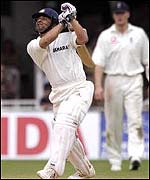
Teamate Graham Thorpe, acknowledged as England's best current batsman, has a conversion rate of 25 per cent (10 centuries, 30 50s), while captain Hussain's is 30.3 per cent (10-23). Neither, however, can match up India's Sachin Tendulkar, who is widely regarded as the best batsman in the world. He has reached 50 on 61 occasions in Tests and turned 29 of them into centuries, a conversion rate of 48 per cent. Trescothick is unlikely to ever be on a par with the sub-continent's batting genius, but the signs are that 'Fleming's Syndrome' may soon be out of his system. | |
| ||||||||||||||||||||||||||||||||||||||||||||||||||||||||||||||||||||||||||||||||||||||||||||||||||||||||||||||||||||||||||||||||||||||||||||||||||||||||||||||||||||||||||||||||||||||||||||||||||||||||||||||||||
|  | | | | | ||||||||||||||||||||||||||||||||||||||||||||||||||||||||||||||||||||||||||||||||||||||||||||||||||||||||||||||||||||||||||||||||||||||||||||||||||||||||||||||||||||||||||||||||||||||||||||||||||||||||||||||||||
|  |
|  E-mail this story to a friend E-mail this story to a friend |
| |
|
| | | ||
 | ||||
 | | Back to top
| ||
| ------------------------------------------------------------ BBC News >> | BBC Weather >> -------------------------------------------------------------------------------- © MMIII | News Sources | Privacy |