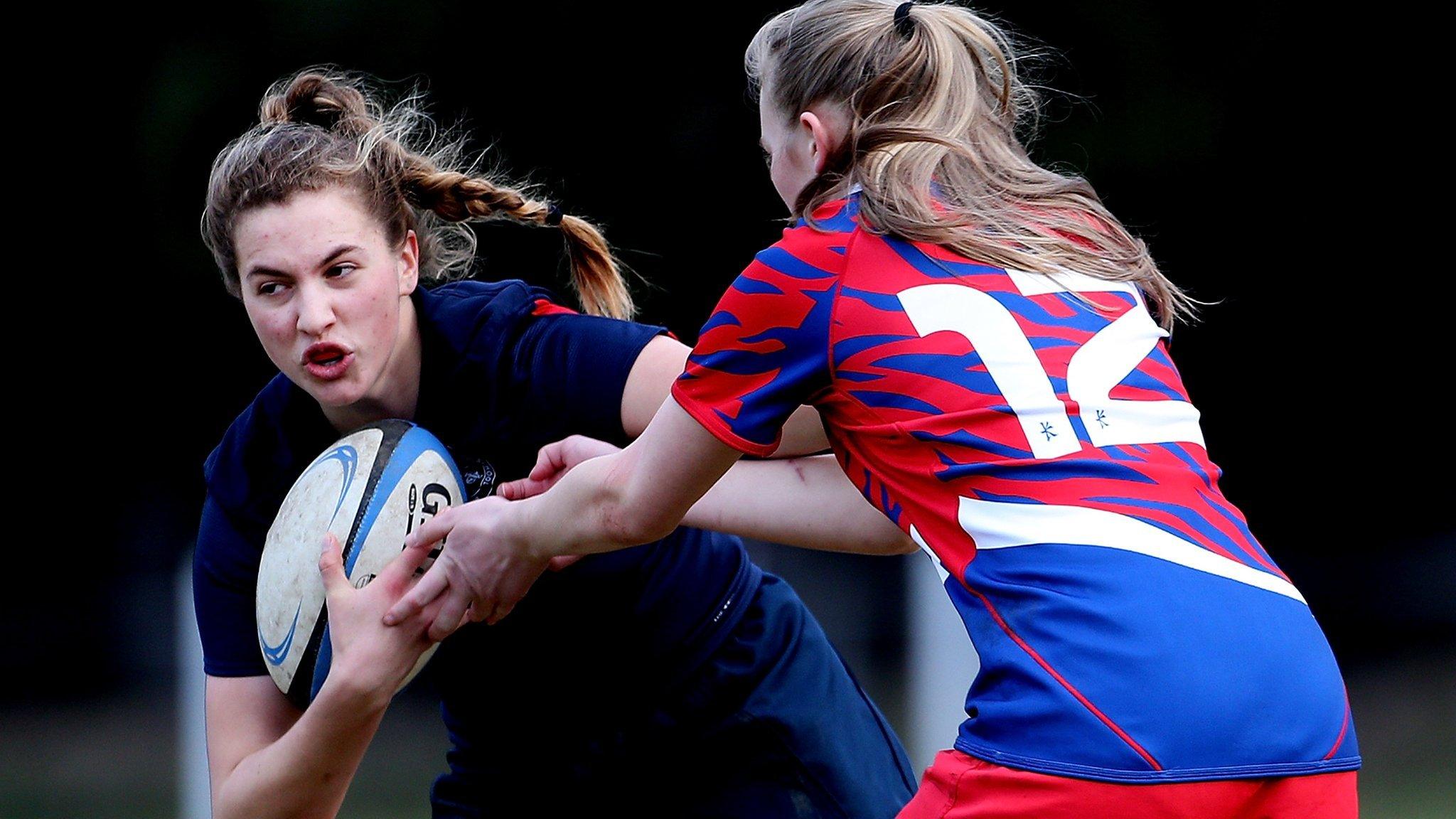
The RFU has identified concussion as the most common match injury for three successive seasons
Rugby and the Brain - Tackling the Truth |
|---|
Panorama, Monday, 21 September, BBC One, 20:30 BST |
Changes could be made to tackle laws to reduce the risk of concussion, World Rugby's chief medical officer has told the BBC's Panorama programme.
Dr Martin Raftery's admission comes less than a week after ex-Wales flanker Jonathan Thomas was forced to retire because of epilepsy, believed to have been caused by multiple head traumas.
"The biggest area concussion will occur is in the tackle," said Raftery.
When asked if this means adjusting the tackle laws, he replied: "It could be."
He added: "I think that my job is to identify risk and then look for solutions to the lawmakers to make the changes that will bring about protection of the athlete."
Concussion was identified as the most common match injury for a third successive year in the Rugby Football Union's annual injury audit for 2013-14, which was published in February.
Head trauma now constitutes 12.5% of all match injuries and has increased 59% on the figures published for the 2012-13 season, rising from 54 instances incurred that season to 86 in 2013-14.
There were seven retirements from the sport last season because of head and neck issues, which are bracketed together and include concussion.
In addition to Thomas, Cardiff Blues flanker Rory Watts-Jones was advised to retire in February after a concussion-related injury that prompted behavioural changes.
England internationals Shontayne Hape and Andy Hazell were also forced to end their careers prematurely because of concussion.
More from the Rugby World Cup |
|---|
For the latest rugby union news, follow @bbcrugbyunion, external on Twitter |
- Published20 September 2015

- Published20 September 2015
- Published20 September 2015
- Published1 November 2013
- Published18 September 2015
- Published3 February 2017

- Published14 September 2016
- Published15 February 2019