£123 for a child's England kit - have prices gone too far?
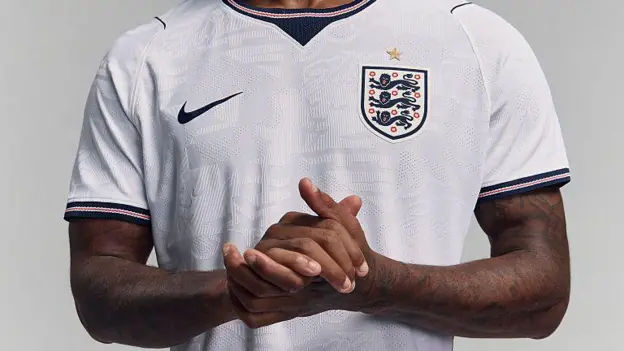
The world's major sportswear brands have revealed the kits their teams will wear during this summer's World Cup
- Published
You remember your first World Cup.
You followed it religiously at home, collected all the stickers in the album, fell in love with a player and pretended to be them on the school playground.
You spent the summer decked out in a kit. It might have been a home nation, but maybe it was Brazil, or Argentina, or Spain, or a hipster pick like Mexico or Japan.
Now you have your own children, they love football, and you want them to have the same experience as you.
How much are you going to have to pay for a kit for them? Up to £122.98.
That is the cost of purchasing an England shirt and shorts with name and number for a child aged between seven and 15 from the Football Association website.
Is your child younger? The full infant kit with name and number is £64.99.
And what about if you fancy one yourself? Well, an adult shirt with a name and number on the back is £104.99.
So, let's say you're a family of four made up of two parents, one older child and one toddler. You would like England shirts for the whole family this summer, plus shorts for the kids.
The total cost? £397.96.
How much do kits cost to make and how much have prices gone up?
All but two of the World Cup kits released so far are manufactured by the three biggest sportswear brands - Adidas, Nike and Puma.
The prices Adidas and Puma are charging for their World Cup range are the same as the cost for their major club sides this season, including Arsenal, Liverpool, and Manchester United for Adidas and Manchester City for Puma.
But Nike have marked up their prices, charging five pounds more for shirts for the likes of England, France and the Netherlands than club teams like Chelsea and Spurs.
That means England fans are paying more for the Nike kits than fans of Scotland, Wales and Northern Ireland are paying for their Adidas-branded kits.
In a statement, Nike told the BBC: "We know that any price increase matters to fans, and we never take that lightly.
"We regularly review our product costs to make sure we're delivering the best possible performance and industry-leading innovation, while balancing rising material, manufacturing and logistics costs."
Adidas added: "The pricing of these jerseys is reflective of the technology, development, testing and high-quality materials that bring them to life.
"We understand that each kit is a meaningful purchase for a fan, and we provide choice with authentic and replica jerseys at different price points.
"Counterfeit items cannot replicate these standards, and we remain committed to delivering products that perform at the very top of the sport."
Puma, who manufacture kits for the likes of Portugal, Morocco and New Zealand, are charging higher prices than Adidas, but lower than Nike.
Kits manufactured by Hummel (for Denmark) and Marathon (for Ecuador) are not currently available for purchase in all sizes and with full customisation in the UK.
According to analysis by sports merchandise expert Dr Peter Rohlmann, it costs about £8.50 for an official adult replica shirt to be manufactured and shipped, with an additional £9.50 cost for marketing, licensing and distribution.
A new England shirt priced at £104.99 would also incur £17.50 worth of VAT.
Removing all costs leaves a profit of about £64.49, which is split between the manufacturer and retailer according to the terms of their agreement.
Nike and Puma prices have risen above the rate of inflation (14.6%) since the last World Cup, while Adidas' rise has been lower.
Is the rise justified?
Is the price being charged for kits understandable, or have they gone too far?
"It's a commercial decision and a matter for the FA," sports minister Stephanie Peacock told the BBC. "But I am sympathetic to fans' concerns and we do want people to think about affordability."
Nick Jones, a member of England Supporters Travel Club, said: "I don't think it comes as a big surprise that they are these prices, and at least international kits last for two years rather than one season like league clubs, so you can say it's better value for money in that sense.
"But also wages clearly haven't kept up at the same rate as inflation so it is hitting people's purses and wallets hard.
"The prices of the kids and toddlers' kits do surprise me, given they use a fraction of the material, so it does feel like Nike are trying to cream a profit off those ones in particular.
In recent years the counterfeit shirt market has been on the rise, with fans sourcing inauthentic replica kits at a much lower cost from online marketplaces linked to factories in Asia - often in the same countries and towns where the big brands have the official versions manufactured.
Fake kits can cost as little as £10 and are most often shipped from China.
"I don't blame anybody at all for buying fakes," Jones adds. "In the last 24 hours in the group chats I'm in links are being shared for fake kits for a fraction of the cost.
"Getting a kit for a tournament is a big part of showing your support for the team for some people, whether you're watching in the stadium, at home, or with friends.
"It partly feels like a duty and kids especially don't want to be left out."
The FA and Puma have been contacted for comment.
