Players as price tags - behind the curtain at The Hundred auction

- Published

Australian overseas cricketer Beth Mooney was one of the most expensive players, bought for £210,000 by Trent Rockets
Grace Ballinger, who was bought by Manchester Super Giants in the recent Hundred Auction, explains how it felt to be a player up for sale to the highest bidder in her latest BBC Sport column.
On Wednesday, 11 March, the first professional sporting auction in the UK was streamed all over the world, watchable on both YouTube and Sky Sports.
The women's Hundred Auction, which took more than six hours, led to all eight female Hundred teams filling their squads, with 89 players picked out of a possible 254 that were up for auction.
On the surface, the auction saw teams become complete, with multiple players going for staggering amounts.
The highest domestic salary paid was £190,000 for the 23-day-tournament.
For most players however, the auction was a highly emotional and unique experience. Many players waited for up to six hours, watching team-mates and colleagues go for both large and smaller sums of money, only to see themselves go unsold - nobody willing to place a bid on them.
No one really knew how the auction would play out and what would be the average salary.
It would still be difficult to produce a meaningful average, with the highest earners selling for £210,000 each (overseas duo Beth Mooney and Sophie Devine), and the lowest earners being bought for the base price of £15,000.
I was bought for £42,500 but 22 of the 89 players went for £15,000, with a further nine being bought for £20,000 or less.
Undeniably, £15,000 for a short franchise tournament is still a good sum of money. However, the jumps in payment among players who will take the field together could make for interesting team dynamics.
I underestimated the strange and anxious feelings seeing yourself go for sale would evoke.
In the build up to the auction date, I was more excited than nervous.
I had a decent few seasons in The Hundred, including winning the title with the Northern Superchargers in 2025, so felt relatively confident in being picked up by one of the franchises.
Those feelings of confidence soon disappeared when my name was called out by the auctioneer.
Although you shouldn't take these things too personally, it was hard not too. People are essentially bidding on what they perceive you are worth to them in cricketing terms.
You could see the conversations happening as people decided whether to bid on you, although it all happened very quickly. You could see people make the decision that your price had gone over their perceived value of you - you were no longer worth their money.
Players also naturally have preferences on where they want to play. However, where you ended up was completely out of your control. Whoever won the bid became who you played for. I did feel slightly like a pawn in a game of chess.
It makes things harder when you are watching coaches you have worked for or teams you have been based at either bidding or choosing not to bid at all.
Further to this, the money players were dealing with was significant. A few extra bids could easily lead to an extra £20,000 on your pay - a huge extra sum for the average female domestic earner.
Thankfully, I was successful in the auction, and got picked for a team I was already interested in playing for. Manchester Super Giants won my bid, meaning Emirates Old Trafford will be my home ground for the first time this summer.
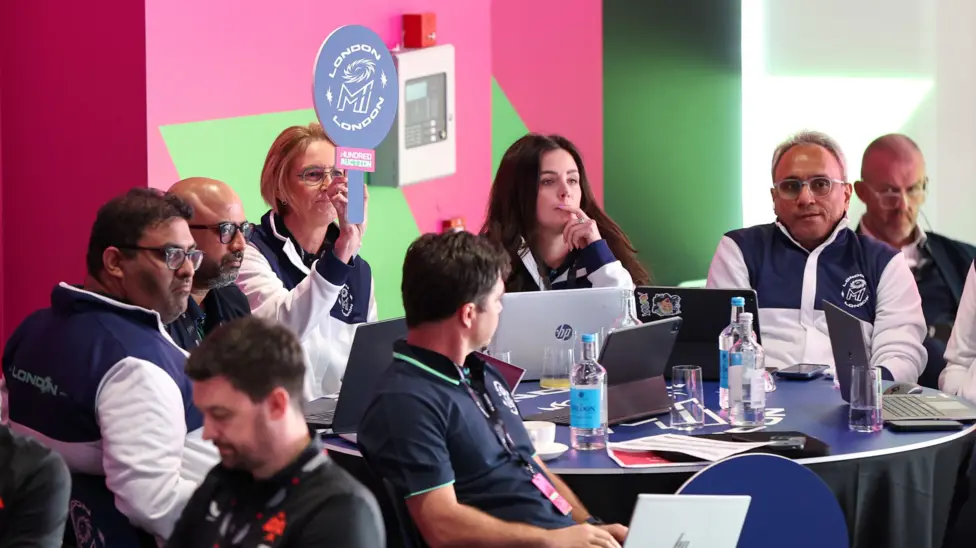
Each franchise had their own table and a paddle to signal when they were placing a bid
There was a mix of auction experience and strategy in the room, and ultimately where you came up in the auction sometimes became either a huge advantage or a disadvantage.
Many successful domestic female players went unsold, including some who have historically had successful Hundred campaigns.
There were also a fair few surprise picks, many of whom have never made their Hundred debut.
In some instances players came up at the right time, and probably got over-paid beyond their perceived value, where people were in desperate need for their skillset.
Meanwhile, others came up at unfortunate times, where their role had already been filled.
The entire thing had a really strange feel to it. With salaries exploding following the privatisation of The Hundred, domestic female professionals just haven't dealt with these sorts of numbers before.
This explosion is probably best reflected through the sale of 18-year-old spinner Tilly Corteen-Coleman to Southern Brave.
Last summer the teenager played for the franchise for £12,500, but on Wednesday she was purchased by the same team for an astounding £105,000.
While some people were left ecstatic and rightly so - Tilly revealing she was "jumping up and down on the bed", external with joy - others were left heartbroken and unsold.
As I have mentioned in a previous column, cricket is well within the entertainment industry - and The Hundred especially wants to entertain.
The auction was certainly made compelling viewing, filmed at the iconic Piccadilly Lights in London. Within this entertainment however, there were harsh realities and anxious moments for the players involved.
A tough day for some, yet a momentous day for English cricket and women's sport in general.
With headlines focusing on the biggest earners and the positives that come with this for those few, it would be easy to forget the players left disappointed and in many cases, somewhat unjustly left out of squads.
An emotionally draining day for all involved, whether your personal outcome was good or bad. Many domestic outfits were probably training while the auction was ongoing, and around 30 players were on an ECB Training Camp in Pretoria, South Africa as it all unfolded.
Managing emotions in a team environment is never easy. Even if you had a good outcome, you were watching hoping your mates within the game got a deal too.
A difficult day for many, and a step closer towards the new beginnings of The Hundred.
