'India v Pakistan becoming a political rivalry rather than sporting one'
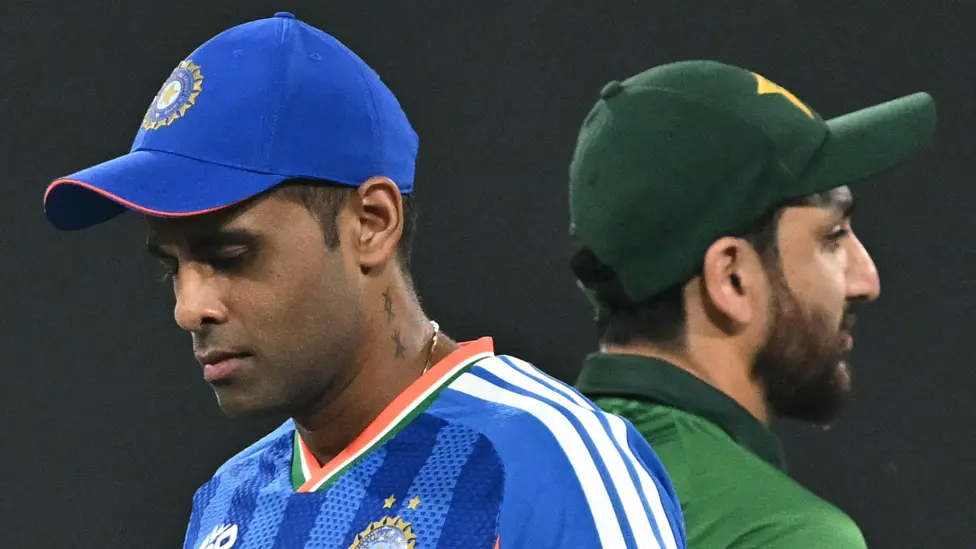
There were no handshakes between the two captains at the toss or between any players at the end of the game
- Published
Colombo awoke to its greyest sky of the week come Sunday morning. A portent, perhaps, of the weather forecast which briefly caused a scare prior to India's dominant win over Pakistan later that evening.
It certainly mirrored the cloud lurking over the build-up to cricket's most-charged derby. Pakistan relented on their original decision to boycott the fixture in solidarity with Bangladesh, who had to forfeit their place in this T20 World Cup when refused dispensation to play their games outside of India.
Arguably more interest stemmed from the pageantry of Sunday's game than from the actual cricket. Plenty were on handshake-watch given recent history between these two. Polite formalities did not return at the toss, Suryakumar Yadav and Salman Ali Agha giving each other the silent treatment.
To be ready for the myriad cameras capturing the flip of the coin, both captains have to be in place a good two minutes before getting on with the ceremony. When mired in such awkwardness, it seems an eternity.
Enough time for a detail-oriented TV producer to spot that Salman, Pakistan's skipper, sported a kink in his collar. The scruffy schoolboy-look was rectified by an anonymous figure inadvertently stealing the situation's authority. It certainly detracted from the attempted strong-man image projected by stubborn leaders.
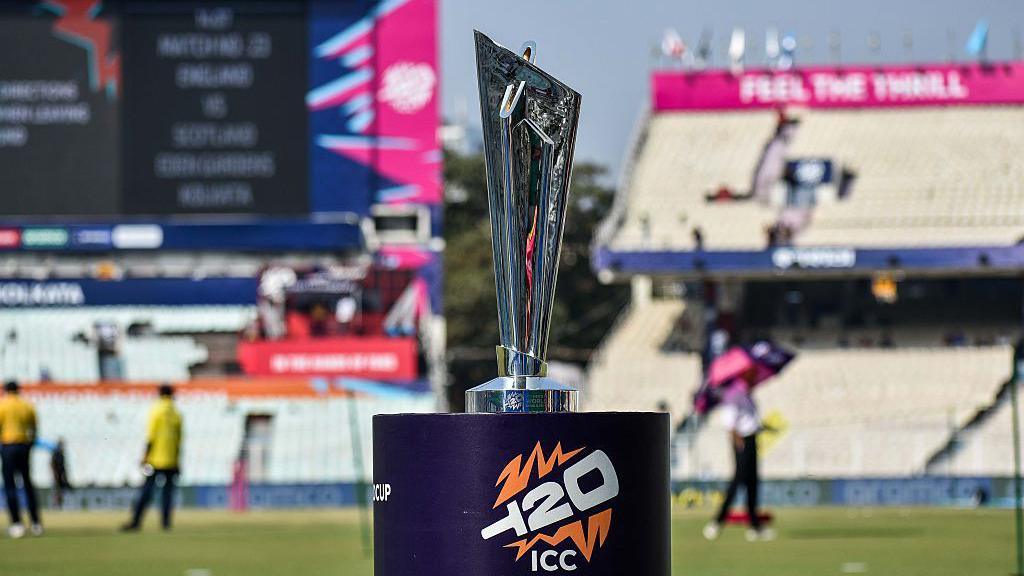
As did the behaviour of the ex-pros off the pitch. On the ICC broadcast, Rohit Sharma and Wasim Akram warmly greeted before walking the tournament trophy onto the field. Away from the cameras, Harbhajan Singh, Misbah Ul-Haq and Ramiz Raja were spotted in cordial conversation in the media area.
The stadium certainly felt different to earlier World Cup matches at this venue. A perimeter was set multiple blocks from the ground. Bags were inspected long before the entrance. And again upon arrival. The Sri Lankan special task force, previously unseen at this tournament, was out in force, automatic weapons on full display.
Even the price of a fake jersey among street vendors shot up amid India-Pakistan inflation. Local entrepreneurs were delighted the fixture went ahead. As were the swarming hotels. Such was the influx in India's accommodation that Mohammed Siraj could not squeeze into the lift on his morning commute.
The backdrop reflected the magnitude of the occasion, but not necessarily any tension. That didn't come until the toss. Albeit there were some murmurs of discontent at the choice of pre-match music. Indian rapper Hanumankind performed with his dance troupe and pyrotechnics aplenty.
He appeared on the soundtrack to Dhurandhar, a movie released last year, the political undertones of which were not well received in Pakistan where the film is banned. Shortly after Sunday's performance concluded, the call to prayer could be heard from a local mosque. The cricketing gods have a sense of humour.
Both camps were reluctant to really delve into the off-field narratives. "In these games the emotions are always going to be high but we need to deal with that," said Salman.
"We have played enough cricket and games like this. You have to see the bigger picture and win our next game to qualify for the Super 8s."
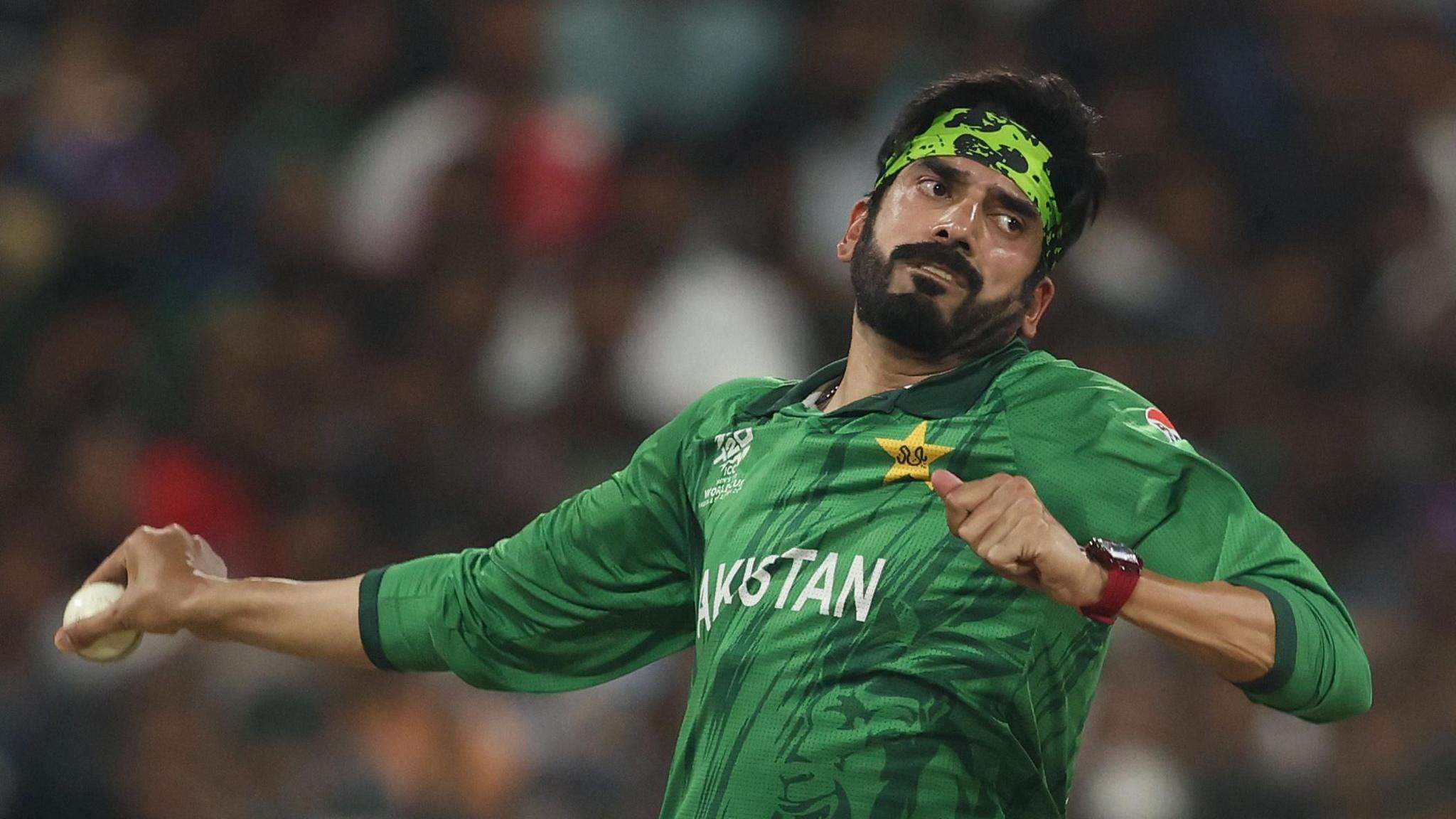
Once the cricket finally started, Ishan Kishan's belligerent hitting delighted the Indian-heavy crowd - which, it should be said, was not at capacity. Usman Tariq's curious action, his pause akin to Jorginho's jump when taking a penalty, dominated pre-match chat. He failed to remain the protagonist of the contest itself, albeit he did cheekily bow towards Suryakumar upon dismissing the man who was filmed mimicking his ways during Indian net sessions.
At the mid-innings break, some dared to think we could have a chase on our hands with Pakistan needing 176. India's dominant powerplay, taking four wickets and conceding just 39 runs, put a swift end to such notions.
The scoreline in this match-up at T20 World Cups now reads 8-1 in favour of India. This rivalry has become political, rather than a sporting one. As tedious as the interference is, it offers more to discuss than one side consistently outclassing the other.
As if aware of this, in a lull during Pakistan's inevitable defeat, the ICC replayed the cordial exchange between Wasim and Rohit prior to the match. Aren't we all getting along just fine? Just not to the extent that players shook hands once India wrapped up their shellacking. That sign of respect continues to feel some way off.
"We see them as a team - we are not thinking about this as a rivalry or whatever," said India's Axar Patel.
"We are playing against one team and we are focusing on cricket. Whenever I'm playing, I'm not thinking about whatever, I treat it as one match and opponent."
After the final wicket, Hardik Pandya and Shivam Dube did not feel they had hit their desired workloads. The former bowled three overs in the match, the latter was not required. Out came bowling coach Morne Morkel to catch extra work with his baseball mitt. Opposition resoundingly dealt with yet more reps needed.
An apt reflection, not that it was required, of this contest's non-existent relationship with the sort of jeopardy required to make us all forget the politics.
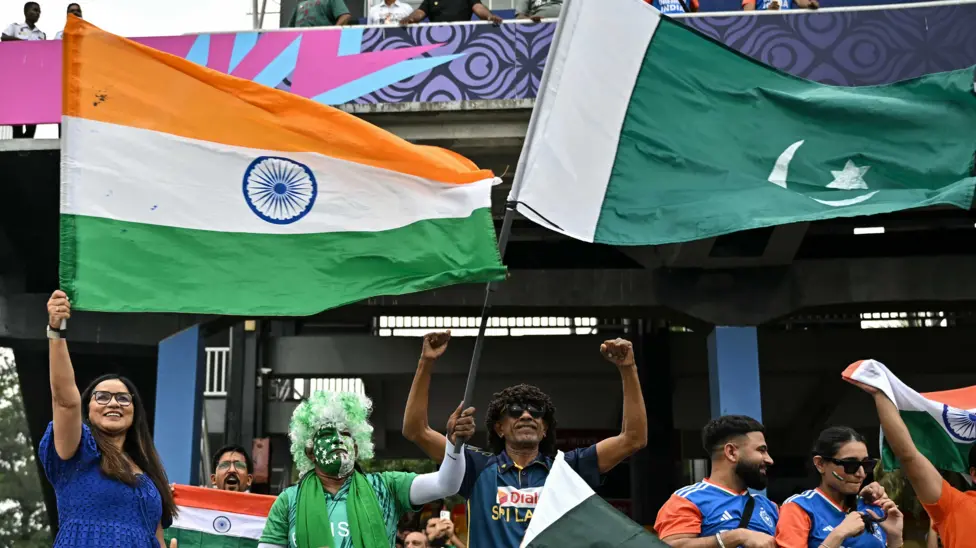
Fans of both sides mixed around the stadium
- Published20 February
- Published8 March
- Published15 February