Team GB skeleton helmet appeal dismissed by Cas
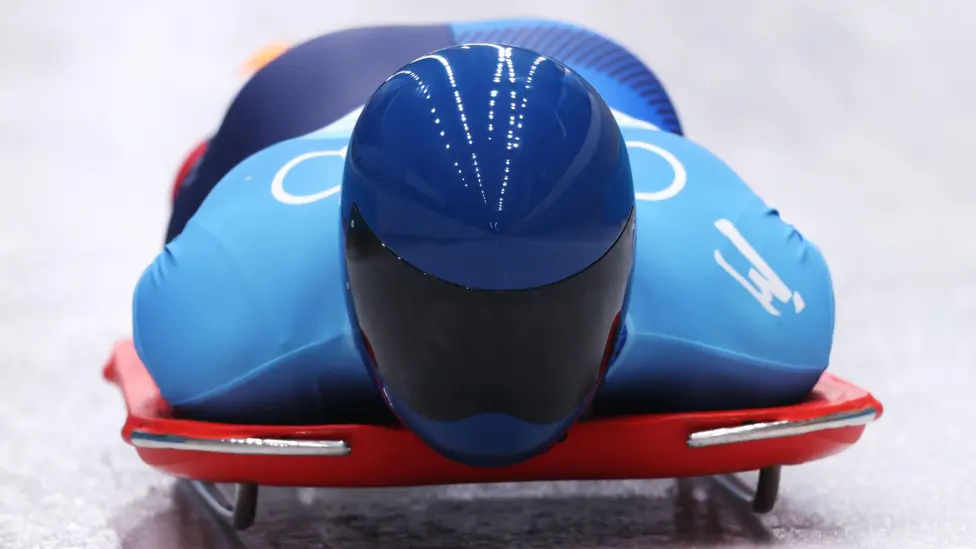
The helmets worn by Team GB in Beijing in 2022 look different to the ones they had hoped to wear in Cortina
- Published
The British skeleton team - among Team GB's best hopes for medals at the Winter Olympics - will not be able to wear their new helmets because they do not comply with the sport's rules around shape.
The British team had appealed to the Court of Arbitration for Sport (Cas) on Thursday to overturn the decision by the sport's governing body - the International Bobsleigh and Skeleton Federation (IBSF).
But Cas says the helmet is a departure from the standard helmet shape and has clearly been designed to specifically enhance aerodynamic performance because the back of the helmet protrudes.
The British Bobsleigh and Skeleton Association (BBSA) stressed that the helmet was designed with safety in mind and to comply with new safety regulations due to be introduced by the IBSF at the start of the 2026-27 season.
Those rules are not in place at the Olympics but British skeleton have essentially tried to get ahead of the curve by designing and using their new helmet in Italy.
Instead they will wear the ones they wore during the last World Cup season.
A picture seen by BBC Sport shows that the helmet is pointed at the back - similar in appearance to a track cycling helmet.
Natalie Dunman, executive performance director at the BBSA, said: "Based on the strength of the case we put forward, naturally we are disappointed in [the] decision.
"However, this does not affect our final preparations and nor has the discourse affected the athletes' focus or optimism going into the Games.
"Our athletes have been winning medals all season, and throughout the Olympic cycle, in their current helmets and we remain in a strong position to continue that trend."
When asked about the helmet prior to the verdict, Team GB's skeleton racers said they had no preference on which helmet they used at the Olympics.
They arrive at the Games as heavy favourites to win medals with world champion and overall World Cup winner Matt Weston leading the charge for gold while compatriot Marcus Wyatt is also fancied to go well.
The British team wore the new helmets at a training session last week in Switzerland with the IBSF ruling them out on 29 January before the BBSA appealed against the ban on Thursday.
Official skeleton training in Cortina begins on Monday with the men's event beginning on 12 February, while the women's starts on 13 February and the team event is on 15 February.
'Could be just enough' - what difference does helmet make?
The helmet is the most important bit of kit both for safety and aerodynamics - how quickly the slider can travel down the track.
Doctor Bryce Dyer, a professor of sport technology at the University of Bournemouth, says that because skeleton is head first it is essential that the helmet is aerodynamic to cut through the air.
"The airflow over that section is really, really important," he said. "Any kind of gain they can make with the shape and the general performance of it, then obviously the higher the speed gap is going to achieve and therefore the better chances of the medal.
"The funny thing with aerodynamics is that the faster you go, the more resistance actually gets thrown against you. So you need the most aerodynamically efficient shape you can obtain."
It is here that the British team's case appears to have been decided, with Cas agreeing with the IBSF that the overall shape incorporates prohibited spoilers (attachments), protruding edges or aerodynamic elements.
"Even that [aerodynamic helmet] will only yield a very, very small increase in velocity. But that could be just enough," said Dyer.
With the margin between winning gold and going home empty handed "hundredths of a second", two-time world champion Weston knows that innovation in aerodynamics is key to the "minor gains" needed.
'All our success with the other helmet'
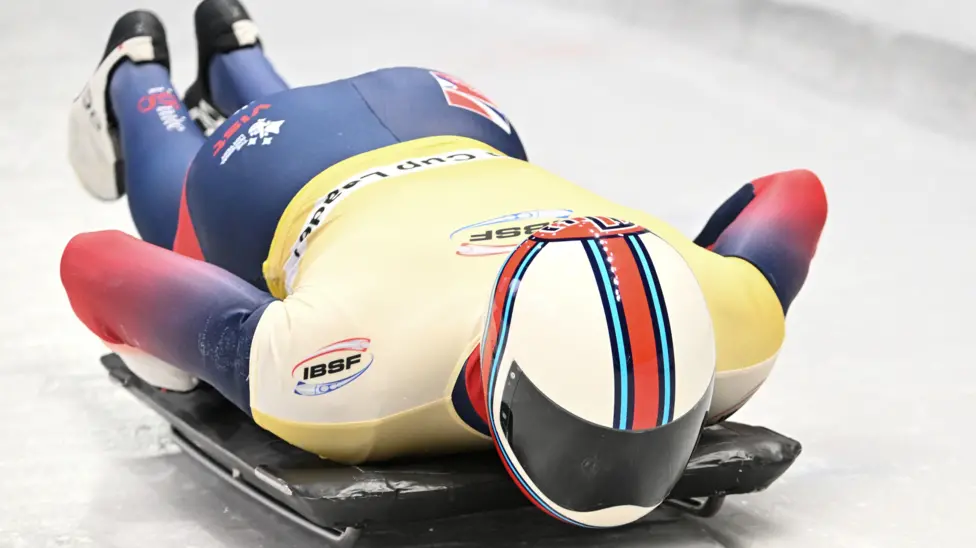
Team GB will now wear the helmets they wore during the World Cup season
While the BBSA say they are disappointed with the decision, the British team know they are in a strong position without the new helmets.
Between them, Weston and Wyatt have won all seven World Cup races this season while three women have qualified for the Olympics for the first time in British history.
When discussing the matter before the verdict was announced, Wyatt, Weston and women's skeleton rider Tabitha Stoecker all said they did not mind which helmet they wore at the Games.
"All of our success has been with the other helmet - for me this is the tiniest little thing in the background," Wyatt said.
"I'm not worried, whatever we end up wearing I think we're in with a great shout of bringing some medals home."
Three-time overall World Cup winner Weston added: "I have other things I can focus on and other things I'm working on to maximise my performance coming into the Olympics.
"If these new helmets get though then great it's an added bonus. But if not then we are in a pretty solid place."
Stoecker added: "We've been competing in our regular training helmets all year and having amazing results.
"With or without that [helmet] I think we all feel really confident in the team and in our abilities and what we're going to be able to lay down at the Games."
Two-time Olympic skeleton champion Lizzy Yarnold said: "It's good to get the decision out of the way before official training has begun. The athletes are likely to be unaffected mentally and their preparation is unaffected.
"I personally like to see developments in elite sport, innovation is important, maybe this process will develop the rules further and create more clarity within the rules, and therefore allow for some innovation."
Winter Olympics 2026
6-22 February
Milan-Cortina
Watch two live streams and highlights on BBC iPlayer (UK only), updates on BBC Radio 5 Live and live text commentary and video highlights on the BBC Sport website and app.
