| | | | | | | ||||||||||||||||||||||||||||||||||||||||||||||||||||||||||||||||||||||||||||||||
| | |||||||||||||||||||||||||||||||||||||||||||||||||||||||||||||||||||||||||||||||||||||
|
'Double blow' for war-hit east | |||||||||||||||||||||||||||||||||||||||||||||||||||||||||||||||||||||||||||||||||||||
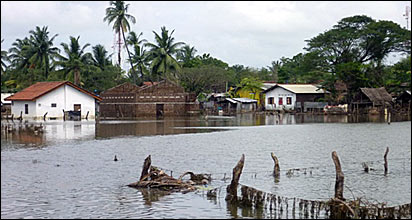
No sooner had Sri Lankans begun to pick themselves up from flooding last month than a second wave of torrential rains unleashed itself, mainly on to the same parts of the country in in the north, centre and above all the east. The east, where Sri Lanka’s main Sinhalese, Tamil and Muslim ethnic groups all live cheek by jowl, has had a terrible time, being hard hit by the war and the tsunami and now this.
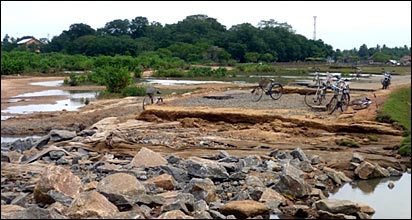
The BBC's Charles Haviland reports from Trincomalee in eastern Sri Lanka. This should be Sri Lanka's east coast highway, newly rebuilt after decades of conflict. It was beginning to bring back new life to this isolated area. I used this road myself just 3 months ago. But looking at it now it is quite extraordinary – it has been crumbled and dissolved away by the floodwaters. Even where the water has receded it looks as if a giant has come along and taken great huge bites out of the roadway.
In a school nearby, a forest of arms reaches upwards: hungry and thirsty people, glad to get water and food rations handed out from a tractor. The families in this makeshift camp have had terrible experiences – Aisha Banu, a young mother, says there were five feet of water in her house. "There are no jobs. There is no food. We just live on the dry rations we get in the camps. All the paddies are destroyed, all the animals are dead, the houses are damaged," she says. By this stretch of flooded land I can see a man wading waist-deep around what may be his home. Nearby two ox-carts and their drivers are pulling their way through the water, following their old, familiar track underneath. Simple dwellings and little roadside kiosks have been flooded or even swept away. Most houses are now free of water but things are still grim.
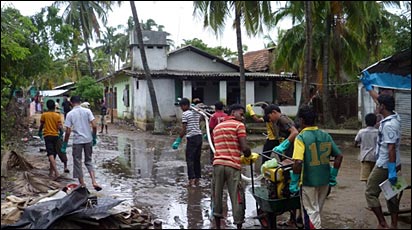
I am in a rather bleak corner ... you can see why the families haven’t moved back in. The water may have gone down but the houses are very badly damaged. There are several whose corners have just crumbled away into water that is now receded and filthy and stagnant. Nazeem and his friend are sweeping water out of the government veterinary stores they manage. They kept vigil here through days of flooding to try to save the refrigerator and its drugs so vital for people keeping animals. It was mostly in vain. "The damage is huge, the medicines are destroyed because one side of the building was flooded. We usually supply medicines for chickens, cows, goats, dogs too – all of them will be affected," says Nazeem. Here at another camp, a woman became highly emotional when we visited, saying no one had come to inspect the damage to her house and she felt hungry and neglected. Two rounds of flooding have left many like her in despair. But HMM Faiz, the chairman of the Eastern Provincial Council, denies that the authorities are neglecting those affected.
"We have much concern about the victims of the flood," he says. "Therefore we are working 24 hours day and night. Whenver the people complain we go there. And we just look after the operation of distribution of the food items." In the face of adversity, inspiring things happen. In the backstreets of the little town of Muttur, young volunteers with a Muslim charity are visiting homes, pumping disinfectant over the yards and gutters left putrid and poisonous by the floodwaters and detritus.
They are also siphoning and chlorinating drinking water wells. Mohammed Hanifa Jawahir organises the 20 volunteers. "Lots of the houses had three feet of water inside. They are badly damaged and the wells have been inundated," says Hanifa. "In some cases the toilet pits have overflowed and there are insects spreading diseases. So we are helping out with repairs and disinfectant. It is a totally voluntary organisation. If we don’t do it someone else will have to. And that would cost them money." Farmers and many others have had their livelihoods shattered. The government fears that nearly a third of Sri Lanka’s rice crop due for harvest about now may have gone. But those hit know they have somehow got to start afresh. And many are displaying a fighting spirit in doing so. To help them, the UN says it will be stepping up last month’s appeal for about 50 million dollars in flood aid. Listen to Charles Haviland on Radio4 and World Service on Sunday and Monday. | LOCAL LINKS  UN flood appeal 'falling short' UN flood appeal 'falling short'09 February, 2011 | Sandeshaya Floods 'may cause' shortage of foods 07 February, 2011 | Sandeshaya Sri Lanka renewed floods kill five04 February, 2011 | Sandeshaya Batticaloa fishing casualty of floods30 January, 2011 | Sandeshaya UN seeks $51m for flood displaced19 January, 2011 | Sandeshaya Floods kill nine in Sri Lanka09 January, 2011 | Sandeshaya 'Produce' new varieties of rice14 July, 2010 | Sandeshaya 'Ponds to prevent floods' Fowzie23 May, 2010 | Sandeshaya | |||||||||||||||||||||||||||||||||||||||||||||||||||||||||||||||||||||||||||||||||||||
| ||||||||||||||||||||||||||||||||||||||||||||||||||||||||||||||||||||||||||||||||||||||
| ||||||||||||||||||||||||||||||||||||||||||||||||||||||||||||||||||||||||||||||||||||||









 There are no jobs. There is no food. We just live on the dry rations we get in the camps. All the paddies are destroyed, all the animals are dead, the houses are damaged