| | | | | | | ||||||||||||||||||||||||||||||||||||||||||||||||||||||||||||||||||||||||||||||||
| | |||||||||||||||||||||||||||||||||||||||||||||||||||||||||||||||||||||||||||||||||||||
|
Sri Lanka new CJ 'ready for reform' | |||||||||||||||||||||||||||||||||||||||||||||||||||||||||||||||||||||||||||||||||||||
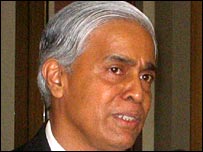
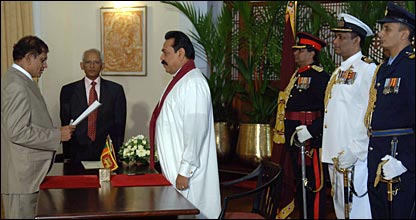
The recently appointed new Chief Justice (CJ) in Sri Lanka says he is ready to reform the way judicial services are administered in Sri Lanka. In the first ever interview with the media since taking office last month, new CJ Asoka de Silva told BBC Sandeshaya that he will soon announce reforms to the Judicial Services Commission (JSC) that controls transfers and disciplinary action within the judiciary. “I am planning reforms to the JSC and you will know within the next few weeks what those reforms are,” he said. Mr. De Silva was responding to two recent international reports on the Sri Lankan judiciary. 'Favouritism' in JSC In a report issued last week, the International Crisis Group (ICG) accused Sri Lanka’s judiciary of failing to protect human rights.
“Through the JSC, he (the former Chief Justice) controlled appointments, transfers and removals of lower court judges. He used those administrative powers to punish judges out of step with his wishes and to reward those who towed the line,” the ICG report said. The new CJ admits that concern was raised on some activities of his predecessor over the way he controlled judicial affairs. “Yes there were concerns that some in the judiciary have received special treatment; there are those who have never left Colombo for example. There were concerns on favouritism. So I need to carefully study the situation and take some measures,” he told the BBC. IBAHRI report Both the ICG and International Bar Association’s Human Rights Institute (IBAHRI) have been highly critical of the conduct of former Chief Justice Sarath Nanda Silva who retired after nearly ten years in office. The IBAHRI report issued after a recent fact finding mission to Sri Lanka recommended: “The appointment, transfer, dismissal or retirement of judges at all levels to be determined by a transparent and accountable system.”
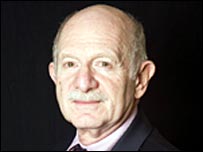
As his predecessor was appointed at a relatively young age and held office for a long time, says the new Chief Justice, he might have committed some mistakes. ICG Senior Vice President Mark Schneider told BBC Sinhala service that the perceived politicisation of the judiciary was a major concern. “I think there was a concern that the report reflects the court was increasingly politicised and that it was not operating in a way that encouraged people to view its actions as independent and impartial,” he said. However, the Chief Justice denied ICJ and IBAHRI accusations that the judiciary is politicised as a result of his predecessor's actions or due to influence by the executive. 'Politicisation' denied “If you take many recent appointments to the judiciary, all the appointments were made on merit,” he said. He also denied ICG accusations that “rather than constraining militarisation and protecting minority rights, a politicised bench under the just-retired Chief Justice has entrenched favoured allies, punished foes and blocked compromises with the Tamil minority.”
Sarath Nanda Silva’s rulings on the north east merger and tsunami P-TOMS for example, says Asoka de Silva, were based on the country's constitution. The international watchdogs have also called on the new CJ to order the executive to implement the 17 amendment to the constitution that curtailed powers of the executive president to appoint senior public servants and judicial officers. The ICJ report recommended to the new CJ: “Order the expeditious adjudication of challenges to the president’s non-application of the Seventeenth Amendment.” The Constitutional Council (CC), which was established under the amendment and has powers to recommend senior appointments including the Chief Justice, is dysfunctional since early 2005. 17 amendment However, Mr. De Silva said the judiciary has no authority to force the executive or the parliament to implement the Supreme Court orders.
“The court has already ordered the quick appointment of the CC, but we are continuously told that the political parties are yet to agree on their appointees. The courts have no other mandate to order the executive or the parliament than to make a request," he said. Asked whether the government is violating the law by appointing public bodies superseding the constitution, he said: “It is the law of necessity that rules in such circumstances." Mr. De Silva, however, agreed with both the reports that rule of law must be strengthened in Sri Lanka. “Maintaining rule of law is vital for any country,” he said, “and if they say there are lapses, we need to look into it and take measures to strengthen the rule of law”. ICG Senior Vice President Mark Schneider welcomes the new office bearer’s enthusiasm. "Particularly I would say there should be efforts made to ensure that the judicial system is the ultimate protector and sanctuary for civil and human rights," he told BBC Sinhala service. | LOCAL LINKS  Ex-CJ's order overruled Ex-CJ's order overruled 03 July, 2009 | Sandeshaya Lawyers put Sri Lanka in the dockSandeshaya Judiciary has no place for autocracy - New CJ11 June, 2009 | Sandeshaya Sinhala heritage 'basis of demerger'07 June, 2009 | Sandeshaya 'IDPs not protected by law' - CJ 04 June, 2009 | Sandeshaya Calls mount for Sri Lanka probe30 May, 2009 | Sandeshaya EXTERNAL LINKS The BBC is not responsible for the content of external internet sites | |||||||||||||||||||||||||||||||||||||||||||||||||||||||||||||||||||||||||||||||||||||
| ||||||||||||||||||||||||||||||||||||||||||||||||||||||||||||||||||||||||||||||||||||||
| ||||||||||||||||||||||||||||||||||||||||||||||||||||||||||||||||||||||||||||||||||||||









 Maintaining rule of law is vital for any country and if they say there are lapses, we need to look into it and take measures to strengthen the rule of law