

 |  |
© SCRAN | |
|
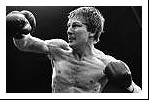
Born in the boxing hotbed of Bridgeton in Glasgow's East End on 18 July 1948, Jim Watt's first love was soccer, but the long, harsh winter of 1962-63 scuppered the young would-be footballer's ability to play. Instead he went to the warmer climes of James Murray's Cardowan amateur boxing club at Maryhill.
Despite splitting from Murray later on to join top Essex-based English coach and cornerman, Terry Lawless, no-one can deny that under Murray's early inspirational guidance the younger Jim Watt, budding but frustrated soccer player, was transformed into Jim Watt, outstanding amateur southpaw boxer.
Watt was good enough to knock out - inside one round - future British European and WBC world welterweight champion, from London, John H. Stracey to take the British Amateur Boxing Association title in 1968. But even then, Jim Watt Esquire was his own man, having an independence of attitude born of losing his beloved dad at the age of 38 to bronchitis.
|  |
© BBC | |
|
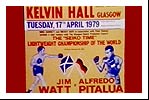
The reason? Watt had already decided to turn pro under the guidance of Jim Murray, a natural loner who ironically idolised that master of social collectivisation, Socialist MP Aneurin Bevan. In the paid ranks there was those who attributed the early Jim Watt's pro career record of only boxing at one single top class London venue in 29 bouts down to his cautious, defensive southpaw style that the boxer had evolved under Murray.
However, on the plus side of this scenario, Watt was spared the early career hammerings that have ruined many a young prospect, which, in turn, explains the marvellous, unmarked freshness he brought to world-class boxing once the big career breakthrough took place. On the other hand, boxing in an ultra-defensive style led him to being referred to as 'Jim Who?' because he fought mainly (16 out of 29 bouts) in private members' clubs for what he claims was pocket money for other champions.





