

 |  |
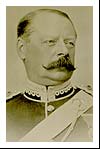
© Local Studies Library, Renfrewshire Council | |
|
Yachting may not seem the most typically Scottish of sports, but, particularly centred on the Clyde, it took off in the Victorian period, to the point where the Clyde was second only to Cowes on the Isle of Wight in popularity. By the end of that century, the Royal Clyde Yacht Club, formed in 1856 as the Clyde Model Yacht Club, had around 1,000 members and 400 yachts.
After establishing a base at the Royal Marine Hotel in Dunoon, the Club became highly successful throughout this period, and, in the year 1887, was ready to launch a challenge for yachting's premier event, the Americas Cup.
One member of this club had another ambition in mind however, and he was to realise it in 1908. Thomas Glen-Coats was a member of the Coats textile dynasty pf Paisley, the eldest son of Sir Thomas Glen-Coats and heir to the Baronetcy. As such Thomas jnr did not have to worry too much about earning a living, and was able to devote himself full-time to his many interests – everything from sailing to Antarctic exploration (part of Antarctica is known as Coatsland after an expedition funded by Thomas and his brothers.)
Yachting however, was Thomas's first love, and he assembled a crew on the yacht Hera with the intention of challenging in the 12-metres class at the 1908 London Olympics. Early Olympics could often be strange affairs, international travel was slow and expensive, and the 1908 event was hit an Italian financial crisis which saw the Games switched at short notice to London, and by political boycotts which further affected entries.
The outcome of this in terms of the yachting competition was that there was very little international competition, and, in fact, in the 7 metre class, there was only one entrant. Two boats contested the 12 metre class, the Hera, and the Merseyside yacht Mouchette, ironically owned by the son of a Scotsman, Charles MacIver.
Page: 12




