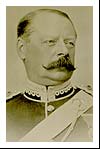
Previous Page The Yacht Hera: Paisley's Olympic Champion 1908It is a little known fact that, amid all the debate surrounding the benefit that a successful 2012 London Olympic bid would bring to Scotland, on a previous occasion when the British capital hosted the Games, not only was an Olympic event staged in Scotland, but that the winners of gold in the event were Scots.Yachting may not seem the most typically Scottish of sports, but, particularly centred on the Clyde, it took off in the Victorian period, to the point where the Clyde was second only to Cowes on the Isle of Wight in popularity. By the end of that century, the Royal Clyde Yacht Club, formed in 1856 as the Clyde Model Yacht Club, had around 1,000 members and 400 yachts. After establishing a base at the Royal Marine Hotel in Dunoon, the Club became highly successful throughout this period, and, in the year 1887, was ready to launch a challenge for yachting's premier event, the Americas Cup. One member of this club had another ambition in mind however, and he was to realise it in 1908. Thomas Glen-Coats was a member of the Coats textile dynasty pf Paisley, the eldest son of Sir Thomas Glen-Coats and heir to the Baronetcy. As such Thomas jnr did not have to worry too much about earning a living, and was able to devote himself full-time to his many interests – everything from sailing to Antarctic exploration (part of Antarctica is known as Coatsland after an expedition funded by Thomas and his brothers.) Yachting however, was Thomas's first love, and he assembled a crew on the yacht Hera with the intention of challenging in the 12-metres class at the 1908 London Olympics. Early Olympics could often be strange affairs, international travel was slow and expensive, and the 1908 event was hit an Italian financial crisis which saw the Games switched at short notice to London, and by political boycotts which further affected entries. The outcome of this in terms of the yachting competition was that there was very little international competition, and, in fact, in the 7 metre class, there was only one entrant. Two boats contested the 12 metre class, the Hera, and the Merseyside yacht Mouchette, ironically owned by the son of a Scotsman, Charles MacIver. It seemed silly to send both boats to Cowes, where the other yachting events had been held, and so both owners tossed a coin to decide where the event should be held. Coats won, and so an Olympic event came north for the first and, so far, only time. The competition was to be decided over a three-race series, and the event took on something of a national contest, with the Hera entirely crewed by Clydemen, and Mouchette by Merseysiders, although the contest was extremely friendly and sportsmanlike. In the event however, only two races were needed to decide the event, as on home waters, the sailors of the Hera, under the watchful eye of their captain, Glen Coats, convincingly won the first two heats and took the title, although in the second race the Hera was somewhat fortunate in that Mouchette's start was partially blocked by an anchored steam yacht, named Hebe, which gave the Clyde boat an early advantage.Nevertheless, over the two races held, the Scottish crew proved superior, and their triumph was thoroughly cheered by the crew of the Mouchette, in a display which shows the true spirit of the Games. The Hera herself had a long career of sailing after her Olympic triumph, until, rather sadly, she disappeared off the coast of Argentina in 1950. Of the crew of the victorious yacht, Arthur Downes, who had qualified as a doctor only a fortnight before the Olympic finals, practiced at Helensburgh for over 40 years; John Buchanan, from Rhu, won the 1936 Tarbert Cup in his 8 metre yacht Falcon and John Mackenzie of Greenock won more than 250 prizes during a sailing career which lasted more than 50 years. Thomas Glen-Coats succeeded to the Baronetcy of Ferguslie Park on the death of his father in 1922, and, despite marrying at the age of 57, died childless in 1954, with the title dying with him. While Yachting may still not be the most popular sport in Scotland, there can be no doubt that the success of the Hera and the Royal Clyde Yacht Club laid the foundations for continued Scottish success in the sport throughout the next century. From Rodney Pattison through Michael McIntyre to Shirley Robertson at the Athens Olympics, all can be proud to be the heirs of Thomas Glen-Coats and his crew. |