

 |  |
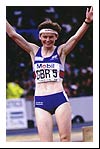
© BBC | |
|
She was also among the medals in 1988 at the Seoul Olympics, claiming bronze at the 3000m distance, finishing less than three seconds behind Tatyana Samolenko of the former USSR.
Murray and McColgan had helped give British athletics, and especially the women's sphere, new credibility and garnered respect from the public, who regarded them as the two 'queens of the track'.
"I never saw Liz give anything less than 100% in any race she competed in," said Brendan Foster, the former 10,000m Olympic bronze medallist.
McColgan justified his claims by coming back from having her year-long maternity break to win the 10,000m at the 1991 World Championships in Tokyo and created an impressive double with the New York City Marathon that same year.
Records kept tumbling as she became the first British woman to go under 31 minutes for 10,000m in a race in Norway.
The following year provided no respite for McColgan, whose relentless pursuit of glory led her to gold in the inaugural World Half-Marathon in Newcastle, setting a new world record for half-marathon of 67minutes 11 seconds.
She also tasted victory in the Tokyo Marathon and set the British Indoor 5000m record of 15 minutes and 3 seconds, a time that still stands to this day.
On top of that already memorable year, she finished 5th in the 10,000m final at the Barcelona Olympic Games, and was awarded an MBE for services to sport.
Five London Marathons, another Olympic Games and numerous other world-class events later Liz McColgan retired from top-class athletics in 2001. Yet her legacy is still felt throughout the athletics world.
| 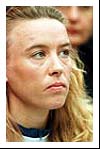 |
© SCRAN | |
|
She has maintained a high profile in Scottish sport and is now the Chairperson of Scottish Athletics, the body responsible for developing activities in Scotland and was inducted into the Scottish Sports Hall of Fame in 2004.
Page: 12






