

Although 1971 began promisingly with Stewart defeating Dave Bedford to win the AAA Indoor 3,000m title at RAF Cosford in a UK all-comers record of 7m 50.0 secs, a debilitating abscess wiped out his summer season.
Although he brought home a bronze medal from the 1972 Olympic Games in Munich, Stewart was deeply disappointed at both his performance and how the final had been run. Whilst most pundits were anticipating the first 3K to be covered in a time close to eight minutes, in the event it was in fact 20 seconds slower. Finland's Lasse Viren who had earlier won the 10,000m title took control and completed the Olympic double in 13:26:4.
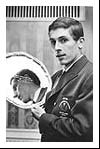 |  |
© SCRAN | |
|
A disappointing fifth place over 5,000m and sixth at 10,000m in the Commonwealth Games in New Zealand in early 1974, prompted him to try his hand at cycle road racing that summer.
Having "recharged his battery" the Scot returned to athletics with a bang. In March 1975 Ian made athletics history when in the space of one week, he not only won his second European Indoor 3,000m title in the Polish city of Katowice but also followed this by defeating a global who's who of endurance running including Lasse Viren to win the World Cross Country title at Rabat in Morocco. Thirty years later, he remains Great Britain's last male winner in this World championship race.
His next objective was to step up in distance to the 10,000m for the 1976 Montreal Olympics and all his training was geared to that goal. In what was one of the hottest ever-English summers, "the tough of the track" was forced to drop out of the Olympic Games 10,000m trial at the Crystal Palace because of a blister the size of an egg on the ball of his foot. Although in excruciating pain and with his foot heavily strapped up, Stewart proved his fitness by completing 10,000m in Finland four days later in a world-class time just outside 28 minutes.
Although the other contender Bernie Ford declined the opportunity to compete in a run off with Stewart, the Selectors perversely selected Stewart for the 5,000m and Ford for the 10,000m.
After leading the 5,000m final at the bell, Stewart placed seventh in a season's best time of 13:27:8 in a race in which Lasse Viren achieved athletics immortality with a fourth Olympic gold medal.





