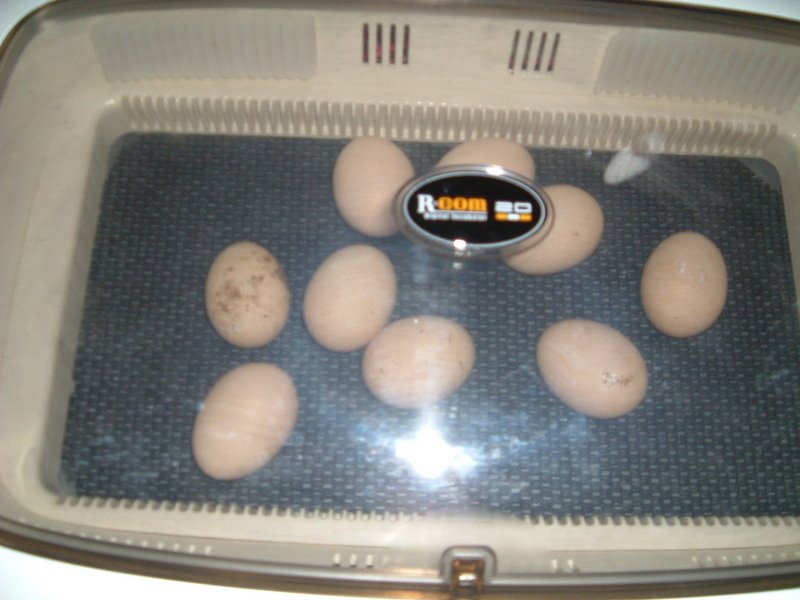
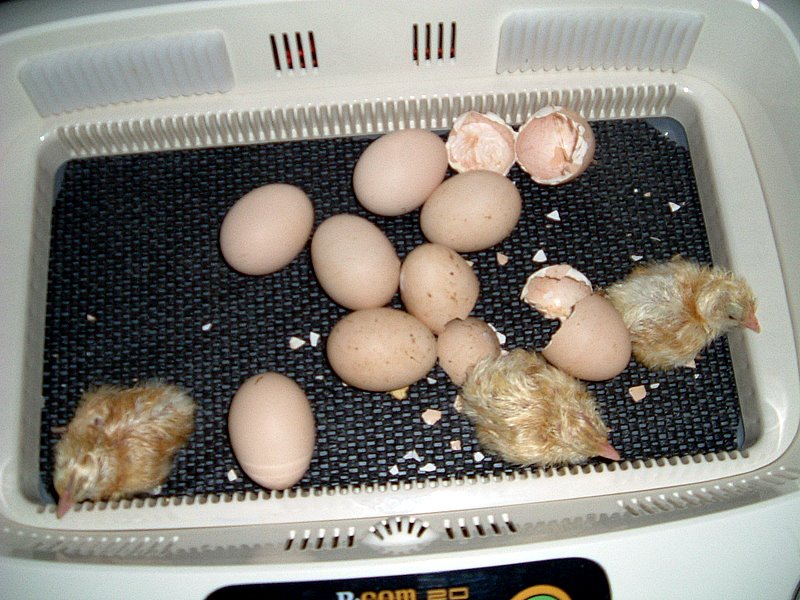
Walking past the spare room I catch a tiny snatch of the sound I have been waiting for. Chirping is coming from the eggs in the incubator; I peer through the clear plastic lid and see at least three of the eggs are pipped – where the shell is broken by the baby as it tries to hatch out. Leaving them to get on with it, I return a few hours later to find three small yellow fluffy chicks nestling amongst the remains of their shells. Leaving them until morning I find three more, who are all transferred to the brooder.
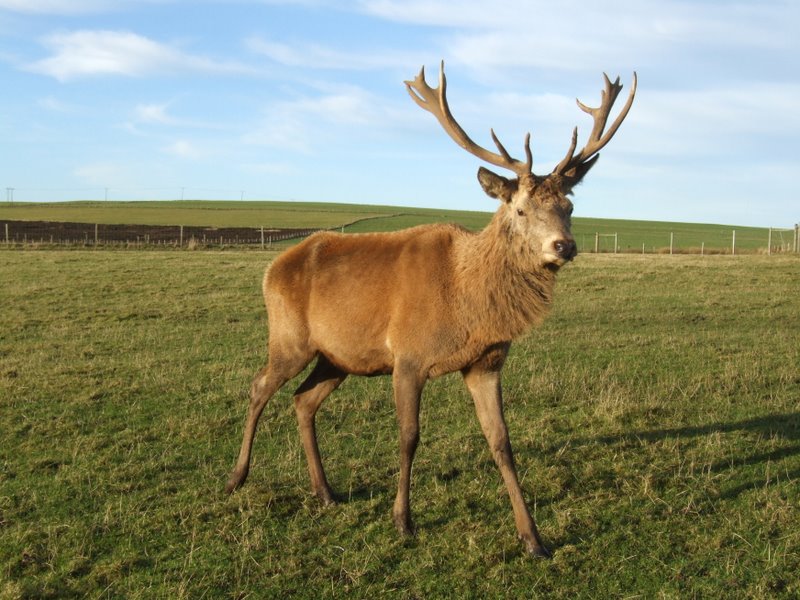
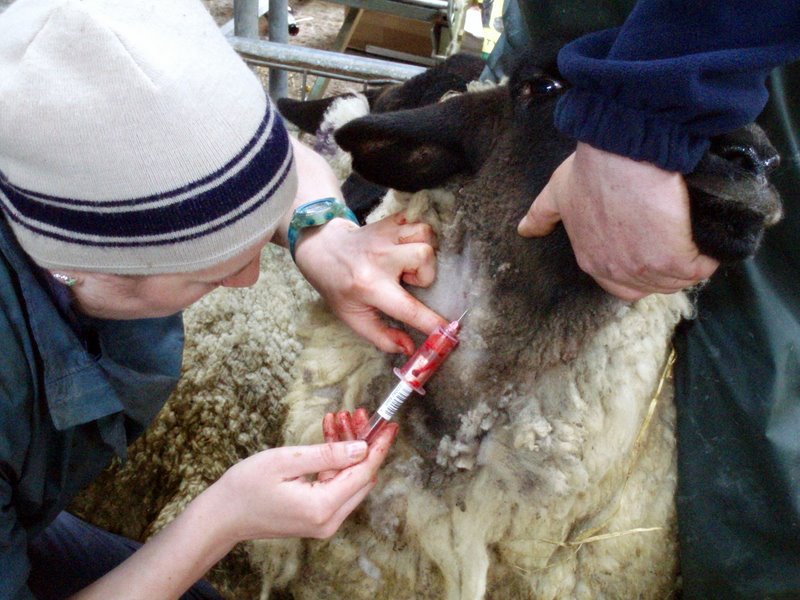
I pull on my wellies and start my jobs, pouring grain and pellet food into buckets and then into the troughs in the main shed. Every single sheep is yelling its head off as I walk down the central aisle and they all race around to be first to get their noses into the metal container as I swing it into the pen. Next I attack the huge bale of haylage and fork it into the big wheelbarrow filling it twice over, and transferring it to their hay racks. Lastly I climb onto the stack in the GP shed and throw down eight bales of straw to go into the lambing shed for bedding. Two buckets of food are poured into the troughs for the deer, and I go and hose out all of the various poultry and re-fill their feeders.
All of the above takes around an hour and a half, if I rush i can get it down to around 45 minutes.
Other jobs I have done is power washed part of the lambing shed to stop it getting icy and slippy when the cold weather comes along. Cleared part of the store room and now have a huge pile of stuff to be thrown away.
Oh yeah, and I write some stuff to put on here too :o)
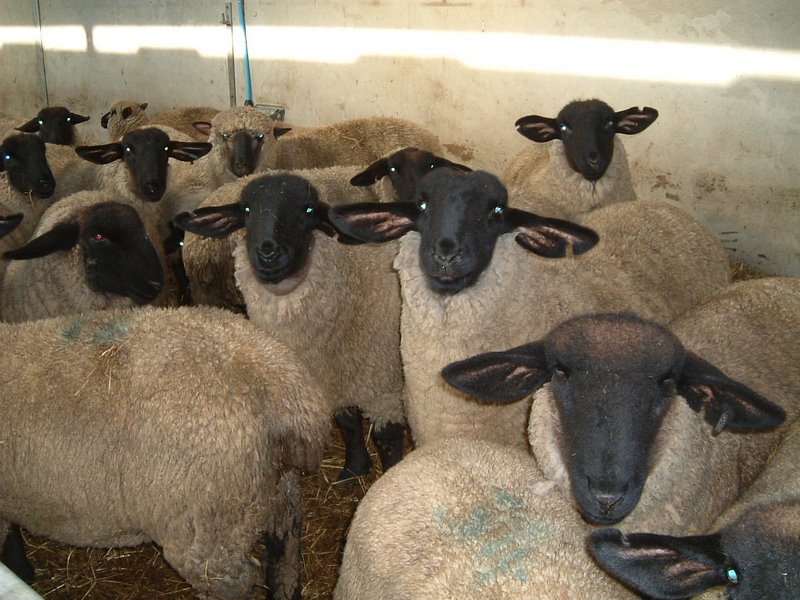
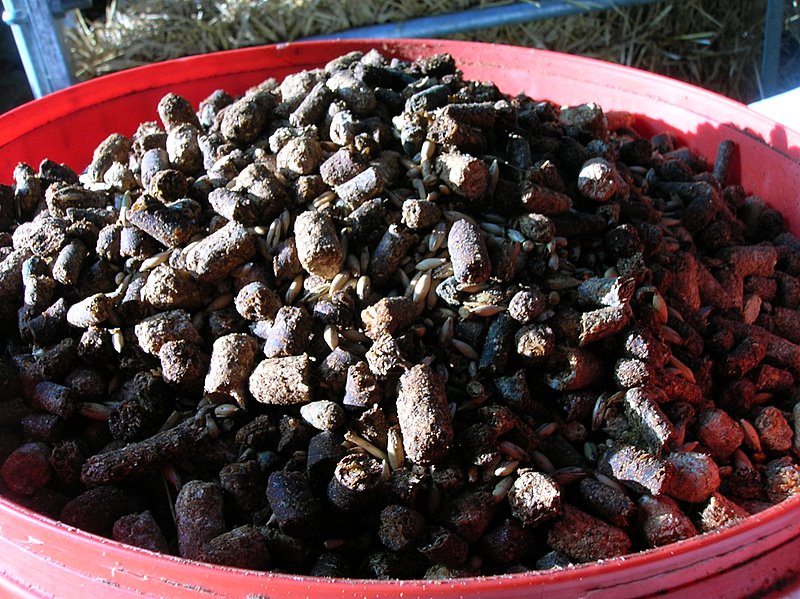
Repeat the above twice a day, with the occasional other bit thrown in to keep me on my toes.
________________________________________________________
Sitting in the office contemplating a bath, I glance upward into the usually black void that is the deer fields and sky above. Occasionally you get the lights from an aircraft coming into land at the airport, but this was different. The bright red light drifted slowly down before blinking out. Grabbing the phone I dial 999 and ask for the coastguard to be put through to the friendly voice in the control room perched on the Knab, Lerwick, Shetland. We visited them when we went to Shetland earlier in the year with a group of divers.
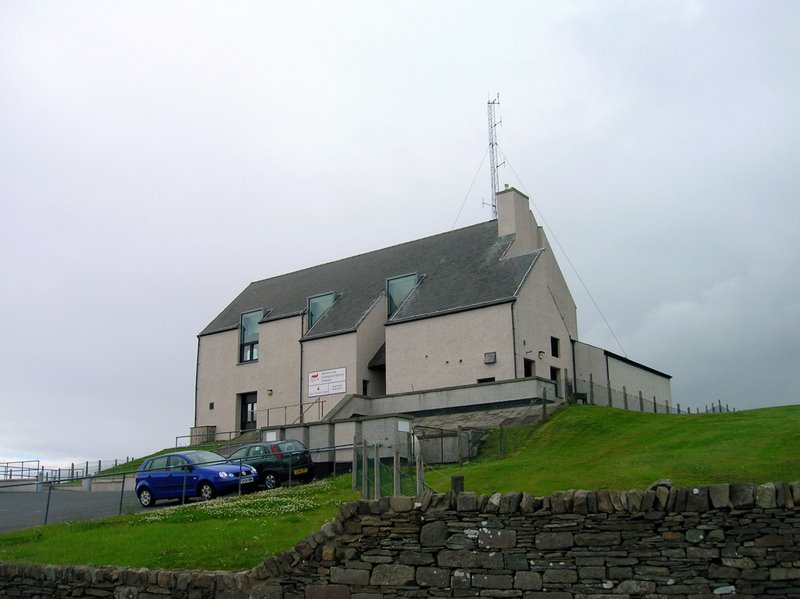
Orkney is covered by Shetland Coastguard and they would coordinate a search for anyone in trouble. The proximity of bonfire night made me slightly dubious as to if it was someone in trouble, but you can’t take that risk and I am thankful it is not my decision to make. Turns out it was the third false alarm in only a few days. Someone somewhere needs to be shown what happens when the lifeboats get called out and its not a nice night.
The below story was put on my old blog so some might have already read it. I will repeat it here for those who might not.
_______________________________________________________________
Grabbing some binoculars from the drawer I peer with some difficulty towards the shore of South Ronaldsay. We were making for Kirkwall, Orkney, a five hour journey by sea from Stromness via the Pentland Firth. A rolling easterly swell gently pushed us to a five degree roll, severely diminishing my ability to focus on what had caught my eye. But, despite the roll, I could make out a huge rusted boiler pushed up onto a rocky beach below the patchwork of green fields dotted with cows.
This sighting remained forgotten about until we met up with Kevin Heath, a local diver with a huge talent for finding and researching wrecks. He informed me that the boiler was that of the Irene, a 2,300 tonne Liberian steamer which was wrecked after issuing an SOS that she was drifting out of control in a force 9 south east gale. The vessel finally went aground on the shore of South Ronaldsay on the 17th March 1969. The whole crew were taken off the stricken boat, with no harm coming to any of them. But this is only a tiny fraction of the story.
As you would expect, the lifeboat had been launched to assist with any rescue, named the TGB after an anonymous donor, it battled from its home port of Longhope, a small community in South Walls, Hoy. To get to the position of the Irene, it had to pass through the Pentland Firth.
The Pentland Firth is a fearsome stretch of water that separates Orkney from the mainland. The tide surges through this narrow space, rushing around the now abandoned islands of the Swona, Stroma and finally the Pentland Skerries with their characteristic double lighthouse. Working on the liveaboard the Valkyrie has meant that we have to through the firth occasionally, and each and every time it makes the hairs stand up on the back of my neck. These days it is filled with the vast bulk carriers heading east or west, channel 16 alive with their calls notifying the coastguard they are entering or leaving the Firth. These turbulent dark waters have become the graveyard of many a ship, and making 2 knots backwards against the current in a back eddy, I can see why.
The comparatively tiny lifeboat entered this wild stretch of water in the raging southerly gale, finding that the tides had met with the awesome opposing force of the wind and created a terrifying situation. At 8.40pm, forty minutes after launching the lifeboat gave her position as 3 miles south east of Cantick Head Lighthouse on South Walls, five miles from her launching place.
At this point she would be entering the tidal race which can make nine knots, versus the gale force winds whipping the sea to a fury. At 9.30pm the TGB was sighted by the lighthouse keepers on the Pentland Skerries, around four miles south east of her previously reported position.
The last reporting signal from the TGB was picked up by Wick Coastguard as she still ploughed north to assist the Irene. This was the last that was heard from the TGB.
The following afternoon after a massive search Thurso Lifeboat found the TGB floating upside down four miles south west of Torness with extensive hull damage. Once righted in Scrabster harbour seven bodies were found in the wreckage. Six of these were in the cabin, one in the Supernumerary and the coxswain still at the wheel with a broken neck. The eighth member of crew, the motor mechanic was never found. Coxswain Daniel Kirkpatrick, Second Coxswain James Johnston (son of Mechanic), Bowman Daniel R Kirkpatrick (son of Coxswain), Mechanic Robert R. Johnston, Assistant Mechanic James Swanson, Crew Member Robert Johnston (son of Mechanic), Crew Member John T Kirkpatrick (son of Coxswain), Crew Member Eric McFadyen. They left seven widows, one widowed mother and eight children, all of whom were pensioned by the RNLI.
Picking our way down the grassy slope to the pebble beach we can see the remains of the wreck poking from the glistening smooth water. Soon there are sections of plate, twisted and unrecognisable as any part of the ship. Two huge boilers lie among the jumble. A complete section of what was once the deck has been bent over, the wooden planking still attached to the underside where it has remained protected from the weather. When the Irene was run aground she was totally intact, what little is left of her is testament to the awesome power of the sea.
Sitting quietly on a section of plate I can’t even imagine the fear felt by the guys in that lifeboat in their final moments. The sheer bravery of going out in that kind of weather is unimaginable to most people, the irony that the stricken vessels crew actually walked ashore is never far from my mind. Somehow it seems so unfair.
Leaving the wreck to her peace, she seems an unlikely monument to those men lost attempting to save her.
Sometimes it is easy to forget the impact the sinking of a boat has. Not just on the people on board, but on those who go to their aid. The tiny community of Longhope was devastated by this tragedy. Fathers, sons, brothers all lost going to the aid of others.
Photographs are here: -
http://picasaweb.google.co.uk/porgthediver/TheIreneSouthRonadlsay
_______________________________________
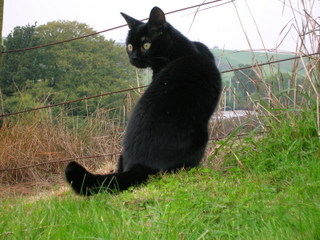
Now, some of you might have noticed that I have a real soft spot for cats. I miss the two I left with my ex more than anything in the world. The little one is pretty brainless so no chance of bringing her up here, she would be squished flat by either a sheep, deer, tractor or goose in 5 minutes flat. The five on the farm are my adoptive cats now, but they are farm cats and dont do the cuddle thing too well.
Scuba Cat who now lives too far away.
To settle the balance of cat/dog on the farm with the recent loss of Harry the King Charles, Carolyn is away picking up Hera, a Leonberger puppy. I really dont like big dogs. Seriously, they scare me a bit and this thing will grow to be a monster! 32inches to the shoulder! Thats longer than my inside leg! Time will tell, but I will post pictures to keep the karma right.


 After coming to Orkney in May 2006 for 8 months, somehow I am still here. Running the MV Valkyrie in the summer and helping on the farm in winter is now my life.
  RSS Feed