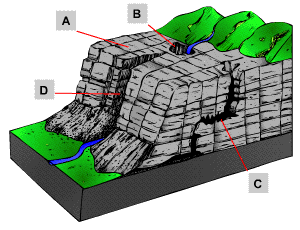
Explain how one of the features marked A - D are formed.
Answer A A is a limestone pavement which is formed when the joints in the limestone are dissolved away by the rainwater. Limestone is dissolved because rainwater is a weak carbonic acid. The joints which are widened and deepened by this chemical weathering are called grikes. The blocks which stick up are called clints. Plants growing in the sheltered grikes can give off acid and this will deepen the joints even more.
Answer B B is a swallow hole. When a stream travelling over an impermeable rock reaches an area of carboniferous limestone it will start to dissolve the limestone and work its way down the limestone. This hole will get wider and deeper as the water keeps dissolving away the limestone. This swallow hole will lead down to an underground cave system.
Answer C C is an underground cavern. When a stream reaches limestone it will work its way down through the joints and bedding planes dissolving away some of the limestone as it goes. Water running along a bedding plane can wear away the roof of the cave if the water table is quite high. Sometimes the joints of the limestone give way and some of the roof will collapse forming a big limestone cavern.
Answer D D is a gorge. When a cavern has its roof eroded continually by a subsurface stream it will get higher and higher. As chunks of limestone get worn away or blocks collapse, the cavern roof eventually collapses and a steep-sided gorge is formed.






 Explain how one of the features marked A - D are formed.