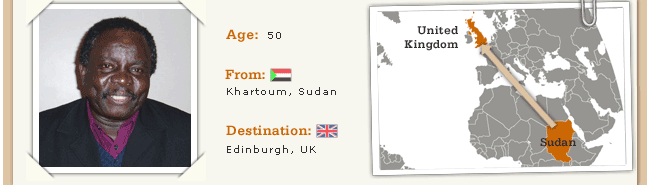
 |  | |  |  | There has been civil war in Sudan for the past forty years. In 1989 there was a military coup against the elected government and there were escalating problems between the ‘Arab' Sudanese in the government controlled north and the ‘African' Sudanese in the south. Mohey, being an African in Khartoum (in the north), decided his family would be safer in another country. His brother was studying at St Andrews University and asked Mohey to come over to the UK. In 1991 Mohey contacted the British Embassy, arranged tickets for himself, his wife and four young children, flew to Heathrow and took an overnight coach to Edinburgh. |
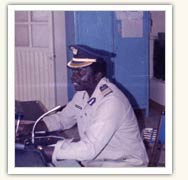
 | 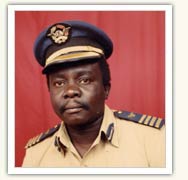 | In 1991 Mohey was working as an airport manager in a regional airport in north Sudan. The government had introduced military training to all people, even civil servants. One of his friends was in the next group of people due to be sent to fight in the civil war in the south. This speeded up his decision. Rather than fight against his own people, he would leave the country. Mohey left behind his mother, two sisters and two of his brothers in Khartoum and he is still concerned about their safety. He worries that they are discriminated against. He keeps in touch by phone from time to time and sends back money to his mother. He'd have loved to have his extended family join him but he can't afford to help them come over. |
 | 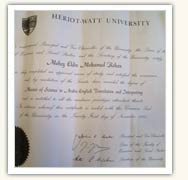 | It was difficult, at first, adapting to life in a new country and Mohey didn't know where to start. As an asylum seeker, he got support from the UK government: income support and a basic place to live. He found himself doing a whole variety of jobs – many of which were dirty and low paid, jobs that British people didn't want to do; cleaning and so on. His wife looked after their one-year-old and the other three children joined the local school. His children soon picked up English and his wife attended English language lessons when their youngest was a bit older. It was eight years before they were granted refugee status. During that uncertain time he had many sleepless nights worrying what would happen to his family if he were to be sent back to Sudan. Refugee status gave Mohey a chance of full-time study. He went to university, and he completed an MSc in Arabic-English Translation and Interpreting while working evenings and weekends. Already holding a diploma in Civil Aviation and a degree in Sociology, Mohey is typical of most educated people in Sudan: forced to escape the country. He was not an ‘economic migrant' looking to earn better money in a new country. |
 |  | Mohey, his wife and four children have settled into life in Scotland and are contributing to the society which helped them start their new life. Mohey still works hard to help support his family and mother back home. He is an Edinburgh Bus Station Inspector, a taxi driver and also does interpreting work. His wife is a nurse and their children are at school or university. Mohey remains as surprised as he did when he first came to the UK at the stigma and what he describes as the media ‘hoo-ha' that accompanies the ‘issue' of asylum seekers/refugees, which, to Mohey, isn't an issue at all. He is chairman of the Sudanese Community in Scotland, helping others settle into new lives with regular meetings, and keeping the Sudanese culture alive with occasional parties and festivals. There are around 600 in their group and Mohey understands and sympathises with their individual struggles. He is particularly worried about one person who is now facing deportation after eight years of settling into the community. Now that there is a declared ceasefire in Sudan and hope for peace, Mohey hopes to return home soon, back to ‘the warm place' and his mother. He'd like his children to return with him but will not stand in their way if they want to stay in the country where they've spent most of their lives. |

| |
|