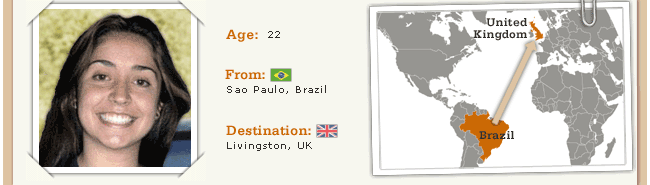
 |  | |  | 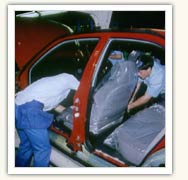 | Andrea's mother is Brazilian. Her father was Portuguese. She and her mother have dual nationality and hold Brazilian and Portuguese passports. Her father was a production manager with Volkswagen in the Anchiete plant near Sao Paulo, who came over from Portugal in 1978. Originally, he went to train the local workforce but stayed on having met Izabella, a Brazilian girl later to be his wife and mother to Andrea. He died in an industrial accident in 1987. Andrea and her mother worked in the same car factory in Brazil, but both were made redundant in 2003, when Volkswagen cut the workforce because of falling orders. |
 | 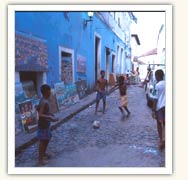 | Andrea and Izabella found it difficult to get another full time job after losing their jobs in the car factory. In Brazil there is no government unemployment benefit scheme and people who lose their jobs have to rely on a one off cash payment which is meant to help tide unemployed workers over spells of unemployment. Because of high inflation in Brazil, this limited payment did not go a long way and both had to rely on part time jobs and casual work. Andrea worked as a shop assistant and in a couple of restaurants but the wages were really low compared to the car factory and she had little left to spend after paying the bills. Rather than eat into their limited savings, Andrea and her mother decided to take the opportunity to travel to Europe to visit some of her husband's relatives in Portugal and get some work in Europe. |
 |  | Andrea and her mother stayed with her aunt in a small town outside Lisbon for about four weeks. They both registered with an employment agency, which kept a database of short term contract jobs throughout the European Union. Because they both held Portuguese passports, there were no problems with work visas etc. If they'd only had Brazilian passports, they would have had to apply for work permits and visas to be allowed to work within the European Union. They spent four months working in a small textile factory near Lisbon. The working conditions were not very good, so they decided to try their luck elsewhere. They signed up for a six month contract in a food processing factory just outside Edinburgh. Even on minimum wages, they are a lot better off than they had been in Brazil. |
 |  | Andrea and her mother stay in a large three bedroom house which they share with eight other Portuguese workers. The house is rented by the agency and their rent is taken directly off their salary. They work one of the three eight hour shifts at the food processing factory. More than 40% of the workforce comes from a variety of EU countries, including Estonia, Portugal, Slovakia, Poland and Greece. Most of the workers stay for three to six months and then move on to other jobs, through the agency. The company used to have problems hiring local people for some of the lower paid production line jobs and now rely on these agency workers, working short term contracts at the busiest times of the year. The work on the production line is much harder that they were used to in the car factory, but Andrea and her mother are planning to do as much overtime as they can to build up some savings, then find a better paid job. They do not have much of a social life where they live and most of their free time is spent with the other Portuguese workers in the house. They are unlikely, however, to stay in Scotland as nobody had told them it would be so cold and wet. They plan to try their luck in England or move back to Brazil to stay with relatives in Florianopolis on the Atlantic coast. |

| |
|