

Thursday 16 October 2014

Service Performance
From award-winning dramas and documentaries to innovative children's game shows and fresh new comedy talent, BBC Scotland's creative output on TV , radio and online excelled across the year.
Television
In News, Reporting Scotland's audience increased for the second year in a row. More than 477,000 now watch each weekday at 6.30pm, compared to an average audience of 465,000 in 2008.
Nearly one million people tuned in on 4 January as blizzards and freezing conditions swept across the country. For more than a week our TV news coverage provided vital information and live reports from around Scotland to huge audiences watching on BBC One.
Reporting Scotland and Newsnight Scotland were both in the vanguard of media coverage of the release of the Lockerbie bomber. Glenn Campbell won one of TV's most prestigious News awards – the Royal Television Society's Award for ‘Scoop of the Year’ – for breaking the story.
In June 2009, BBC Scotland marked a decade of devolution with a live televised debate and Brian Taylor's documentary, Holyrood and the Search for Scotland's Soul.
In December 2009, we focused on renewable energy in the run up to the Copenhagen Conference and Hayley Millar investigated Scotland's renewable energy potential in Power of Scotland. Jackie Bird travelled to Afghanistan in February, to report on the Scottish medics running the main field hospital at Camp Bastion. Her live reports featured on Reporting Scotland and in the documentary For Care and Duty.
Throughout the year Business Editor Douglas Fraser provided analysis of the ongoing economic crises, with a particular focus on the Scottish financial sector.
BBC Scotland's Investigations Unit ran a number of high profile reports. The Millionaire Thieves revealed how organised crime makes millions from shoplifting, Hash in the Attic examined the growing problem of cannabis farming and The Buckfast Code investigated the links between tonic wine and violent crime.
For network, the Panorama investigation into Britain's Homecare Scandal won a Scottish BAFTA and prompted a parliamentary motion that applauded it for being “in the finest tradition of investigative journalism.” A strong year for factual programming included a number of highlights. The This is Scotland season on BBC Four offered programmes as varied as Rory Bremner and the Fighting Scots, Peter Capaldi's Portrait of Scotland and Off Kilter, Jonathan Meades’ idiosyncratic and provocative view of Scotland and the Scots.
December saw the second half of the BAFTA award-winning series A History of Scotland transmit on BBC One Scotland, repeated on BBC Two network and on the BBC HD channel.
Jimmy's Food Factory was a huge hit, with nearly six million viewers on BBC One network, the highest rated science format on the channel. Global Harvest played well on BBC Two, where Simon King's Shetland Diaries also peaked with an audience of 3.2 million.
A number of key programme strands transferred to Scotland as part of the BBC's Network Supply Review. The Review Show (formerly Newsnight Review) began broadcasting from Pacific Quay in January and Imagine saw Alan Yentob explore topics as diverse as Scrabble and the work of influential sculptor Anish Kapoor. They join an increasingly impressive roster of BBC network arts programmes from Scotland, which includes The Culture Show and Artworks.
Mark Beaumont's latest epic journey took him from the heights of Mount McKinlay in Alaska to Ushuaia in southern Argentina, a journey of some 13,000 miles and all of it played out daily in two-way conversation with our audiences via social networking sites. Cycling the Americas was broadcast in March on BBC One.
Around 20% of all of the BBC's Children's programming is commissioned from Scotland, and most of it is made by our Children's Department.
Nina and the Neurons continued to bring to life science and technology for the under-6s on CBeebies and Ed and Oucho's Excellent Inventions did likewise for 9-12 year olds on CBBC . Raven, now in its 10th series, continued to captivate its loyal young audience, the animated television series OOglies for CBBC broke new ground and work commenced on the hugely innovative multiplatform game show, Mission:2110.
In drama, Hope Springs, from Shed Productions, charted the travails of four women on the run and hiding out in a small Scottish town and Personal Affairs offered offbeat drama for BBC Three.
Wallander, the award winning adaptation of the Henning Mankel novels, set in Sweden and starring Kenneth Branagh, proved a hit with audiences on BBC One: a third series has been commissioned.
The fifth series of Waterloo Road continued to reflect the ups and downs of daily life in a secondary school. The popular River City, now in a one hour format, remains Scotland's only dedicated soap opera and One Night in Emergency marked the television debut of acclaimed writer Gregory Burke.
In entertainment, T in the Park, Scotland's biggest music festival, was brought to UK audiences with live and highlights coverage on television and radio, online video steaming and 87 hours of footage available via the BBC Red Button service.
The World Pipe Band Championships online videostream attracted over 46,000 hits from viewers across the UK, US, the Commonwealth and Europe. The Edinburgh Military Tattoo offered, in part, a tribute to Burns on the 250th anniversary of his birth; songs, poems and acts from as far afield as Tonga and China featured in the BBC One network broadcast.
In November 2009, Children In Need once again drew an impressive television audience, attracting 1.1 million viewers in Scotland and raising on the night £1.65million.
Hogmanay Live 2009 showcased some of Scotland's best traditional and modern musicians. It was available to viewers throughout the UK via Red Button and via the web (which also afforded access, for the first time, for international audiences).
Work continued to uncover, nurture and develop new comedy writing, bringing together established and emergent young writing talent from across the country. Series this year included Happy Hollidays, with Ford Kiernan, Burnistoun, and, making a successful transition from online to TV , the innovative Limmy's Show and Gary Tank Commander. On network, Life of Riley, starring Caroline Quentin, and The Old Guys, with Roger Lloyd Pack and Jane Asher, both returned for second series.
In sport, live Scottish Cup and CIS Insurance Cup action, and the World Cup qualifier between Norway and Scotland, was complemented by Sportscene's weekly SPL highlights and online clips of all the goals.
Shinty's Camanachd Cup Final was webstreamed live, allowing global access; and rallying, bowls, athletics, golf, rugby and cricket all featured during the year.
In Learning, 70 Scottish schools participated in the 2010 School Report. A Learning Zone edition of Jimmy's Food Factory was produced for younger viewers and the interactive Talkie Time sought to help 4-6 year olds to engage with numeracy and literacy. Clydeside Stories allowed four groups to tell their personal tales of how River Clyde regeneration had affected them.
In September BBC ALBA marked its first year on-air, on satellite, with a schedule featuring a variety of new programming, including Tormod, a challenging and intimate portrait of writer and entertainer Norman MacLean.
An Là brought weeknight news, with the winter weather and major local stories, such as the threatened closure of the Qinetic base in Uist, to the fore. Lifestyle challenges facing Scotland were explored in the entertaining and informative series Farpais Fhallain.
In a summer of music BBC ALBA brought the celebrated Hebridean Celtic Music Festival to a wider audience, alongside T in the Park, Blas and the Hebridean Tattoo. The Christmas schedule provided a showcase for new writing, directing and acting talent with the children's drama Siubhlachan developed in conjunction with the MG ALBA FilmG competition. A new learning zone supporting the 5-14 curriculum was launched in a weekly format, with complementary online resources; alongside Speaking our Language, learning support was enhanced by an extended Beag air Bheag website and the new Facal Oirbh site.
Under the leadership of internationally-renowned Chief Conductor Donald Runnicles, the BBC Scottish Symphony Orchestra played to audiences across Scotland, from Glasgow to Inverness, Aberdeen to Ayr, and at the BBC Proms in London. The opening concert of the season, Mahler's Symphony No.1, was broadcast on BBC Two Scotland.
BBC Scotland's public events are many and varied, each designed to allow audiences to engage directly with us in a number of ways. Across the summer, our family days reached over 50,000 people as part of the Scotland's History campaign, and Nina and the Neurons and Ed and Oucho's Excellent Inventions workshops were a feature of the Edinburgh International Science Festival.
The Pacific Quay, River City and Doors Open tours allowed visitors a look behind the scenes and media literacy workshops offered workshops in film direction and production, for young and old alike.
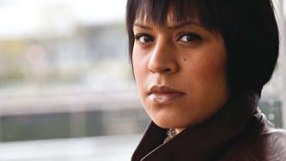
Arifa Farooq went undercover to expose systemic failings at the heart of Britain's domiciliary care system in Panorama: Britain's Home Care Scandal.
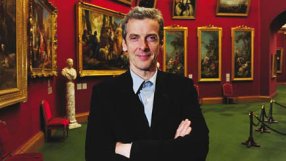
Peter Capaldi's Portrait of Scotland considered how Scotland's art has reflected the changing face of the nation.
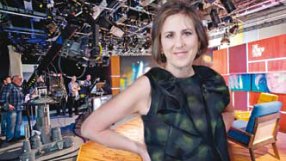
The Review Show was one of a number of network programmes which transferred to Scotland during the year.
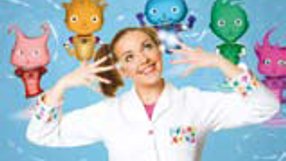
Programmes such as Nina and the Neurons continued to build BBC Scotland's reputation as a centre of excellence in children's television production.
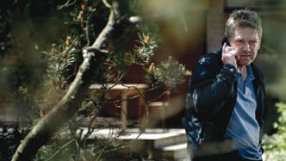
Wallander, with Kenneth Branagh, drew an average television audience of 5.7 million viewers on BBC One in January 2010.
BBC iD
BBC iDBBC navigation
BBC links

BBC © 2014The BBC is not responsible for the content of external sites. Read more.
This page is best viewed in an up-to-date web browser with style sheets (CSS) enabled. While you will be able to view the content of this page in your current browser, you will not be able to get the full visual experience. Please consider upgrading your browser software or enabling style sheets (CSS) if you are able to do so.
