 |  | |
 Roger Harrabin Roger Harrabin
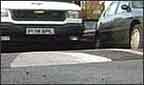
An expert tribunal set up by The Today Programme to examine the controversy over speed humps has concluded that the councils who are tearing them up may be risking people’s lives.
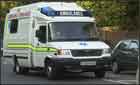
A number of councils started removing humps after fears that traffic calming measures in London alone might be costing 500 lives a year by delays to the emergency services.
But Mervyn Stone, Emeritus Professor of Statistics at University College London, says that figure in unfounded and therefore the case against humps has not been made.
He does complain, though, that concerns about emergency services haven’t been taken seriously enough by some local councils.
He wants more research on response times, and says one solution might be to put paramedics on motorbikes to carve through traffic.
Although he raises questions about some of the data on the safety benefits of humps, he says traffic calming improves the quality of life for residents and encourages children to get fit by walking and cycling.
He made his comments following a tribunal that examined a mass of evidence from campaigners for and against humps. He has been looking at evidence on road humps and speed cameras for two months on behalf of the Today Programme. The case against humps was put by Paul Smith who campaigns in favour of driver responsibility. The case for humps was made by Robert Gifford from the Parliamentary Advisory Council on Transport Safety, PACTS.
READ THE TRIBUNAL FINDINGS ON THE CASE AGAINST SPEED CAMERAS
Robert Gifford -
READ HIS FULL ARGUMENT
Robert Gifford is Executive Director of the Parliamentary Advisory Council for Transport Safety (PACTS). PACTS is a registered charity and associate Parliamentary group advising MPs and Peers on road, rail and air safety issues. Its charitable objective is "To promote transport safety legislation to protect human life".
Robert is a member of the Ministerial Road Safety Advisory Panel. Since 1997, he has also acted as a special adviser on transport safety matters to the House of Commons Transport Select Committee. He is a member of the Responsibilities and Rights of the Motorist group of the Motorists' Forum, served on the working group set up by the Highways Agency to look at the implications of the Selby road crash and is a member of the Safety Advisory Board set up by the Rail Safety and Standards Board. He also serves on the National Steering Group of the Driver Improvement Scheme.
Prior to taking up his post with PACTS, he taught English for 13 years and spent six years as a policy officer with the National Union of Teachers. Between 1987 and 1995, he was a councillor on Milton Keynes Borough Council, including three years as Leader. He is still active in local politics, serving currently as chair of Stony Stratford Town Council.
He is married and his numerous personal interests include cooking, gardening and the performing and visual arts.
Paul Smith - READ HIS FULL ARGUMENT
Paul Smith 49, has been a professional engineer, originally in electronics and latterly in computers for over 25 years. He has always had an interest in cars and driving. In the 1980s, the interest in driving became a serious passion and that led Paul to take many different courses in advanced and high performance driving on road, race track and skid pan. Towards the end of the 1980's, working in his spare time, Paul wrote most of a book called "The Art of Fine Driving", but when Paul moved to Scotland in 1990 the manuscript was lost in the move and was never submitted to publishers.
In 2001 Paul started the "Safe Speed" web site. Since that time Paul has carried out more than 5,000 hour of work mainly concentrating on: "What has been the effect of speed cameras on UK road safety?"
This work has been based largely on an detailed understanding of the principles behind the Police method of driving as explained in Roadcraft and taught the World over. Unfortunately the government and many so-called road safety experts appear to have completely forgotten that the principles underlying Roadcraft gave us the safest roads in the World.
Paul is now a full time campaigner for safer roads, better road safety information leading to higher standards of driving, and the decommissioning of all speed cameras.
Mervyn Stone
Professor Stone is an Emeritus Professor of Statistics at the Department of Statistical Science, University College London, and has worked at UCL since 1968 - on numerous projects assessing and analysing statistics as they relate to public policy. He has been Editor of the Theoretical Journal of the Royal Statistical Society, and a member of their executive council.
 Back to Reports Homepage Back to Reports Homepage
| | | | |
| | | | | |
| |
| |
|