| | | | | | | | | |

| | | WILD BLUE BRITAIN
|  | |  | MISSED A PROGRAMME?
Go to the Listen Again page | | | | | | | | |
| |
Lionel Kelleway is at his best fronting up this new series about our coasts - Wild Blue Britain - and he doesn't hold back on his infectious enthusiasm.
| | | 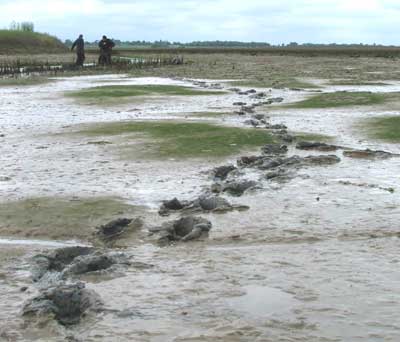 | | | Squelch! - Leila Fonseca and Steve Colclough from the Environment Agency set fishing nets at low tide. |  |  Listen again to the programme Listen again to the programme | |
Episode 3 - Muddy Shore
Mud is glorious stuff! However the trouble is that mud is a hard sell. It's not especially nice to sit on or walk on and it smells something rotten!
But this type of habitat is hugely important to Britain.
It is the best form of sea defence over many miles of coastal lowland, it's a haven for wildlife year round plus it has great commercial value.
Much of the muddy shore around Britain is made by the sediment in river water becoming sticky and gloopy when mixed with sea water and settling where the river meets the sea. The chemistry of mud is interesting - its dark smelly under-layer is rich in bacteria that eat nitrate which helps stabilise polluting run-off from farmland.
Lionel visits the Blackwater estuary of Essex where the Environment Agency are running a programme called "managed re-alignment". This essentially means breaking through old seawalls, erected 300 years ago to claim farmland from the marsh, and returning the land to muddy shore. Not only is this great for natural history, but its main purpose is to protect this habitat from annihilation through a process called "coastal squeeze" (rising sea levels pushing the marsh up against the seawall and destroying it).
Lionel discovers how commercially important fish are using these new salt marshes as nurseries within 2 years. This all has knock on effects for wildlife and recreational sports (walking, fishing, bird watching).
Such schemes have their critics, but in the Blackwater estuary the concerns of local oyster farmers have been incorporated into the planning and compromises have been found.
| | |
RELATED LINKS | | | The Blackwater Project
Essex Wildlife Trust
The Environment Agency
Blue Planet Challenge - Life on the Edge
UK Wildlife - Habitats
TV Coast series
The BBC is not responsible for the content of external websites
| | |
| | |
|