|
| THE LATEST PROGRAMME | |
|
|
|
|
|
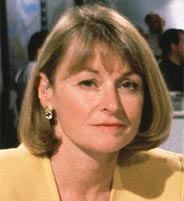
Sue Cook presents the series that examines listeners' historical queries, exploring avenues of research and uncovering mysteries.
 Email the programme with your questions. Email the programme with your questions.
 Listen to the latest programme after broadcast. Listen to the latest programme after broadcast.
|
PROGRAMME 12: 17 December 2002
 * Aston Villa Football Club - Methodists – Villa's role in forming the Football League. * Aston Villa Football Club - Methodists – Villa's role in forming the Football League.
* The Greenwich Foot Tunnel – why it was built in 1902.
* Charles Darwin – and how mid-Victorian Britain reacted to his revolutionary ideas.
* Banknote engravers – and their secret work in wartime.
|

|
PROGRAMME 11: 10 December 2002
 * Fotheringhay Castle – and its link to Mary Queen of Scots. * Fotheringhay Castle – and its link to Mary Queen of Scots.
* Paul Reynaud – Churchill’s French counterpart.
* The Great Schism - how the Christian Church split 1000 years ago.
* Redoubt fortresses and Martello towers.
|
|
PROGRAMME 10: 3 December 2002
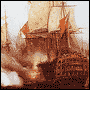 * Captain Jean-Jacques Lucas. * Captain Jean-Jacques Lucas.
* The short-lived British colony designed as a whaling station.
* Sigismund Rentzsch - 19th-century watchmaker.
* Burning boats at Gravesend - symbolism or hooliganism?
* The Julian Calendar.
|
|
PROGRAMME 9: 26 November 2002
 * Aspects of a soldier’s life - White breeches, drumming out and the Riot Act. * Aspects of a soldier’s life - White breeches, drumming out and the Riot Act.
* William Blake’s grave and the old Dissenters’ burial ground in London.
* The Edwardian Man in the Iron Mask.
* Lady Godiva of Coventry - the legend and its observance.
|
|
PROGRAMME 8: 19 November 2002
 * The St Brice’s Day Massacre, 1002 - ethnic cleansing of Danes in England * The St Brice’s Day Massacre, 1002 - ethnic cleansing of Danes in England
* HMS Bulwark and HMS Princess Irene - how they exploded in W.W.1.
* Lewes Bonfire Night and its anti-Catholic origins.
* The London Gazette - the history of the official newspaper of record.
|
|
PROGRAMME 7: 12 November 2002
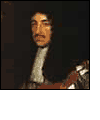 * Sir Joseph Williamson, Charles II’s Secretary of State. * Sir Joseph Williamson, Charles II’s Secretary of State.
* The Rye House plot - the failed scheme to assassinate Charles II.
* The Maxim machine-gun - the weapon that changed war.
* Hiram Codd - the man whose bottles revolutionised fizzy drinks.
|
|
PROGRAMME 6: 4 November 2002
 * The Antarctic Northern Party - the survivors of Captain Scott's expedition. * The Antarctic Northern Party - the survivors of Captain Scott's expedition.
* Thorpeness and the House in the Clouds - the fantasy holiday village.
* Oilseed crushing - Hull's great 19th-century industry
* Horsehoes - who first thought of shoeing a horse?
|
|
PROGRAMME 5: 29 October 2002
 * News of Nelson’s death - how the news got back and to where. * News of Nelson’s death - how the news got back and to where.
* The Prince Bishops of Durham - the powerful mediaeval prelates.
* Flannan Light - the mystery of the Scottish lighthouse.
* Sir John Cass - the seventeenth-century London businessman and philanthropist..
|
|
PROGRAMME 4: 22 October 2002
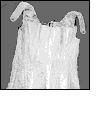 * Whalebone and corsets. The industry that changed the shape of the body. * Whalebone and corsets. The industry that changed the shape of the body.
* The Girl Pat. The Grimsby fishing boat that vanished
* The Huddersfield Workhouse scandal.
* The Benin expedition of 1897. A sorry chapter in British imperial history
|
|
PROGRAMME 3: 15 October 2002
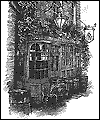 * The Olde Mitre - in London or Cambridgeshire?. Why an ancient tavern is not part of the City of London. * The Olde Mitre - in London or Cambridgeshire?. Why an ancient tavern is not part of the City of London.
* Charles Atlas (1893 - 1972). The world's most perfectly developed man?
* Belvederes - the look-out towers of Maldon. Watching for ships from an Essex port
* Khalid Sheldrake and the South Shields Port Riots - a Muslim convert's involvement in race riots
|
|
PROGRAMME 2: 8 October 2002
 * Woking Mosque - the first purpose-built mosque in Britain. * Woking Mosque - the first purpose-built mosque in Britain.
* The sweating sickness - the epidemic which killed thousands in Tudor times.
* Two female eighteenth-century pirates.
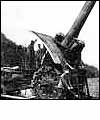
* Big Bertha - the big howitzer used by the Germans to attack Liège in W.W.1.
|
|
PROGRAMME 1: 1 October 2002
 * Defender of the Faith - F.D. or Fidei Defensor on coins. * Defender of the Faith - F.D. or Fidei Defensor on coins.
* Elisabethville - the Belgian village in County Durham.
* The Cotton Famine - the crisis in the Lancashire cotton industry in the 1860s.
* Spartacus - the story of the rebel gladiator
|
|