

16:30 - 17:30
Sean Rafferty presents a selection of music and guests from the arts world.
 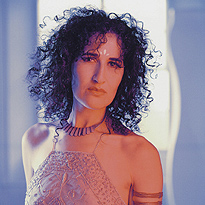  AIDA NADEEM (IRAQ/DENMARK)  The music industry in Iraq has more or less ground to a halt in the chaos that has engulfed the country since the American led invasion of 2003. Even so, this nomination is a timely reminder that musicians are prominent among the many people forced into exile, both before and after the fall of Sadam Hussein. Born in 1965, Aida Nadeem grew up with open ears in a cosmopolitan neighbourhood of Baghdad, and took her first steps in music as a twelve-year-old, when she began to study the bassoon at a local academy. She was drawn to both classical and avant-garde music and by 1986, had landed her first job as a musician with Iraq’s Symphony Orchestra. However, she was also involved in politics, and it was this which eventually meant she had to flee her country. In 1991, she found herself living in Denmark, where she continued her studies at the Royal Danish Academy of Music. At the same time, she was becoming involved in the Danish underground music scene, dabbling in dance/world crossover, and starting to develop her skills as a vocalist, drawing inspiration not only from Arabic but also Turkmen vocal styles of Northern Iraq. In the UK, she has appeared at Glastonbury, WOMAD and the Cambridge Folk Festival, along with her collaborators The Angel Brothers. With her band Arabian Underground, she released her first album in 1998. Arabtronica (2002) developed a more clubby sound, and the fully formed results of her experimentation can be heard on Out of Baghdad (2005). She wrote and arranged all the music, and the album pointedly features Fun-Da-Mental’s Aki Nawaz in the production credits – one of her early influences. Dubbed ‘ethnic synthetic’, her music combines aspects of ambient, trip hop, Arabesque and even ‘Asian underground’ styles with some traditional Iraqi poetry alongside her own lyrics. It’s all topped with her trademark vocals – a highly individual, almost scat-like style with distinctive non-verbal elements. Jon Lusk Aida Nadeem's website Read other people's comments then  Tell us what you think: Tell us what you think:Ron White Sukhendu Patra,Nabagram, Bengal kaggen- Egypt | |
| ||||||||||||
| | |
 Listen to 'Baghdad'

BBC iD
BBC iDBBC navigation
BBC links

BBC © 2014The BBC is not responsible for the content of external sites. Read more.
This page is best viewed in an up-to-date web browser with style sheets (CSS) enabled. While you will be able to view the content of this page in your current browser, you will not be able to get the full visual experience. Please consider upgrading your browser software or enabling style sheets (CSS) if you are able to do so.
