

16:30 - 17:30
Sean Rafferty presents a selection of music and guests from the arts world.
Confucius On Radio 3 |  | |
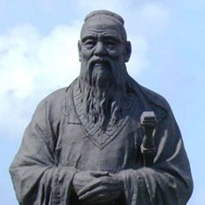 27th Feb - 3rd March 2006 Radio 3 asks nine public figures to assess the relevance of Confucius' famous Analects to contemporary diplomacy, freedom, feminism, religion, and their own lives. Listen again to each short piece here for seven days after broadcast. There will also be a Sunday Feature 'Goodbye Confucius' on 5th March and a Night Waves debate on Confucius on 6th March, which will also be available to listen to again online.  Mon 27/2/06 - Frances Wood Frances Wood is Curator of the Chinese section at British Library. She takes us down into the Basement 2 strongroom to read some of the earliest recorded Analects, on paper that dates from the 9thC AD. Frances is a bit more sceptical about Confucius - she thinks he's a terrible old fusspot who keeps going on about whether his sleeping mat is straight and whether people are wearing the wrong colour. The Analect she has picked is: The Master said, 'In one's household, it is the women and the small men that are difficult to deal with. If you let them get too close, they become insolent. If you keep them at a distance, they complain. ' It reflects the attitudes to women at the time, which were so extreme that if your sister-in-law was drowning, it was considered improper to extend a hand to save her. The Master said, ‘In one’s household, it is the women and the small men that are difficult to deal with. If you let them get too close, they become insolent. If you keep them at a distance, they complain.’ (XVII, 25)  Listen to Frances Wood Listen to Frances Wood Monday 27/2/06 9:25pm - Karen Armstrong [repeated during 'In Tune' Fri 3/3/06] Writer on religion Karen Armstrong considers the Analect: " Do not do to others what you would not have done to you." Sometimes known as the Golden Rule, this principle is common to all major world religions and Confucius was the first to propound it. He claimed not to be an innovator, yet this thought was revolutionary. Karen feels the Confucian ideal of empathy and mutual respect is increasingly relevant in a global community. Tzu-Kung asked saying, Is there any single saying that one can act upon all day and every day? The Master said, Perhaps the saying about consideration: Never do to others what you would not like them to do to you.’ (XV: 23) translation by Arthur Waley, The Analects of Confucius pub. George Allen & Unwin Ltd 1938) Listen to Karen Armstrong Tuesday 28/2/06 - Sun Shuyun [broadcast during 'In Tune] Sun Shuyun is a documentary maker and writer on China. She graduated from Beijing University and won a scholarship to Oxford. She chose to comment on the following: 'In serving his father and mother a man may gently remonstrate with them. But if he sees that he has failed to change their opinion, he should resume an attitude of deference and not thwart them; may feel discouraged, but not resentful.' In China the family is all-important and Confucius says that of all virtues filial duty ranks the top, but Sun Shuyun feels that is it also something debilitating - every level of the hierarchy demands respect and she feels it has made them perhaps too deferential. And in Sun Shuyun's own family, when it came to matters of the heart, generations of children have disobeyed their parents' wishes. The Master said, 'In serving his father and mother a man may gently remonstrate with them. But if he sees that he has failed to change their opinion, he should resume an attitude of deference and not thwart them; may feel discouraged, but not resentful. (IV:18) (translation by Arthur Waley as before) Listen to Sun Shuyun Tuesday 28/2/06 - 9:25pm - Lewis Wolpert Biologist Lewis Wolpert continues a week of reassessment of the thoughts and epigrams of Chinese philosopher Confucius. He chooses the words: "To say you know when you know, and to say you do not when you do not, that is knowledge." Professor Wolpert points out that the real question is: how do you know when you're right? You may believe something fervently - sufferers of the delusional disorder Capgras syndrome believe they are married to an alien - but that doesn't make it true. The Master said, ‘Yu, shall I tell you what it is to know. To say you know when you know, and to say you do not when you do not, that is knowledge.’ (II,17) Listen to Lewis Wolpert Wednesday 1/03/06 -Satish Kumar [broadcast during Morning on 3] Satish Kumar is the editor of Resurgence magazine and Director of Programme at the Schumacher College. When he was only nine years old, Satish Kumar joined the wandering brotherhood of Jain monks. At the age of eighteen, he became a campaigner for land reform, working to turn Gandhi's vision of renewed India and a peaceful world into reality. Issues of life and death have informed his own spiritual quest, hence he chose the following Analect: Chi-lu asked how the spirits of the dead and the gods should be served. The Master said, ‘You are not able even to serve man. How can you serve the spirits?’ ‘May I ask about death?’ ‘You do not understand even life. How can you understand death?’ (Book XI, verse 12) Listen to Satish Kumar Wednesday 1/3/06 9:25pm - Lynne Truss Author Lynne Truss - writer on the nation's spelling and good manners - ponders the relevance to modern living of one of the Analects of the ancient Chinese thinker: 'I used to take on trust a man's deeds after having listened to his words. Now having listened to a man's words I go on to observe his deeds.' Lynne Truss feels that actually we are all too keen to dismiss the message if there is any hint of human failing, and occasionally we should judge the words on their own merit. Tsai Yu was in bed in the daytime. The Master said, ‘A piece of rotten wood cannot be carved, nor can a wall of dried dung be trowelled. As far as Yu is concerned what is the use of condemning him? The Master added, ‘I used to take on trust a man’s deeds after having listened to his words. Now having listened to a man’s words I go on to observe his deeds. It was on account of Yu that I have changed in this respect.’ (V, 10) Listen to Lynne Truss Thursday 2/3/06 - Jonathan Fenby [broadcast during 'In Tune'] Journalist Jonathan Fenby, former editor of the South China Morning Post, picks apart this Confucian Analect about good government: ‘Rule over them with dignity and they will be reverent; treat them with kindness and they will do their best; raise the good and instruct those who are backward and they will be imbued with enthusiasm.’ (II, 20) But how have successive governments lived up to this ideal? Listen to Jonathan Fenby Thursday 2/3/06 9:25pm - Nick Broomfield Documentary-maker Nick Broomfield explains why one of Confucius' sayings has a professional and personal meaning for him. "The gentleman helps others to realise what is good in them; he does not help them to realise what is bad in them. The small man does the opposite". The subjects of Nick's documentaries have included the serial killer Aileen Wuornos and the white supremacist driver of Eugene Terreblanche. Yet he argues that seeing the good in them makes a better portrait. The Master said, ‘The gentleman helps others to realise what is good in them; he does not help them to realise what is bad in them. The small man does the opposite.’ (XII, 16) Listen to Nick Broomfield Friday 3/3/06 9:25pm - A S Byatt The writer AS Byatt muses on what it means to be a gentleman. The Master said, ‘In his dealings with the world the gentleman is not invariably for or against anything. He is on the side of what is moral.’ (IV, 10) Literature is full of examples of gentlemen who are not of noble birth, and of those of noble birth who do not behave like gentlemen. But how do we define those values today? Listen to A S ByattReferences All the readings of Confucius are taken from DC Lau translation, Penguin Classic ISBN 0140443487 unless otherwise stated. The original text can be found at this multi-lingual website http://www.confucius.org/maine.htm ) | | Confucius on Radio 3 Schedule of Programmes The Analects: A Brief Introduction Sunday Feature: Goodbye Confucius Night Waves: Confucius Related Links on radio 3 on bbc.co.uk on the web The BBC is not responsible for the content of external websites. |
| | |

BBC iD
BBC iDBBC navigation
BBC links

BBC © 2014The BBC is not responsible for the content of external sites. Read more.
This page is best viewed in an up-to-date web browser with style sheets (CSS) enabled. While you will be able to view the content of this page in your current browser, you will not be able to get the full visual experience. Please consider upgrading your browser software or enabling style sheets (CSS) if you are able to do so.
