

16:30 - 17:30
Sean Rafferty presents a selection of music and guests from the arts world.
Webern Day - Thursday 15th September |  | |
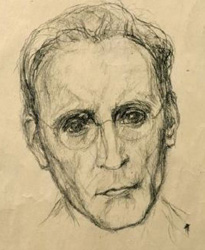 Webern Biography Despite the fact that his published output lasts less than three hours, the music of Anton Webern occupies a place of central importance in the development of Twentieth-century music. Born on 3 December 1883 in Vienna , Webern came from an aristocratic family. There was music in the household, and Webern studied the cello. His father hoped he would take over the family estate, the Preglhof, where Webern wrote many of his works, and which he dearly loved. But it was music rather than agriculture which attracted him, and he enrolled at the University of Vienna , gaining his PhD in musicology in 1906, with an edition of the music of Heinrich Isaac . Two years earlier, he had met Arnold Schoenberg, who was to become a friend and mentor to Webern for the rest of his life. He married his cousin Wilhelmine in 1911, attempting to support himself and his family by conducting in various provincial opera houses. But these engagements were short-lived, partly because Webern hated the music he was called upon to conduct, and partly because he was temperamentally unsuited to the job. Realising that his son would never make a farmer, Webern's father sold the Preglhof in 1912. With Europe plunged into war, Webern volunteered for army service; he was discharged in December 1916. After the war, he settled in Vienna , composing, attending to his family, and walking in the mountains. In 1918 he worked with Schoenberg 's Society for Private Musical Performances, which put on concerts for invited audiences, with no critics allowed. In 1921 he became conductor of the Modling Men's Choir, and the following year began working for the Workers' Symphony Concerts, maintaining the connection until 1933. In 1925 he began teaching at the Jewish Institute for the Blind, and in 1929 worked for the first of many times with the BBC Symphony Orchestra in London . He became highly regarded as a conductor, despite breaking down during the rehearsals for the premiere of Berg's Violin Concerto in Barcelona in 1936. With his music banned by the Nazis, Webern found himself in financial difficulties, and was reduced to working as a proof reader for his former publisher. In early 1945, his son Peter, drafted into the German Army, was killed on a troop train on the Eastern Front. During the night of 15 th September, on stepping outside his house for a cigar acquired on the black market, Webern was accidentally shot by an American soldier. | | More about Webern Related Links on radio 3 on bbc.co.uk on the web The BBC is not responsible for the content of external websites. |
| | |

BBC iD
BBC iDBBC navigation
BBC links

BBC © 2014The BBC is not responsible for the content of external sites. Read more.
This page is best viewed in an up-to-date web browser with style sheets (CSS) enabled. While you will be able to view the content of this page in your current browser, you will not be able to get the full visual experience. Please consider upgrading your browser software or enabling style sheets (CSS) if you are able to do so.
