Elgar's life | In his lifetime |
 | | |
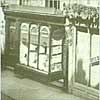 Elgar is born on 2 June in Broadheath, near Worcester. His father - a piano tuner and organist at the local Roman Catholic church - opens a music shop in 1863 in Worcester, and the family lives above it. Elgar is born on 2 June in Broadheath, near Worcester. His father - a piano tuner and organist at the local Roman Catholic church - opens a music shop in 1863 in Worcester, and the family lives above it. | 1857 | 1863 | 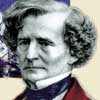 A year after the premieres of Berlioz's Béatrice and Béneçdict, Les troyens à Carthage is first performed in Paris. Elgar loved Berlioz's music and influences can often be heard in compositions such as The Dream of Gerontius.
|
| | |
 Elgar shows great ability improvising on the piano. He attends rehearsals for the Three Choirs Festival where his father plays the violin in the orchestra. But the year is overshadowed by the death of his younger brother Jo, a musical prodigy referred to as the 'Beethoven of the family'. Elgar shows great ability improvising on the piano. He attends rehearsals for the Three Choirs Festival where his father plays the violin in the orchestra. But the year is overshadowed by the death of his younger brother Jo, a musical prodigy referred to as the 'Beethoven of the family'. | 1866 | 1869 |  Russian chemist Dmitri Ivanovich Mendeleyev (1834-1907 classifies chemical elements by their relative atomic weight into his 'periodic table'. Elgar has a deep interest in chemistry and converts the dovecot in one of his homes into a laboratory, naming it 'the Ark'.
|
| | |
 Elgar pursues a living as a musician, teaching the violin, deputising for his father and composing and conducting for the County Lunatic Asylum - an early trial in music therapy. Elgar pursues a living as a musician, teaching the violin, deputising for his father and composing and conducting for the County Lunatic Asylum - an early trial in music therapy. | 1873 | 1877 | 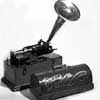 Thomas Edison announces his invention of the phonograph, a machine that can record sound. Technology later embraced with enthusiasm by Elgar.
|
| | |
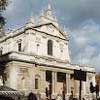 Elgar composes his popular piano piece Salut d'amour for his fiancée, Caroline Alice Roberts, novelist, originally his piano pupil. They marry at Brompton Oratory in 1889 and give birth to their only child, Carice, in August 1890. Elgar composes his popular piano piece Salut d'amour for his fiancée, Caroline Alice Roberts, novelist, originally his piano pupil. They marry at Brompton Oratory in 1889 and give birth to their only child, Carice, in August 1890. | 1888 | 1890 |
August Johannes Jaeger joins the music publishers Novello, where, as office manager, he later influences Elgar through his friendship and insightful music criticisms. Elgar portrays him musically as 'Nimrod' in the Enigma Variations. |
| | |
 Success with the Enigma Variations brings Elgar recognition, though the comparative failure of The Dream of Gerontius a year later wounds him deeply. He say of his oratorio, 'This is the best of me'. He hides his feelings with a humorous portrait of London in Cockaigne (In London Town) (1901). Success with the Enigma Variations brings Elgar recognition, though the comparative failure of The Dream of Gerontius a year later wounds him deeply. He say of his oratorio, 'This is the best of me'. He hides his feelings with a humorous portrait of London in Cockaigne (In London Town) (1901). | 1899 | 1897 | 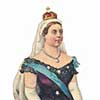 Queen Victoria celebrates her diamond jubilee. Elgar composes his Imperial March for the occasion and he dedicates his cantata Caractacus to her.
 |
| | |
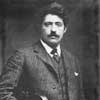 Having completed his two Wand of Youth suites, he composes two symphonies (1908 and 1911) and the Violin Concerto, first performed by Fritz Kreisler. He receives the Order of Merit in 1911. Having completed his two Wand of Youth suites, he composes two symphonies (1908 and 1911) and the Violin Concerto, first performed by Fritz Kreisler. He receives the Order of Merit in 1911. | 1910 | 1905 | 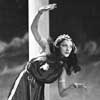 Richard Strauss's Salome is first staged in Dresden, its censorship problems furnishing it with excellent publicity. Earlier that year, in a series of lectures, Elgar spoke of Strauss as 'the greatest genius of our day'.
 |
| | |
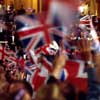 Elgar's response to World War I is his Spirit of England. The trio melody from his first Pomp and Circumstance March (1901), adapted into a Coronation Ode for Edward VII, with the words 'Land of Hope and Glory', gains popularity. Elgar's response to World War I is his Spirit of England. The trio melody from his first Pomp and Circumstance March (1901), adapted into a Coronation Ode for Edward VII, with the words 'Land of Hope and Glory', gains popularity.
| 1914 | 1913 |
Spencer Gore (1878-1914) becomes the first president (1911) of the Camden Town Group of painters which was responsible for introducing Post-Impressionism into Britain. In 1913 it is absorbed into the London Group under the presidency of Harold Gilman (1876-1919). He paints his Eating House in 1914. |
| | |
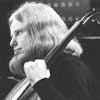 A shoddy first performance of Elgar's Cello Concerto by an under-rehearsed orchestra elicits a polite response from critics and the public. Elgar's wife dies months later (1920). A shoddy first performance of Elgar's Cello Concerto by an under-rehearsed orchestra elicits a polite response from critics and the public. Elgar's wife dies months later (1920). | 1919 | 1923 | 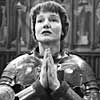 George Bernard Shaw writes St Joan. Shaw was a close friend of Elgar and publicly championed his music, persuading the BBC to commission a Third Symphony from Elgar.
 |
| | |
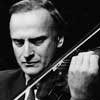 He is made Master of the King's Music but, bereft of his wife, has little enthusiasm for composing, producing a few minor pieces and sketches for a Third Symphony. He does some important recordings including the Violin Concerto with Yehudi Menuhin in 1932. He is made Master of the King's Music but, bereft of his wife, has little enthusiasm for composing, producing a few minor pieces and sketches for a Third Symphony. He does some important recordings including the Violin Concerto with Yehudi Menuhin in 1932. | 1924 | 1929 | 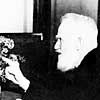 A new Music Copyright Bill is proposed, suggesting that a composer should only be able to charge twopence for the perpetual right of public performance of a work. Elgar and George Bernard Shaw violently oppose the bill.
 |
| | |
Elgar dies of cancer at his home in Worcester on 23 February. He is buried beside his wife at St Wulstan's Church, Little Malvern. A window commemorating him is erected at Worcester Cathedral in 1935.
| 1934 | 1931 | 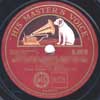 The recording company HMV merges with Columbia to become EMI. In November the company opens new recording studios at Abbey Road in London, inviting Elgar to officiate. He conducts his symphonic study Falstaff for its inaugural recording. The recording company HMV merges with Columbia to become EMI. In November the company opens new recording studios at Abbey Road in London, inviting Elgar to officiate. He conducts his symphonic study Falstaff for its inaugural recording. |
| | |
 |



 Listen Live
 help
help