On Radio 3 Now

In Tune

16:30 - 17:30

Sean Rafferty presents a selection of music and guests from the arts world.

The Spirit of England, Op. 80 (1915–17)
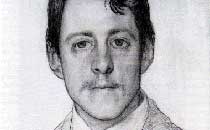
Laurence Binyon

In January 1915, Elgar received a letter from his friend Sir Sidney Colvin asking ‘Why don’t you do a wonderful Requiem for the slain – something in the spirit of Binyon’s “For the Fallen” …’. Now much anthologised, this poem’s most famous stanza (‘They shall grow not old, as we that are left grow old ...’), declaimed as part of the annual Remembrance Day service, first appeared in Laurence Binyon’s slim volume of war poetry, The Winnowing Fan, published late in 1914.

Elgar obtained a copy and immediately set to work sketching three of the poems ‘for tenor or soprano solo, chorus and orchestra’: ‘The Fourth of August’, ‘To Women’ and, as the climax of the work, ‘For the Fallen’. ‘For the Fallen’ was completed during 1915 and ‘To Women’ by February 1916. ‘The Fourth of August’, by contrast, progressed slowly. The first of Binyon’s war poems, its second line provided Elgar with the collective title for his three settings: ‘Now in thy splendour go before us, / Spirit of England, ardent-eyed, / Enkindle this dear earth that bore us, / In the hour of peril purified.’ But the penultimate (sixth) stanza which characterised the German nation as ‘Vampire of Europe’s wasted will’ gave him pause. At that early stage of the war, the unbridled national hatred of the Germans had yet to manifest itself. He put it aside.

Meanwhile, ‘To Women’ and ‘For the Fallen’ received their first performances in Leeds on 3 May 1916, followed by six performances in London for war charities. By the end of the year, anti-German sentiment had turned to ‘cold, steel-like anger’ (Ernest Newman) and Elgar resumed work on ‘The Fourth of August’. His feelings toward a country that had championed his music had hardened. For the troublesome stanza, he used the ‘Demons’ Chorus’ from The Dream of Gerontius. He finished the orchestration on 11 May 1917.

The three parts of The Spirit of England were first performed together in Leeds on 31 October 1917 with tenor and soprano soloists (Gervase Elwes and Agnes Nicholls). Elgar dedicated the work ‘to the memory of our glorious men, with a special thought for the Worcesters’. Resonant, powerful, and unfairly neglected today, it was at the time (Newman again) ‘in truth the very voice of England’.

Programme Note © Jeremy Nicholas

Return to the Notes index

    BBC © 2014The BBC is not responsible for the content of external sites. Read more.

    This page is best viewed in an up-to-date web browser with style sheets (CSS) enabled. While you will be able to view the content of this page in your current browser, you will not be able to get the full visual experience. Please consider upgrading your browser software or enabling style sheets (CSS) if you are able to do so.