On Radio 3 Now

In Tune

16:30 - 17:30

Sean Rafferty presents a selection of music and guests from the arts world.

The Chopin Experience - Chopin profile
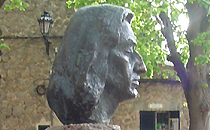
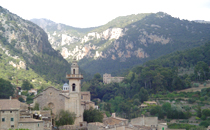
Chopin best at the Monastery at Valldemossa, Majorca

Chopin's father was a Frenchman who went to Poland, where he earned his living as a teacher and married a Polish woman.

The only boy among their children, Fryderyk (or Frédéric) was a child prodigy and from an early age his playing was in demand among the aristocracy of Warsaw. He had a Polonaise published when he was only seven. He played for the unpopular Grand Duke Constantin at the age of 10, and the Tsar when he was 15. (In the post-Napoleonic era Poland was part of the Russian empire.)

The Conservatory Years

Chopin entered the Warsaw Conservatory the following year and took Józef Elsner's three-year course in harmony, counterpoint and composition.

Chopin's first piano teacher, Adalbert Zywny, had already introduced him to the music of Bach and the Viennese classics. As a pianist, however, Chopin is considered to have been self-taught: he doesn't seem to have needed to practise very much and, in any case, he made his reputation playing his own music.

His more extended early works were decorative and brilliant, in the line of display pieces by touring virtuosos like Hummel.

To Paris via Vienna

After giving two big concerts in Warsaw at which he introduced his two piano concertos, Chopin left for Vienna in November 1830, staying eight months, during which he learnt of the Warsaw Uprising. He never saw Poland again. He made his way to Paris, where he soon felt at home, since there were many Polish émigrés, whose cause was popular.

Although he made his French debut in the Salle Pleyel, Chopin disliked the publicity and pressure of large concerts, preferring small gatherings in society apartments, where the subtlety of his touch could be better appreciated.

Because of his popularity, he found he could make a handsome living from teaching: not only rich young ladies, but also students who became professionals. His music sold well, and from 1833 it was published simultaneously in England, France and Germany.

Chopin wrote Nocturnes and shorter pieces in dance forms, such as Mazurkas, Waltzes and Polonaises, throughout his career. He found his mature style early, with the first set of Études, Op.10 (1830-32). These are still, with their sequel, Op.25, the corner-stone of modern piano technique, as well as powerfully poetic pieces.

The old village of Valldemossa, MajorcaChopin and Sand
Chopin started a relationship with the novelist George Sand in 1838, composing his Preludes during a winter spent with her in Majorca, where bad weather exacerbated his tuberculosis. From 1839 to 1845 he spent winters in Paris and summers at Sand's country house at Nohant, writing the third and fourth Scherzos, the last two Ballades, the Fantasy in F minor and the Sonata No.3 in B minor.

Final Years
The liaison with Sand broke up in 1847, complicated by battles with her two children. The following year, revolution broke out in Paris. A sort of escape was offered by Chopin's rich Scottish pupil Jane Stirling, who invited him to England and Scotland, though by now he was seriously ill. He died less than a year after his return to Paris.

Profile © Adrian Jack, 2003

    BBC © 2014The BBC is not responsible for the content of external sites. Read more.

    This page is best viewed in an up-to-date web browser with style sheets (CSS) enabled. While you will be able to view the content of this page in your current browser, you will not be able to get the full visual experience. Please consider upgrading your browser software or enabling style sheets (CSS) if you are able to do so.