 | 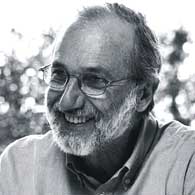 John Tusa interviews Renzo Piano John Tusa interviews Renzo Piano
Broadcast: May 03
JOHN TUSA: When a thousand foot sliver of glass pierces the sky over London Bridge station, that landmark skyscraper will be by the Italian architect Renzo Piano. When you visit the new Parco de la Musica in Rome, that's his work too. So is the mile long frontage of the terminal at Japan's Kansai Airport. So are the curving arches of the football stadium in Bari, in southern Italy. Now, don't get me or him wrong - Renzo Piano is not about size. Space, certainly, but not just size, and certainly not for its own sake. You'd see that at once in the work he did helping small communities in Otranto, Matera, or his native Genoa, to modernise their neighbourhoods through informed self-help. He's not a community architect, but one who does care about communities. Is there anything I've forgotten? Ah, yes, the Pompidou Centre at the Beaubourg in Paris, which he designed with Richard Rogers, and which put them both, and hi-tech architecture, on the map a quarter of a century ago. A signature building, an icon undoubtedly, as defining of modern Paris as the Eiffel Tower. Yet for years Piano was almost shackled by the Beaubourg hi-tech tag. Still his office here, very nearby, suggests that he can't quite get away from it, or the area. But as one critic put it, Renzo Piano was more confined by the association with the Pompidou Centre than freed by it. Now, all that is behind you, but I think it's perhaps an important place to start with, because Rogers and Piano was to all intents a one building practice. Now how did the two of you get together?
RENZO PIANO: Well, that was in, I guess in '68, '69. Richard was one of the few persons I knew in London speaking Italian fluently, and then we became so friends and almost like brothers in some way, and we still are. Richard's like a brother for me. So we started about '69, '70 I guess, in London. But we won the competition in '71, the competition for - we called it at that time the Centre Beaubourg, the Beaubourg Centre - and then we started to move to Paris, and then we started to work together really in that period.
JOHN TUSA: And was there ever any disagreement between you that this should be a hi-tech building of the most hi-tech kind?
RENZO PIANO: No, not really, no. We never disagreed because we were both bad boys, and you know we were genuinely bad boys, in a different way, but we have been so complementary all the time and, and it was a kind of innocent way to make provocation against the institutional building and institutional culture of building you know. We were convinced, and I think we were right to convince that culture is more about curiosities, not about intimidation. And the typical building in that period, the beginning of the seventies, were very intimidating. I mean those kind of monumental stone, marble buildings, you know. So we were genuinely interested in making that provocation, to make a factory, to make a refinery, to make whatever, you know. Everybody was saying this is more like a factory than like a museum, and we were very pleased about that.
JOHN TUSA: Were you surprised when you won the competition?
RENZO PIANO: Of course, very very surprised. And we did the competition, you know we got that competition among 681 entries. Can you believe that? I mean it was… We made the competition because we are very pleased, we worked together with Peter Rice, .......... We are very happy to do that. It was like enjoying life you know, it was really like, like making sort of provocation. Normally we were working in the evening, because in the day we were very busy doing our work, so…
JOHN TUSA: Earning money?
RENZO PIANO: Yeah, yes, making money, I mean surviving at that time. And then we won that, and we were very very surprised, we can't believe it.
JOHN TUSA: It's been called, as you know, a hi-tech spoof.
RENZO PIANO: No. Yes but it's, I think that this is because of all those pipes, but really it's not hi-tech triumphalistic building. Is more about a parody of hi-tech, it's more about, it's more about introducing that sort of familiarity of the machine instead of the intimidation of the stone and marble and arches you know. It was really about welcoming people. And it was also about flexibility, don't forget. I mean a few years ago big changes were made. After twenty-five years of life, after under fifty million visitors, some changes were made, and those changes were possible only because the building was really like a machine, like a tool, completely flexible.
JOHN TUSA: So when they renovated it, that reflected what you had designed it to be - a building which was capable of being renewed?
RENZO PIANO: Exactly. In twenty-five years… You know when we designed that building we really didn't know very much what culture was about, you know but frankly we were very happy about not knowing very much because it was more fresh. And we thought that a building for culture has got to be flexible, ready to change with the times, and that was absolutely true. Today a library is completely different from a library twenty-five years ago, and that's the reason why the building has been changed very easily, in a completely flexible way. And you know I even think that in twenty-five years' time they will probably change again, but the building will be like a tool - flexible and ready to accept any change.
JOHN TUSA: And there was no model, there was no example, that you were working from, but people told you that they needed an arts institution, or rather an arts building which wasn't an institution?
RENZO PIANO: The brief was quite interesting because the brief was already talking about mixing different disciplines, like music, visual art, design, and reading and books and information. So the brief was in some way revolutionary because it was already introducing that concept that there is no borderline between artistic discipline. So that was good. What we made actually was to push this to the extreme, making five floors, like a football, you know, field, one above the other, pushing all the, all the fixed elements of the building outside, like stairs, like escalator, like lift, like pipes, so that the floors were really like a completely flexible space, spanning fifty metres, so completely open you know, semantically but also physically open to change. And this is in fact what has been happening.
JOHN TUSA: Now it's obvious from what you've said that you approached this with the greatest seriousness, and of course it's interesting reading what architectural critics say about the building, and one of them said, 'It was an act of loutish bravado'. But from what you've said this was a very serious thing. I mean you weren't making gestures were you?
RENZO PIANO: No, no, no, it was not gesture making. No it was, it was a correct provocation. The proof is that since then the presence of museums in social life changed dramatically. You must admit that museums were not what they are today. Today they are like new cathedrals, and they have a great success. Probably the seventies, the beginning of the seventies, were the era when all this changed. So it was not just a joke, of course, it was the right moment to change.
JOHN TUSA: Let's go back even further to your origins. Your family were all builders, you admired your father hugely. I mean do you feel that the sheer practicality of his approach to buildings, making buildings, is something which is absolutely a key part of your character and approach?
RENZO PIANO: It is, it is. I think it's in my DNA, it's also in my, under my skin. I always loved to spend time with my father on this site. But you know it's not just about practicality and the craftmanship, it's also about dreams. You know when you are a young boy, six, seven, eight, ten years old, and you go on-site every day and you enjoy that, you understand that building is a little miracle. It's really like a miracle. One day you see sand on the floor, and next morning you see something standing up - strong and tall. You know and this is a miracle, this idea that you start from something rough, without any shape, and you give a shape. You know when I went to see my father a long time ago and I told him I wanted to be an architect, he watched me and said, "Why ever, son, why? You can be a builder, now you just want to be an architect." A builder is like a god, is like a little god.
JOHN TUSA: It's good.
RENZO PIANO: Because you do things, you think about things and you do things you know. So in his personal view of things, a son of a builder should be just a better builder, that's all. (LAUGHS)
JOHN TUSA: Yes, what a tragedy! Yes my son wants to be an architect - what a tragedy!
RENZO PIANO: That was evolution for him. I'm joking because he was very happy of course. But you know in some way the miracle… being the son of a builder doesn't mean that you imitate just the craftsmanship of the pleasure to do physical things. It's more about the utopia of making things, starting from informal, rough material and then making things.
JOHN TUSA: Now you've often said that architects are too pompous, they talk too much about art, and that you prefer to be very practical though, although as you say the architect is also god but is a very practical god rather than an artistic god.
RENZO PIANO: (LAUGHS) Well architecture funnily enough is probably the most materialistic discipline you can think about, because it's really about physicality, it's about material. It's about fighting against gravity, architecture, you know. And believe me, gravity is a very very stubborn thing you know, it's a very obstinate thing. So it's very much materialistic, but at the same time it's very idealistic, it's probably one of the most idealistic disciplines you can think about, because it's about people, it's about enjoyment, it's about utopia, it's about changing the world you know. And you do change the world in some way.
JOHN TUSA: For better or for worse.
RENZO PIANO: You try, yes, you try, and this is what probably everybody dreams about that, but as an architect you do, because you do a job and you interfere with the way people live and stay, so you have a greater responsibility.
JOHN TUSA: But you also have to solve problems for them don't you, and you've always emphasised that, that you're providing a service to solve problems. So there's the practicality as well as the idealism that you've just been describing.
RENZO PIANO: You cannot be just a practical man. It's not enough, unfortunately. Architecture is not just about making good buildings and solid, it's also about telling stories in some way. And you can tell stories by making interview, you can make, tell stories by writing or by painting or by playing music, but you also tell stories by making buildings, because buildings talk. They sometimes sing as well, in the plans, but sometimes they are like that. And you know so that is both practical, but is also extremely light and, and ethereal.
JOHN TUSA: You see what's interesting is that in quite a lot of the writing about you, people say, well the thing about Piano is that he avoids theory, he avoids intellectualisation, indeed he's almost anti-intellectual. But from what you're saying - and I know we're not talking about theory - but what you're saying is not anti-intellectual. Now was there one particular period in your life you think that you deliberately almost fostered an image of excessive practicality?
RENZO PIANO: Yes, of course, because, because you, first because you change. And being the son of a builder I enjoyed, in a quite snob way in some ways, to be a son of a builder, especially in an environment where sometimes architects been played a bit too much the artistic role. But of course I totally agree, architecture is art, but I don't think you should say that too much, but it is art. I mean architecture is many many things. Architecture is, is a science, is technology, is geography, is typography, is anthropology, is sociology, is art, is history. You know all this comes together. Architecture is a kind of bouillabaisse, incredible bouillabaisse. And by the way architecture is also a very polluted art in the sense that it's polluted by life, and by complexity of things.
JOHN TUSA: And compromise.
RENZO PIANO: Ah, compromise. But in some way this compromised art becomes more real and more, and more true than other art.
JOHN TUSA: Because you have to deal with the compromises don't you, you can't walk away and say I won't make a compromise.
RENZO PIANO: Exactly. So the secret is that you don't really do compromise, but you are confrontated to life all the time. So in some way it's stupid to say that architecture is not art, because it's not true, but at the same time it's even more stupid to talk about, too much about architecture being art, because then you get, you get…
JOHN TUSA: Gestures.
RENZO PIANO: Yes, exactly. Then you become… You know academy is exactly when you refuse to feed architecture by reality, and by real life, and by people's needs and all that. It's not about being moralistic, it's just about truth, and the new architects of that.
JOHN TUSA: And was it difficult to get away from the Beaubourg and from the expectation that, because you've done that building, that if anybody came to you, that was the style of architecture you would do? Was it difficult to make that transition?
RENZO PIANO: Yes. As an architect you do something and everybody thinks that this is your style. So if they love what you've done they want to do again the same thing. Now this is the beginning of the end of course, because then you are trapped in a sort of stylish cage, maybe sometimes maybe golden cage but it's still a cage. And this is terrible because one of the beautiful things about architecture is that it depends entirely from where you are, when, and doing what, you know. Architecture is really the mirror or the moment, of the moment, and of the people you are working with in architecture, and so essentially the client and the community you are working. That's the reason why. Architecture is a bit like making a movie. You know it's about different things. And every time you start from the scratch, it's not true because of course you have your own coherence and your own system of doing things. But you have to stay away from the notion of a style, in the sense of the rubber stamp. I mean that's terrible. That's terrible because you'll get trapped in a very formalistic thing. I mean this also happened with the great artists you know. At the end of their life they were obliged to repeat themselves because that was…
JOHN TUSA: That's what people wanted and that's what they'd paid for.
RENZO PIANO: Exactly, exactly.
JOHN TUSA: You mentioned the film directors, and I think this is I think an essential thing because Milos Foreman, and I think maybe Bertolucci as well, said my cameraman is a better cameraman than I am, the actors can act in a way that I can't, the sound man can do the sound, the editor can do the edit, the musician writes the music - what am I, the director? He said that in the end I'm the person who brings it all together. Now is that why you said that being an architect…
RENZO PIANO: I like that, yes, yes. I think you have to bring together things. You need to work with talent, because teamwork is about aiming talent at people around you, and you have to, all this coming to one end you know, otherwise everything disperse. But in some ways quite true, you have to work on the detail, and you have to work on the global thing you know. By the way, you know that there are very similar things about music for example and architecture. They look so far away, one from the other - one is the most physical one, between, among the art, and the other one is the most light, the most immaterial - but they are quite the same, in the sense that music and architecture depend a lot from discipline, order, sometimes even geometrical order, and then you play in that order. And sometimes you become disobedient to that order, then you break the order, but you need the order.
JOHN TUSA: What music do you like?
RENZO PIANO: I like music, all music, but of course I love modern music, I am a good friend of… I've been working with Luciano Berio a long time, with Pierre Boulez, a long time ago, together with Richard Rogers.
JOHN TUSA: Of course when you built his centre for Duesenberg you had to come…
RENZO PIANO: Indeed, yeah many, a long time ago. Since then we are very familiar, we meet all the time, and I love working with musicians. I love also music belonging to a different sphere. I love all music at one condition, that it's music and not rubbish you know. But music is great. And in some way music is also depending from geometry, and from precision, and from mathematics.
JOHN TUSA: You mentioned community a while ago, and I want to take you back to that just for a moment, because again in the comparatively early years, and after Beaubourg, you had this time when you were working with small and rather poor communities, some of them down in the south, in Pulia and Otranto and Matera, and you had a mobile lab, and you were helping the people there to understand how they could renew their neighbourhoods by learning the necessary skills. Now how important a period for you was that, working with the community in that way?
RENZO PIANO: Well it was a very important period. It's still now. Still now. I became eventually goodwill ambassador of UNESCO for the city, for urban renewal, so since a long time ago now I have a job for UNESCO and I go there. And right now for example we are working in Sarajevo, and we are making a scheme there for a cultural centre, for an educational centre. We have just done, on the Miliatska River there, a bridge last year, and we are working there. So I became familiar with the idea of working with community.
JOHN TUSA: So the community is the client in this case is it?
RENZO PIANO: The community is the client, yes, and this is a very… You know the art of listening is one of the most difficult arts you can think about, the art of listening to people, understanding people. And the architect must listen, and must understand. You become more sensitive when you work with a community, because then you have to listen to the little sound, the little noise - you need to make interpretation of things. And this is a very good gimmick about understanding. And I think that, I love the idea of not designing the building but designing in that case the tools that may be used by people to make a building. You know any historical centre is always like that, you cannot demolish that like that, you have to change. You have to go through a kind of homeopathic process more than a surgery. Cities are, especially old cities, are a bit like human bodies, they are very vulnerable. They need to change by using their internal resource and their internal energy more than by just making surgery. So all this is extremely subtle, and, and I love working on that kind of atmosphere.
JOHN TUSA: Now you as a person, you're from Genoa - a Genovese - and sometimes regarded by Italians as not quite Italian, a bit European. But again is this an important part of your character, that you are, well shall we say more European than you are Italian?
RENZO PIANO: Mm, it's difficult to say. I'm very Genoese. By example I love sailing, I love boats, I love the sea. My office in Genoa is right in front of the sea. I think the water for me is the best background possible you can have, you know it's a kind of a natural internet in which you swim you know. And water is ocean, the water of the ocean is the interlinking matter of the entire world. For me, for me Liguria, the sea, the water, are kind of a constant reference. I also love Italy for many many reasons. It's quite true that I left Italy when I was, what, twenty-five-year-old. I started to travel, then I went to London. We came together with Richard and from there I moved to Paris, and I'm a French resident in Paris since now almost thirty years.
JOHN TUSA: So you are quite non-Italian.
RENZO PIANO: Yeah but…
JOHN TUSA: You're European now.
RENZO PIANO: But I still go back to Italy all the time you know, and, and you know for me then it's true I'm European, because they don't see any difference. I feel only empires, like in Genoa, like in London, like everywhere, in Berlin. Yes I'm European, that's for sure.
JOHN TUSA: Are you an outsider? Because you've been described sometimes as being - maybe this was earlier on in your career - as being deliberately outside the church of architecture.
RENZO PIANO: (LAUGHS) Well that, that's a bit part of the snob side you know. Yes of course, and I enjoy that, especially because in Italy you have to be outside of the church if you want to be saved, otherwise… When I was a young architect, you know, the real trap was Academy you know so I escaped Academy. So I got to be above all those defence, and now I don't need any defence, so I don't care. But when you are younger, when you are thirty years old, when you start to do things all around the world like that, I mean you need to build up your defence. But it's quite true. I mean, I have a good friend, a writer, that's said many times, you know I came so many times very close to the temple, but I always stop at the door, I never was able to get inside the temple. Because it's true, it's true. I mean as a, as an architect, as a writer, as an artist, you are always inadequate to what you're doing. I mean you never feel like really getting the temple. You should do, be like that. And this is the real point - you know how many times you are, you feel so close to beauty, but, and then you try to grab it, but the arms are too short. I mean you feel the inadequacy of what you're trying to do. I mean the mind goes much faster than your arms, and this is true.
JOHN TUSA: I think there's another building we need to talk about, because it marks the difference from the Beaubourg, and that is Menil Collection in Houston, Texas, which is a long, low, wood clad building, absolutely fitting in with the grey wood clad houses round about. Now what does that say about your approach to architecture? Was fitting in with that environment, which is a very domestic environment anyway, but making something monumental in a domestic environment, was that an important part of what you thought architecture is about?
RENZO PIANO: Yes, yes, a very important part. And especially, I have to say, in that scheme the client was an essential part.
JOHN TUSA: Because they're making demands of you?
RENZO PIANO: Well a good client is very demanding. A good client is never a client that says yes. No, no, this is not the good client. The good client is somebody that, that has a strong dream, and, and has a strong desire, and is able to tell you this, and is able to understand quality. That's a good client. Dominique De Menil, the lady that was my client on the Meniel Collection, was an extremely intelligent lady - strong lady. She wanted that sense of serenity, that sense of abstraction. We learn a lot about natural lighting, about the sense of beauty of the light, of the day that goes away, you know, the cloud coming, the sense of vibrant quality of natural lighting versus artificial lighting. You know all, all the sort of suspended atmosphere of that building comes of course from us as architects, but comes also from the client. That was our dream.
JOHN TUSA: And then, taking another move forward, by the time you got to the Kansai International Airport in Japan, from 1988 onwards, which I suppose is a building really characterised by very very advanced computer techniques, because you could only design it by understanding how people flowed and how air flowed, and from this came the idea of the organism. Now that sounds as if it is a rather new idea in your work, the building as a living organism, and almost looking like one as well.
RENZO PIANO: Yeah, it's true. When you work with, with the so extreme situation, like a seismic area in the middle of the sea, and in the man-made land you know in that, well then engineering, architecture, comes together. You know and we got to do that way. I mean that building got to be light, to be seismically correct.
JOHN TUSA: Everybody says that it looks like a dinosaur skeleton, but the point is that it's not because you thought that that was an amusing shape. That was how the logic of the flow of air and the movement of passengers dictated the shape.
RENZO PIANO: Absolutely, that's… that's what they wanted to say. I mean as an architect you work on, on mathematics, you work on geometry, you work on inspiration, and fantasy, and imagination. But in the end the shape of that building is not like a dinosaur because we wanted to copy nature, we were just making in a much more humble way, the same job nature is doing - we were just building something very flexible and very light.
JOHN TUSA: Do you get a satisfaction from the fact that when you produce a building like that which works, that in fact the shapes do relate very closely to the deep shapes and structures of nature?
RENZO PIANO: Yeah is, is… yes, is a kind of surprise in some way. It's surprising. But it's never, it's never something you think about before. I mean actually you have to stay away. I mean a dinosaur is a dinosaur, and a, and an airport is an airport. You have to be care… (LAUGHS) careful about not mixing up. You know metaphors are very dangerous sometimes. So you never do it that way you know. You don't build Beaubourg by saying now I make a ship in the middle of the city. Then everybody says it looks like a ship, or like a spaceship. Yes but you don't, that's not where you start from you know.
JOHN TUSA: When you have a commission, when you, say won the commission, how do you begin to start thinking about a building?
RENZO PIANO: Yeah that's a good point. First I think I have to say I never start a job without spending days, sometimes more than days - maybe sometimes weeks - wandering around. You know I never, I don't remember one single job, even when they are so far away, that I started to work on without trying to understand the place, and to listen. You know place talk, you just have to shut up and listen. And you know one thing you can be very wrong about in architecture is the scale of a building. Scale. You know as an artist, when you make a sculpture you are working on the real size, but as an architect you have to think about what the building will look like when it will be built in the right scale. If you are standing in the middle of Manhattan, for example we are working now on the New York Times headquarters in Times Square, in New York, but you have to stand there and you have to think about this tower right there, and you have to project like, like in a sort of imaginary movie. You have to project that there. Otherwise you may be wrong in scale.
JOHN TUSA: But this preliminary activity, sketching, absorbing, takes a long time. I think one of the words you use is 'assimilating'.
RENZO PIANO: Yes, yes.
JOHN TUSA: What are you assimilating? Well the home environment?
RENZO PIANO: Yes, yes, you try to understand everything from the place. The greatest compli… compliment I can hope to get in a building is when people say it's like this building been there since ever, you know… like a present that is natural you know. This is very important. And this is not something you can make by not understanding the place.
JOHN TUSA: Have you ever had a blinding flash, so to say, where the first sketch, or an early sketch, that you did of a building, turns out to be very close to what the building finally is?
RENZO PIANO: Yeah, it happens some… it happens quite often. Not because… Not because you have a sort of attitude of the genius you know, that then you suddenly… It's not like that, because architecture is, is a passion game, I mean you need really to build things. But sometimes among the sketch you do there are things that are seminal, and they remained the scheme you know. When we start working on the New York Times, for example just talking about a new, a new site just opened there in New York, I mean one of the first flashes was about the building being atmospheric, a building that takes the colour of the city. You know very well one of the most beautiful things about Manhattan is that it changes colour, the city change. After a shower everything is blueish, and in a sunny evening everything becomes red, you know, and this capacity of a city to take the colour of the weather is a fantastic thing. So one of the first sketch was really to use a ceramic material that can, can capture that changing quality of the weather and the colour, and that was one of the first sketch that actually remained, through the schematic design, detailed design, and then eventually working drawings.
JOHN TUSA: You've mentioned your collaborators. Is it a sort of dialectic process, or to what extent are they solving problems, or are they offering you solutions?
RENZO PIANO: Yeah, of course. Of course it's not at all like the master coming back, and, and putting on the table the great idea and then… You know architecture is really like a circular process, it's a very crafted process. We craft by the way in the office many many times models. We do. And of course we work on computers. But it's like a circular process. You go from detail, to general, from general to detail, and, and, and you go from silent personal work to teamwork. I actually very much like the teamwork because this is the most beautiful thing, the teamwork. After a while you don't even understand who did what, who got the idea. And this is great, when you don't even wonder who got the idea. It doesn't matter, it's the, it's the team. You know in a good team you have to establish a very simple rule - everybody is the best - and then you just fight, and you discuss, and you tell the truth to everybody, and if everybody brings ideas you know. Of course, like in an orchestra I guess you need - that's for sure - you need the director somewhere, you need that to bring all the forces to the same final aim. But, but it's not at all like the director making the creative work and the other one making the practical work - this is not true at all.
JOHN TUSA: Have you ever realised in the middle of a building, quite a way down the project, that you are going down a blind alley, and that you are pursuing a solution which is not going to be a solution?
RENZO PIANO: Of course.
JOHN TUSA: And what do you do then?
RENZO PIANO: Then you change direction, and you stop and you come back and you start again. I mean absolutely, this is absolutely true, and you have to have that capacity not to fall in love. You know this is, this is the, this is a very important discussion about intelligence. Intelligence may be light or heavy. If you have a heavy intelligence then you don't have the capacity to stop and to come back, but if you have a light intelligence, that mean that you are permeable to critics, you understand people. It's not because you are ready to compromise, because you just understand argument. And then the light intelligence has the capacity to stop and to come back.
JOHN TUSA: And you were about to say something very interesting and I want you to complete the sentence - that is you said you must not fall in love. And I suppose you were going to say you must not fall in love with a particular solution.
RENZO PIANO: Exactly, you have… You have… You have to be passional, that's for sure. Architecture is about passional. Passion, it's about passion world. But you have to have enough lucidity in the passion to understand that something is wrong, so you cannot fall in love with a specific solution - then you never come back. You need the lucidity from time to time to look and to say no, that's wrong. That's wrong, you have to come back.
JOHN TUSA: I think you also said that just at the time when you think you've got the right solution, that is the time when you need to pause and really think very hard as to whether it is the right solution.
RENZO PIANO: Yeah of course you do that. Of course you also understand, John, that architecture is about, is about practical things, like going on-site, building. And you know this is what is difficult for architects. If you write a piece that you know I'm not happy about, then you re-write. If you write a piece of music and you are not happy, well you re-compose. But if you are not happy about architecture when it's finished - it's finished. You have no way to go back.
JOHN TUSA: Well they used to say that surgeons bury their mistakes and architects cover them with ivy.
RENZO PIANO: Exactly. So you should better be careful not to do any mistake. But you have to stay away from the perfectionists, because perfection is not possible. There is a moment when you have to come down to building, to construction. So there is a moment when you have to stop, unfortunately, and even by suffering you have to do it. This is one of the tragedies of architecture - there is a moment of no return, and there you have to go ahead.
JOHN TUSA: Were you very disappointed not to get the commission for Ground Zero, Twin Towers in New York?
RENZO PIANO: No we are, we are doing so many work in New York you know, we are, we are working on the New York Times, we have a, we have a Morgan Library that is a very famous library on Madison Avenue and we are working on that. And we are working on the extension of Columbia University. We already have those, those three works. And then, and also honestly I think Ground Zero is an impossible job, and, and so I never thought we should even try. I mean I, you know the only thing I can say about Ground Zero is that is, is a place of such tragedy that I hope, and I hope it, I said that the architect for that job should be today a young boy, five years old, still feeding at the school of innocence, because you need, you need time. In a place of such tragedy you should not rush to do anything, you fall easily in the rhetoric and in the symbolism. And you know in such kind of tragedy you have to accept that you may show energy, not necessarily by, by building there, exactly there.
JOHN TUSA: Have you ever made a building that perfectly satisfied you?
RENZO PIANO: John, I think the day I will make a building that perfectly satisfies me I will stop working I guess. I will stop doing new things, because it must be such beautiful impression, and feeling that you have to stop. So, no, I don't think, I never did that.
JOHN TUSA: But you have a building of your own which you are particularly fond of, which you think solved certain problems.
RENZO PIANO: Well of course, of course. The truth is that you love all those buildings, you love all because they are all children, and you love them. I'm normally trapped in the building you know. Here in Paris I work and I live very close to Beaubourg, and in some way I'm a little Quasimodo of Beaubourg! I almost live in Beau Bourg you know, (LAUGHS) and every time Richard comes to Paris we go to Beau Bourg, we go there to have lunch. Tomorrow is a Saturday, I will go there with my family.
JOHN TUSA: And do you notice things that annoy you and...
RENZO PIANO: Yes, sure, and I keep making notes, and then I send my friends there little notes. That corner is not clean, that… So, so you know you never lose touch with the project. You stay in love with all those little, big, small children around the world. The truth is that you especially love and give love to the ones that are, are young - very young, or they are still growing - but otherwise it's very difficult to say which one is your preferred.
JOHN TUSA: And what do you do when you get architect's block, when you're looking at a problem and you think, I don't know how to get out of this? Does this happen, and how do you deal with it?
RENZO PIANO: Yes, normally, normally when you, when you have a blockage, you change the scale you know, in… And funnily enough, I have good friends in musicians or writers - Mario Vargos Llosa is a good friend, and Luciano Berio was talking about the same thing - I mean you change the scale, you go on, you go on a different scale. For example you leave for a while that problem there and you start to talk and to work and to detail something there, or there. And then sometimes by a little miracle then you come back, and suddenly, you know. But also you know in some, in some way a creative process is a very funny one. Sometimes when you are blocked you have to accept to suffer, you just have to watch in the dark. And you, and you have to accept, and you watch in the dark for a kind of observation for a while, and then after a while, like when you're entering in the, in the dark room, then after a while you start to see more, because the eyes get adapt, adapted. So you start to see. So sometimes you have to accept the state, the, the sort of state of anxiety, and then sometimes something happens. The only thing…
JOHN TUSA: And do you get upset by it, when it happens?
RENZO PIANO: Yes, but more than upset, it's a kind of you suffer, you suffer because you don't, you don't feel that everything goes well. But the only thing you should not, never do is to make a compromise and to find short circuits. You have to accept, and, and… And then normally what you do, you change, you change the topic, you change a scale, you change angle, on the same job, and then you come back.
JOHN TUSA: Renzo Piano, thank you very much.
| |








 Night Waves Debate: "This house believes that Prince Charles has been good for architecture"
 submit your walk






