
Bare All

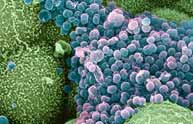
Gonorrhea virus
Sexually Transmitted Infections (or STIs)


There are at least 25 STIs, including chlamydia, genital herpes and gonorrhoea.
You can't tell if someone has one - 8 STIs have no symptoms.

STIs are very common, affecting people of all ages, races and sexuality. They're easy to catch and you're more at risk from HIV if you sleep with someone who's carrying an STI.

Whether you are straight, gay, bi or transsexual, you must protect yourself against these infections by using condoms. And you need to do this until you're sure there's no chance of either of you or your partner catching or passing on an STI.

Here's a list of some of the more well known STIs: 

Chlamydia

70% of cases of Chlamydia in girls have no symptoms. If undetected this can lead to infertility.
1 in 10 sexually active young women has had Chlamydia.

Symptoms:
In women, this infection often produces no symptoms, but can block the fallopian tubes, causing fertility problems later. You may notice slight discharge or pain on peeing. In men, it often affects the urethra and causes marked symptoms such as discharge or pain on peeing, described as 'non-specific-urethritis' ('NSU').

Treatment: Testing involves a special swab, or urine or blood tests. Treatment is with a specific type of antibiotics, but it can require several courses of tablets. Your sexual partners should be contacted and checked as well.

More

Gential Warts

Genital Warts and Chlamydia are two of the most common STIs in teenagers.

Symptoms:
Fleshy growths that can look like anything from a small pinky-white lump to a bulbous, cauliflower-shaped growth. They can appear alone or in clusters around the helmet of the penis and around or in the vagina and cervix. They're not usually painful, but they can result in itchy or inflamed skin .

Treatment: The two most common types of treatment are with painting on a strong solution that is washed off later or cryotherapy(freezing).

You should never use treatments purchased from a pharmacy, even those for use on other types of warts, on your genital warts . 

More

Gonorrhea

Causes: Caused by a bacteria and can affect the vagina, urethra, penis, rectum and even the mouth if you have oral sex.

Symptoms: Women tend to notice a profuse, yellow or greenish watery vaginal discharge and pain on peeing. Men may see a yellowy green discharge from the penis and have pain on peeing. Itching or anal discharge is also possible, though some people get no symptoms at all and carry the infection from one partner to the next.

Treatment: There is a risk of damage to your fallopian tubes, with reduced fertility, if the infection is not treated. If you have gonorrhoea, you should not have sex until you have had swabs done and a course of antibiotic treatment. Your sexual partners should be contacted and checked, too.

More

Herpes

Causes: Herpes is a virus (herpes simplex type II) similar to the one that causes cold sores (herpes simplex type I), and is transmitted sexually. It's possible to spread the infection to the mouth during oral sex and you might get type I infections in the genital area.

Symptoms: It can cause painful cold sore-like spots (ulceration) around the vagina and the penis. As with cold sores, once you've had them the virus stays in your system throughout your life, and could flare up again.

Treatment: There are now anti-viral antibiotics, which can be used to control and reduce a flare-up, but they aren't a cure. If you're pregnant, there is a risk of the baby getting a severe and potentially fatal herpes infection, so if you have active ulcers you need to discuss it with your midwife or GP.

More

NSU (Non-Specific Urethritis)

Causes: NSU is the term used to describe bacterial infection in the urethra in the penis, and is transmitted during sex.

Symptoms: The main symptoms are usually a clear discharge from the hole at the end of the penis (the entry to the urethra), and it may hurt to pee. You may feel pain or discomfort along the urethra inside the penis and symptoms may be worse in the morning.

Treatment: Any discharge from the penis needs to be checked by a doctor, either your GP or a doctor from a GUM (Genito-Urninary Medicine) clinic, and can be treated using antibiotics.

More

Syphilis

Symptoms: It may start with a sore in the vaginal or anal area, or around the genitals in men. Once the initial ulcer heals, it can stay in your system for years.

Treatment: Swabs which are usually used to test for STIs may show nothing, so blood tests are also used in diagnosing Syphilis. Although cases are rare now, this serious infection can cause infertility and affect the heart, blood vessels, skin, bones and brain if left untreated.

The infection can be treated with antibiotics and, like other STIs, it is important to contact and test all sexual partners. 

More

Thrush

Symptoms: With thrush, women may notice a white lumpy discharge or itchy vaginal irritation. Men may notice that their penis has become swollen and is very red and itchy. Both may have pain on peeing too, or feel the need to go frequently.

Treatment: Thrush can be treated with cream, pessaries or tablets. For mild cases these can be bought at the chemist, although severe cases should be seen by a doctor.

These treatments don't cure the infection. Thrush is an imbalance of a yeast-like fungus called candida, which we normally live in harmony with. After antibiotics or with other medical problems, such as diabetes, the normal balance of bacteria and fungi can be disturbed. Treatments just put the amount of fungus back to normal.

Find out what Dr Mark Hamilton had to say about thrush on the Sunday Surgery.

Pubic lice

Symptoms: Pubic lice (sometimes called crabs) are tiny insects that live on the skin in hairy parts of the body like pubic hair, under the arms and in chest hair. They cause itching or inflamed skin in the affected areas and black powder (lice droppings) in your underwear.

You can sometimes see brown eggs attached to pubic hair and the lice themselves or red spots as they feed.

Treatment: Special shampoos, creams or lotions are used to kill the lice and their eggs. You do not need to shave affected areas but your itching or rash may take a few weeks to clear up. A skin calming lotion can help.

Your partner should be checked and treated too to avoid re-infection. Clothes and bedding should also be washed. Sex and close contact should be avoided until the treatment is complete. 

More on BBC Relationships site

Scabies

Symptoms: Scabies are tiny mites, too small to see with the naked eye, that lay eggs under the skin. They cause an itchy rash around the genitals and buttocks, abdomen or breasts. They can also affect hands (especially between the fingers), wrists, elbows and underneath arms.

Treatment: Special shampoos or lotions from your doctor or from your local pharmacy. You do not need to shave affected areas but do need to wash your clothes, towels and bedding.

Sex and close contact should be avoided until the treatment is complete. You may not necessarily catch scabies through sex, close contact can be enough. You cannot catch scabies from toilet seats, swimming pools or cups and cutlery

More on BBC Relationships site

Sonar Festival
Sound Of Sonar

Get a taster of the Barcelona festival

BBC © 2014The BBC is not responsible for the content of external sites. Read more.

This page is best viewed in an up-to-date web browser with style sheets (CSS) enabled. While you will be able to view the content of this page in your current browser, you will not be able to get the full visual experience. Please consider upgrading your browser software or enabling style sheets (CSS) if you are able to do so.