I was a nun, the late Pope helped me support trans women
Despite having a friend in Pope Francis, Monica Astorga’s work helping marginalised transgender women in Argentina, put her on a collision course with the Church.
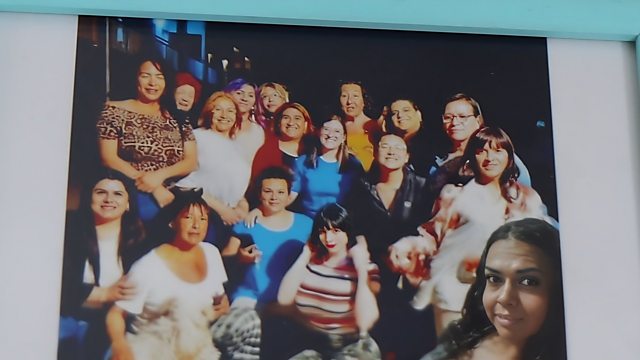
As a child Monica Astorga always wanted to become a nun, she joined a Carmelite order in Neuquén, Patagonia. It was an extremely impoverished area. Here Monica first encountered transgender women. Largely ostracised, they were often sex workers, drug addicts and homeless. She welcomed them to the church and created an innovative housing project especially for transgender women. In this work she had a high-profile supporter, the Archbishop of Buenos Aires, Jorge Bergoglio, who became Pope Francis. However, despite the success of her mission, the local religious forces turned against her, and she left the order. Our reporter Natalio Cosoy went to meet Monica, who is no longer a nun, but is recognised internationally for her work with transgender women in Argentina.
In the 1970s, after encountering many gay people who wanted to be part of the Catholic Church, American religious sister Jeannine Gramick set up an organisation where they could worship in the US city of Boston. The mainstream Catholic church did not approve and banned her from ministering to homosexuals. However, like Monica, Jeannine was supported by Pope Francis, and the ban was eventually lifted. This is an interview she gave to Matthew Bannister in 2016.
Presenter: Asya Fouks
Producer: Julian Siddle
Get in touch: outlook@bbc.com or WhatsApp +44 330 678 2707
(Photo: Monica Astorga in the centre of the photo in a blue top, wearing glasses with a group of transgender women. Credit Natalio Cosoy)
Last on

Broadcasts
- Mon 8 Dec 202512:06GMTBBC World Service
- Mon 8 Dec 202518:06GMTBBC World Service except East and Southern Africa & West and Central Africa
- Mon 8 Dec 202523:06GMTBBC World Service East and Southern Africa & West and Central Africa only
- Tue 9 Dec 202503:06GMTBBC World Service
Watch Lives Less Ordinary on YouTube
Videos from our extraordinary podcast Lives Less Ordinary.
Contact Outlook

Info on how we might use your contribution on air
Podcast: Lives Less Ordinary
Step into someone else’s life and expect the unexpected
