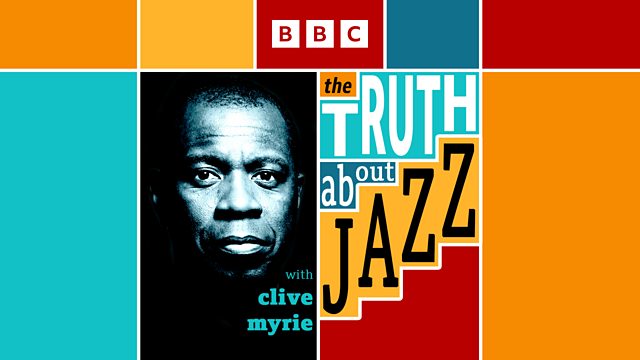
Jazz and diplomacy
Broadcaster and jazz enthusiast Clive Myrie charts how jazz became a tool of protest, politics and subtle US diplomacy and examines lyrics behind some of the seminal protest songs
Clive Myrie charts how jazz became a tool of protest, politics and subtle US diplomacy. He hears about Louis Armstrong's struggle with racism and meets musician Charles McPherson, who worked with the legendary jazz composer Charles Mingus - and discusses Fables of Faubus, one of Mingus's most explicitly political works. The song was written as a direct protest against Arkansas Governor Orval Faubus, who in 1957 sent out the National Guard to prevent racial integration at Little Rock Central High School.
Clive also remembers the 16th Street Baptist Church bombing which killed four children in September 1963. Veteran jazz musician Reggie Workman tells him how the attack led John Coltrane to write Alabama two months after the bombing. Clive also looks at how America's global radio service Voice of America began using jazz as a way of improving US diplomatic relations.
The Truth About Jazz was produced by Ashley Byrne and Wayne Wright.
The series is a Made in Manchester Production which was originally produced for the BBC World Service.
Last on

More episodes
Previous
Broadcasts
 Sat 22 Oct 202219:06BBC World Service except East and Southern Africa & West and Central Africa
- Sat 22 Oct 202220:06BBC World Service East and Southern Africa & West and Central Africa only
- Sun 23 Oct 202212:06BBC World Service
- Fri 16 Dec 202211:00BBC Radio 4
