What is behind the Indian Ocean Cyclones?
Why have three cyclones developed in the Indian Ocean in quick succession?
First there was cyclone Idai, then cyclone Kenneth and now cyclone Fani. As we go to air Fani is still developing, but the earlier two were unprecedented, occurring in a manner rarely if ever seen before. What is behind these extreme events? We look at the current state of weather patterns in the region and the influence of climate change.
And from Tibet a jawbone from an ancient giant provides new insight into the development of humanity.
Astronomers join forces to search for evidence of a black hole swallowing a neutron star, and why atmospheric pollution might have reduced the severity of past droughts.
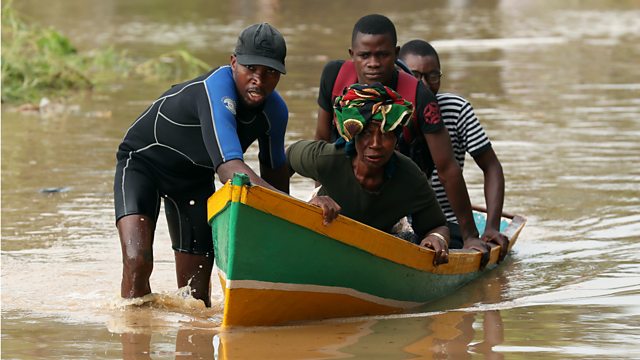
(Image: A man ferries a residents through a flooded road in the aftermath of Cyclone Kenneth in Pemba. Credit: Reuters)
Presenter: Roland Pease
Producer: Julian Siddle
Last on

More episodes
Broadcasts
- Thu 2 May 201919:32GMTBBC World Service except South Asia
- Fri 3 May 201904:32GMTBBC World Service Online, UK DAB/Freeview, News Internet & Europe and the Middle East only
- Fri 3 May 201905:32GMTBBC World Service Australasia, Americas and the Caribbean & South Asia only
- Fri 3 May 201906:32GMTBBC World Service East and Southern Africa & East Asia only
- Fri 3 May 201910:32GMTBBC World Service West and Central Africa
- Fri 3 May 201913:32GMTBBC World Service Australasia
- Fri 3 May 201917:32GMTBBC World Service South Asia
- Mon 6 May 201900:32GMTBBC World Service
Podcast
![]()
Science In Action
The BBC brings you all the week's science news.