Turning brain waves into speech
Analysis of neural activity associated with talking has allowed neuroscientists to reproduce speech synthetically.
Neuroscientists have recorded the brain activity of patients while talking and used this to develop computer programmes that can simulate speech. The neural activity they monitored is associated with the muscle movements needed to talk and form words rather than the meaning of the words themselves. They say a refined version of the system should be able to generate speech for people who cannot talk.
Data collected from a long running study of plankton is proving useful for research into historic ocean plastic pollution. Records of plastic accidentally entangled in the ocean going plankton samplers now provides a snapshot of contamination dating back to the 1950s.
Rewilding, letting nature take its course has romantic appeal. Perhaps counter intuitively a review of methods from around the world shows the key to successful projects is often how well they interact with local people.
And over 600 scientists have called for the European Union to put indigenous rights and deforestation to the fore of its trade negotiations with Brazil. We look at why they made this political call.
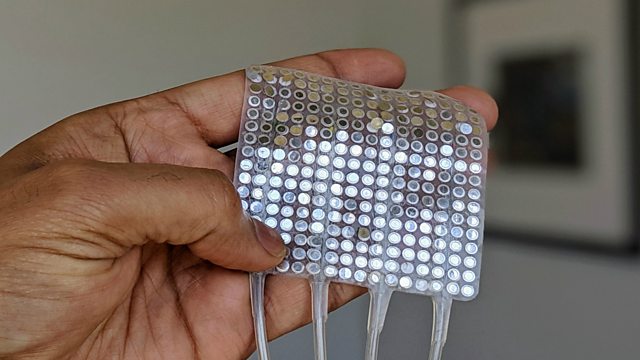
(Picture: Researchers implanted electrodes similar to these in participants’ skulls to record their brain signals. Credit: UCSF)
Presenter: Roland Pease
Producer: Julian Siddle
Last on

More episodes
Broadcasts
- Thu 25 Apr 201919:32GMTBBC World Service except South Asia
- Fri 26 Apr 201904:32GMTBBC World Service Online, UK DAB/Freeview, News Internet & Europe and the Middle East only
- Fri 26 Apr 201905:32GMTBBC World Service Australasia, Americas and the Caribbean & South Asia only
- Fri 26 Apr 201906:32GMTBBC World Service East and Southern Africa & East Asia only
- Fri 26 Apr 201910:32GMTBBC World Service West and Central Africa
- Fri 26 Apr 201913:32GMTBBC World Service Australasia
- Fri 26 Apr 201917:32GMTBBC World Service South Asia
- Mon 29 Apr 201900:32GMTBBC World Service
Podcast
![]()
Science In Action
The BBC brings you all the week's science news.