How Memories are Made and Lost
How memories are made and lost? Three prizewinning scientists discuss the latest brain research.
How are memories made? Claudia Hammond joins an audience at London’s Royal Institution this week to hear from three prize-winning neuroscientists about their cutting-edge research on the brain.
Earlier this year Tim Bliss, Graham Collingridge and Richard Morris won the one million Euro Lundbeck Foundation Brain Prize – the world’s biggest prize for neuroscience. They worked out how the brain remembers, how it strengthens connections between different brain cells and why it sometimes forgets.
The brain has billions of nerve cells or neurons which are linked by trillions of connections or synapses. It is at these synapses where memories are formed - the memories which make us who we are. The trio’s research was on a mechanism known as Long-Term Potentiation, which works by permanently strengthening the connections between two neurons. It is a bit like beating a path through some long grass – the more you walk the path, the more defined it becomes. Similarly, the more times we have an experience, the stronger the memory gets. Understanding this process brings the exciting possibility of new treatments for conditions like Alzheimer’s disease, schizophrenia and depression.
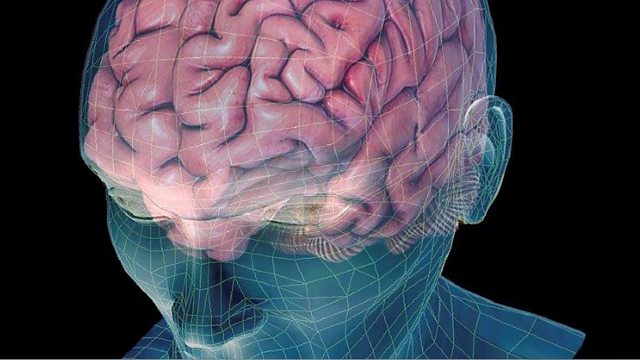
(Photo caption: Healthy brain, 3D magnetic resonance imaging (MRI) scan and wire-frame artwork. Credit: © Zephyr/Science Photo)
Last on
Clip
![]()
Does the brain get full?
Duration: 01:26
Broadcasts
- Wed 7 Dec 201619:32GMTBBC World Service East and Southern Africa & West and Central Africa only
- Wed 7 Dec 201620:32GMTBBC World Service Online, Australasia, Americas and the Caribbean, UK DAB/Freeview & Europe and the Middle East only
- Wed 7 Dec 201621:32GMTBBC World Service South Asia & East Asia only
- Thu 8 Dec 201602:32GMTBBC World Service Americas and the Caribbean
- Thu 8 Dec 201603:32GMTBBC World Service Online, Europe and the Middle East & UK DAB/Freeview only
- Thu 8 Dec 201604:32GMTBBC World Service East Asia & South Asia only
- Thu 8 Dec 201605:32GMTBBC World Service Australasia
- Thu 8 Dec 201607:32GMTBBC World Service Europe and the Middle East & East and Southern Africa only
Podcast
![]()
Health Check
Health issues and medical breakthroughs from around the world.