Thirty Nine 45
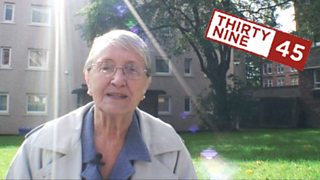
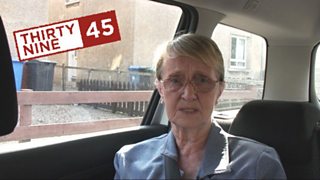
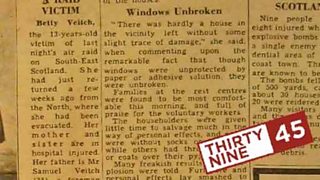
On the 6th August 1942 the east coast of Scotland was bombed by the Luftwaffe. Christine Scott has a vivid memory of the attack. Aged eleven, she was on holiday in St Andrews when the bombs fell. Starting with the outbreak of war and her evacuation to a sheep farm in Lockerbie, Christine tells us her 'war' story.
The war starts for Christine.
Christine returns to Hotspur Street in Glasgow where she lived for most of her childhood.
Journey to Lockerbie remembered.
Christine continues her story by describing the journey she and her mother took to Lockerbie and the new world and experiences that she found there.
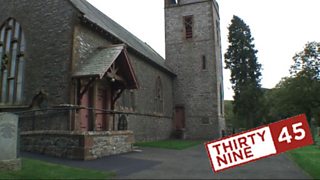
"Quite an old woman" at Tundergarth Parish Church
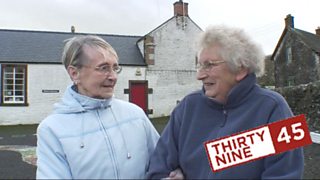
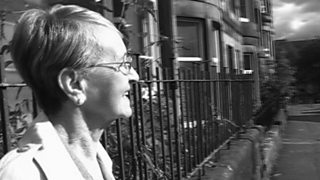
Christine - "now quite an old woman" - sits at Tundergarth Parish Church as she prepares to visit Linnhall Farm and the school she was sent to in 1939. As the wind blows (apologies for the sound quality) Christine reflects on her childhood relationship with Lockerbie and what the name of Lockerbie now means to the world.
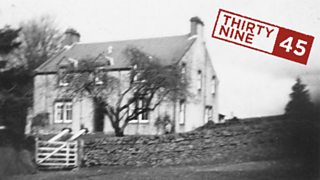
Return to Linnhall Farm
Christine returns to Linnhall Farm where she lived between September 1939 and the summer of 1942. As she sits in the kitchen a special visitor makes an unexpected entrance catching us all off guard.
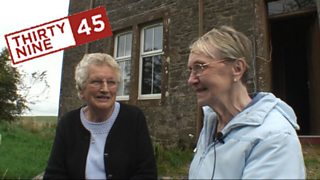
Christine and Mary at their old school.
Christine thinks back to September the 25th, 1949 the day she first arrived at what she knew as Bankshill School. She chats to Mary about her troublesome first few days and admires the changes to the school which is now known as Tundergarth Primary School.
The Evacuation Scheme
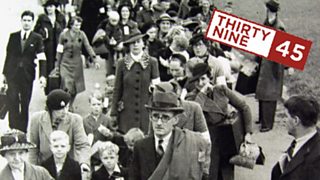
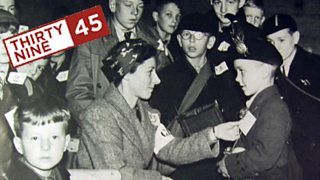
Andrew Jeffrey tells us why the evacuation scheme was instituted by the Government.
Unforeseen Side Effects
The evacuation scheme brought different social classes together for the very first time. Andrew Jeffrey talks about some of the unforeseen side-effects on urban and rural communities.
Problems Arose
Andrew Jeffrey talks about the failure of the evacuation and the problems caused by large numbers of children returning to the cities.
Evacuation Research
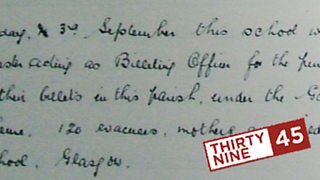
Andrew Jeffrey gives tips on where to find the best factual sources.
Christine Returns to Hotspur Street
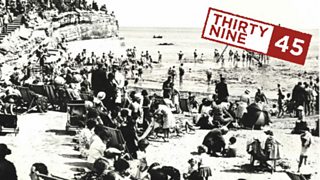
Christine talks about coming home to Hotspur Street and getting ready for their family holiday.
Holidays at Home
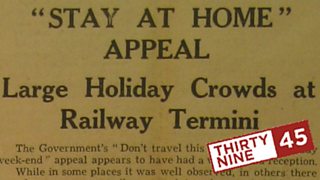
Andrew Jeffrey explains why the war time Government wanted people to stay at home during their holidays.
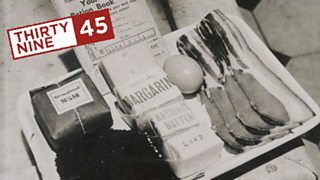
Lost Rations
Christine Scott returns to St Andrews
Christine Visits the Step Rock Pool
Christine visits the Step Rock Pool in St. Andrews and reflects upon sharing her rubber ring with a little girl back in 1942.
The Night the Bombs Fell
Christine recalls her experience on the night of 6th August 1942. The night the bombs fell.
Christine Goes to Nelson Street
Christine describes what happened to the homes in Nelson Street, St. Andrews.
Christine at Western Roundel Cemetery
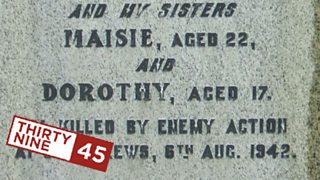
Christine visits the Western Roundel Cemetary in St Andrews where some of the victims killed in the bombing are buried.
Tip and Run Raids
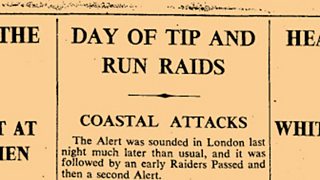
Military historian Andrew Jeffrey explains what a “Tip and Run Raid” is and why the Luftwaffe had adopted this particular tactic.
Andrew at radar station
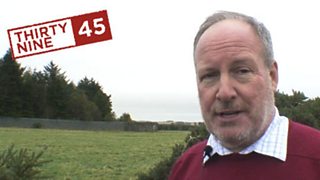
Andrew Jeffrey visits RAF Douglas Wood one of a series of Chain Home air defence stations around the British coast.
Enemy Attack
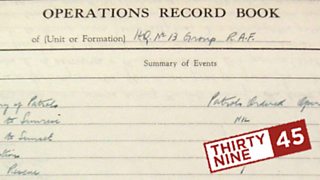
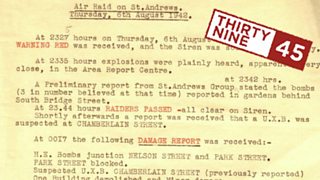
Andrew Jeffrey tells us what the documents from the National Archives reveal about the Luftwaffe attack and the RAF response.
Historian Andrew Jeffrey in Nelson Street, Glasgow
Historian Andrew Jeffrey compares the scale of the bombing that occurred in Nelson Street, Glasgow in March 1941 with the single plane attack on St Andrews in August 1942.
ARP Report
Andrew Jeffrey introduces us to one of the source documents that give us a blow by blow account of the ARP response to the St Andrews bombing.
Discovery
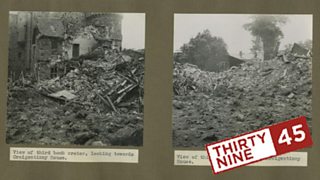
Andrew Jeffrey is excited by the discovery of an album which records every air attack on Edinburgh during WWII.
Did the blackout work?
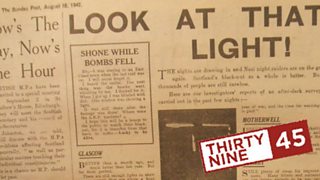
Did the careless showing of a light really attract enemy bombers to hidden targets? Historian Andrew Jeffrey thinks not and casts doubt on the usefulness of the blackout.
Ministry of Information
Andrew Jeffrey talks about the role of the Ministry of Information.